An authoritative technical guide and market intelligence report for orthopedic surgeons, procurement directors, and hospital equipment distributors. Engineered by CareFix — ISO 13485 Certified Manufacturer.
Executive Overview: The Evolution of Unilateral External Fixation
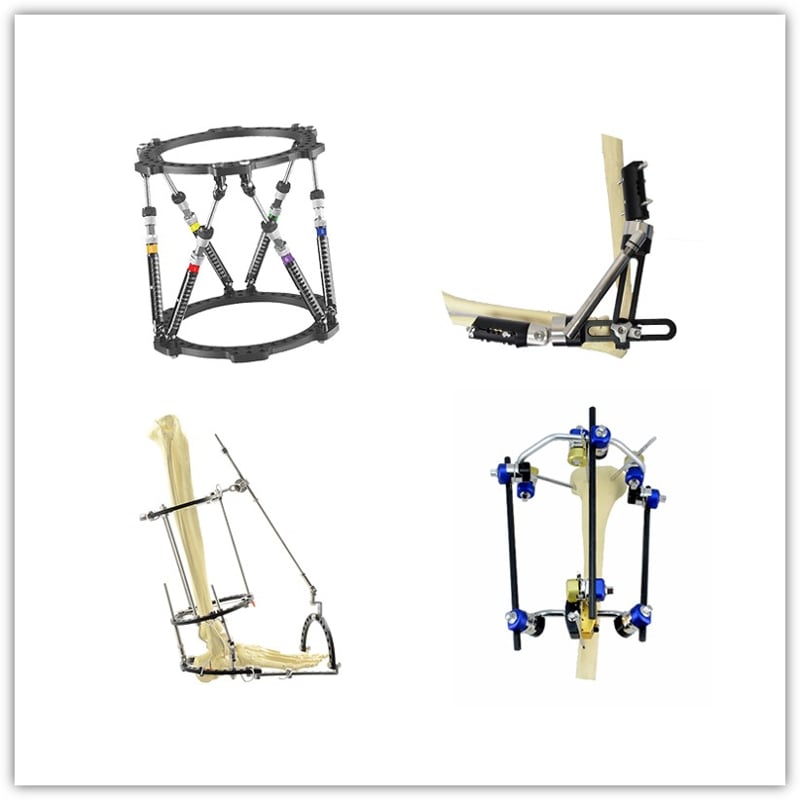
In modern orthopedic trauma management and limb reconstruction, the Unilateral External Fixator (also known as a monolateral external frame system) remains an indispensable surgical tool. Unlike circumferential ring fixators (such as Ilizarov or circular spatial frames), unilateral systems utilize a single rigid body rail, telescopic bar, or articulated rod positioned parallel to the long axis of the bone segment. Screws—predominantly heavy-duty bone Schanz pins—are inserted in a single plane or limited convergent angles to secure the proximal and distal bone fragments.
For international healthcare procurement officers and chief surgeons, choosing the correct unilateral external fixation device involves evaluating critical biomechanical parameters: bending stiffness, torsional resistance, axial micromotion capability, clamp adjustability, ease of intraoperative reduction, and radiolucency. As orthopedic trauma surgical procedures move toward minimally invasive techniques (MIS) and early patient weight-bearing, modern unilateral fixator systems have evolved from crude temporary emergency spans to highly sophisticated, micro-adjustable lengthening and bone transport devices.
Key Information Gain: Why Unilateral Fixators Dominate Polytrauma Triage
Biomechanical studies demonstrate that modern carbon-fiber and titanium-alloy unilateral external fixators can achieve up to 85% of the torsional rigidity of double-ring structures while reducing operative installation time by 60%. This rapid stabilization is vital for damage control orthopedics (DCO) in severe polytrauma patients presenting with open fractures, vascular injury, or extensive soft-tissue compromise.
Biomechanical Engineering & System Architecture
The biomechanical success of a unilateral external fixator relies heavily on managing the distance between the bone column and the main longitudinal body rail (the offset distance), as well as the pin-to-bone contact mechanics. CareFix engineers analyze structural behavior under dynamic physiologic loading to achieve the optimal equilibrium between rigid stabilization and elastic micro-strains that stimulate osteogenesis (callus formation).
The primary point of mechanical failure in any monolateral construct occurs at the pin-bone interface. CareFix Schanz pins feature precision-machined reverse-taper thread profiles and self-drilling/self-tapping flutes. Manufactured from implant-grade Titanium Alloy (Ti-6Al-4V ELI) or high-grade Stainless Steel (316L), these screws deliver optimized radial compression against cortical bone, reducing the incidence of pin loosening and micro-motion induced osteolysis.
Modern limb lengthening and bone transport procedures rely on continuous distraction osteogenesis (Callotasis). CareFix unilateral limb reconstruction systems feature integrated telescopic dynamic bodies equipped with micrometer-threaded adjustment collars. Surgeons can execute controlled daily distraction rates (typically 1 mm per day divided into four 0.25 mm steps) with sub-millimeter precision, encouraging dense collagen matrix orientation and rapid bone mineralization.
3. Radiolucent Materials & Multi-Planar Clamping
Interferences under intraoperative C-arm fluoroscopy significantly prolong surgical duration. CareFix incorporates high-strength carbon-fiber composite longitudinal rods. Carbon fiber offers complete radiolucency, allowing surgeons to obtain crystal-clear anteroposterior (AP) and lateral X-ray views during intraoperative fracture reduction without needing to disassemble frame elements.
CareFix Featured Unilateral External Fixator Solutions
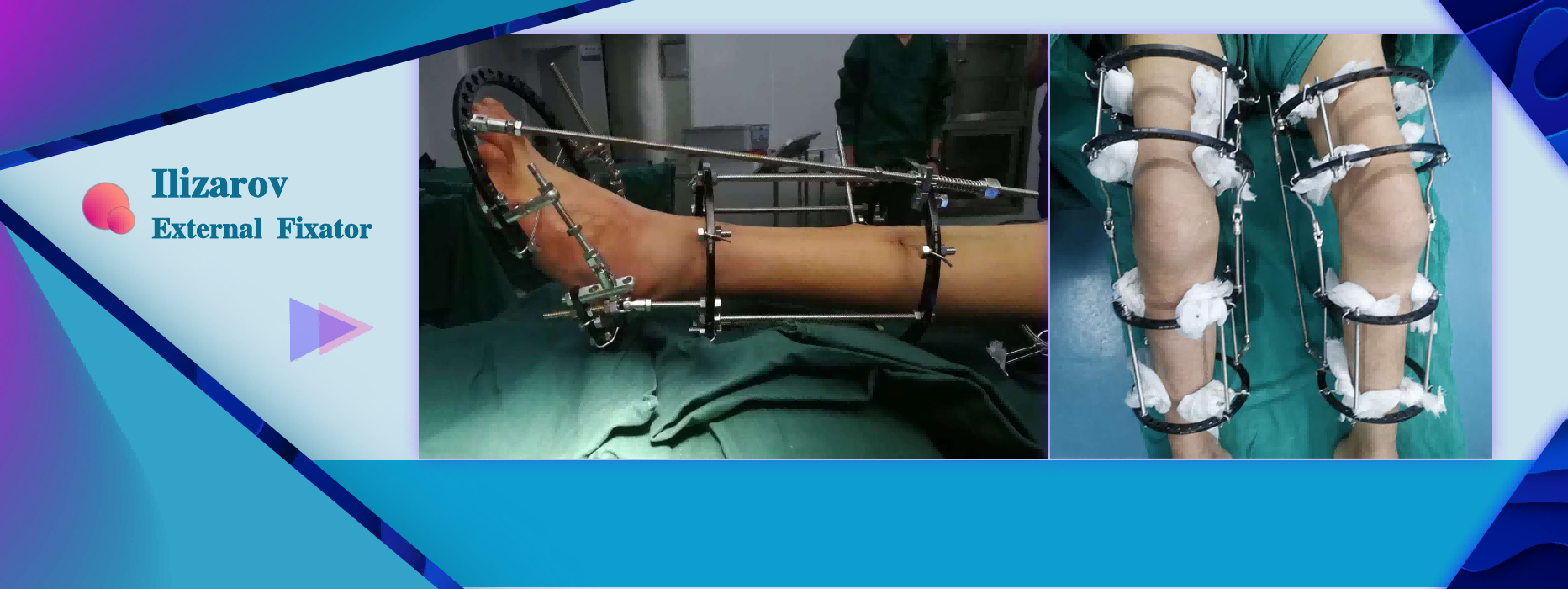
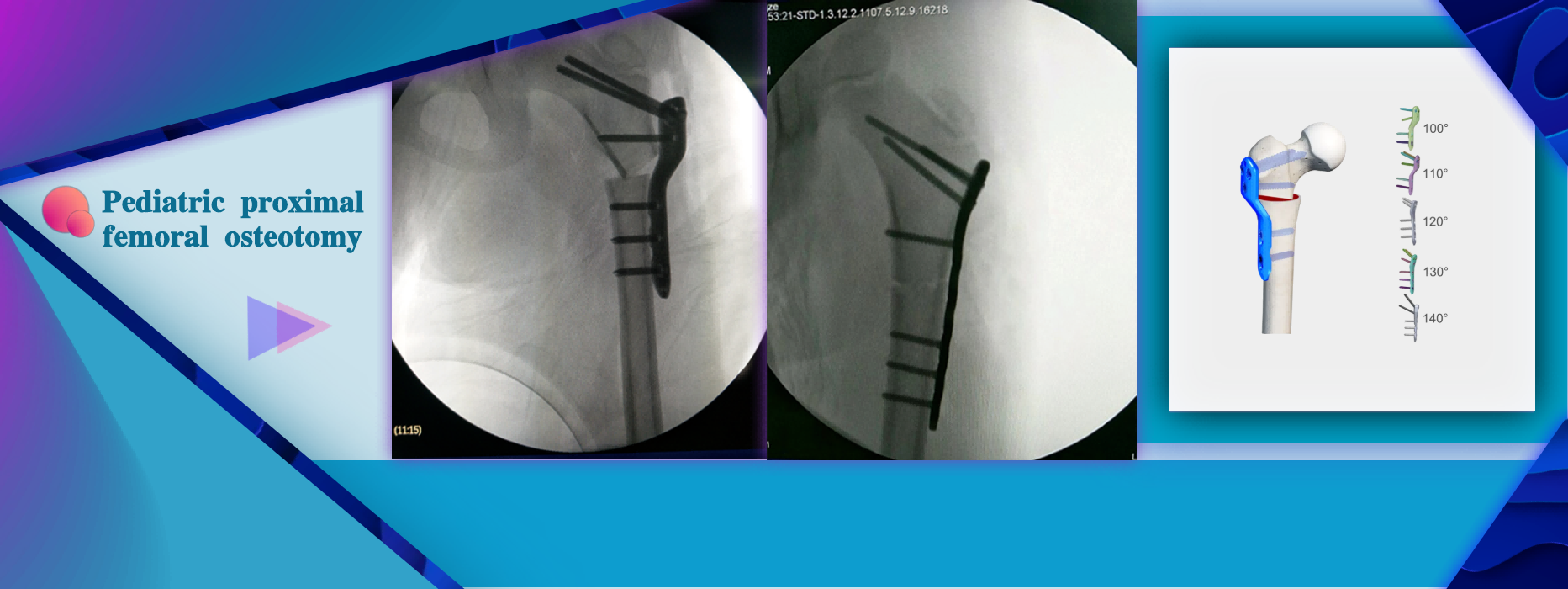
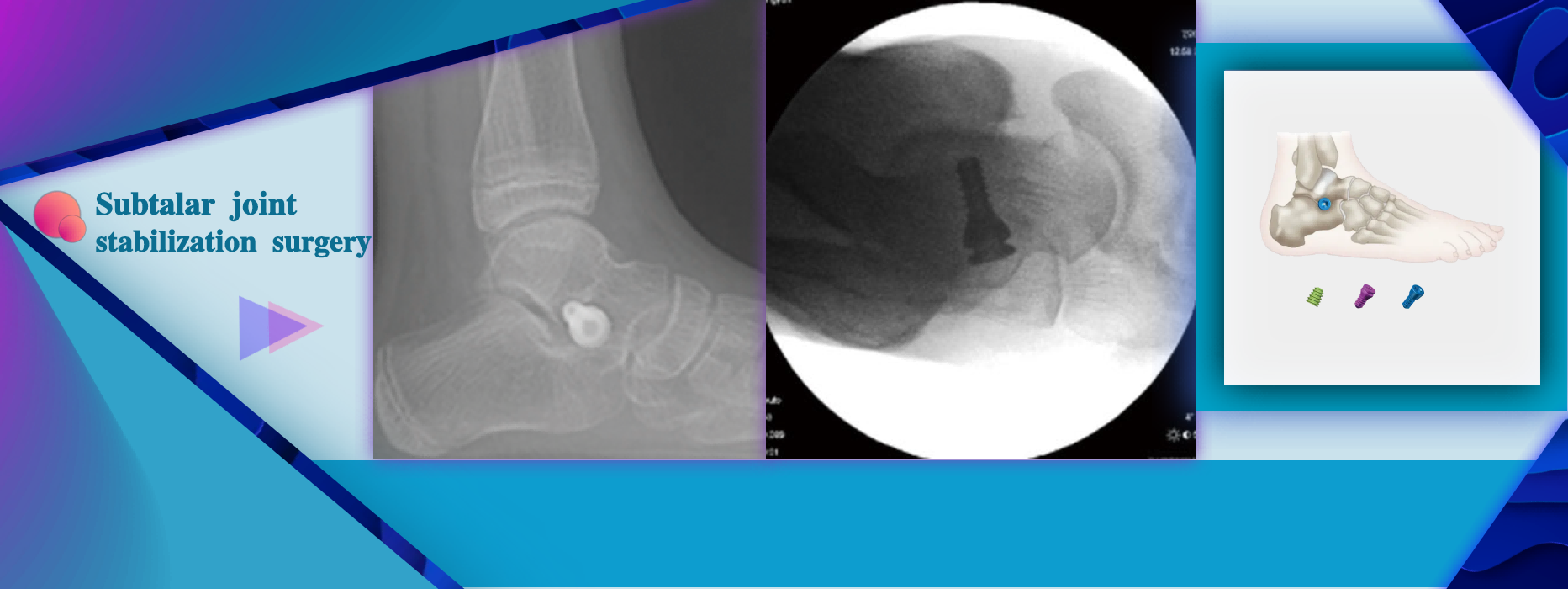
Below is our specialized product series designed to meet diverse surgical requirements, from pediatric osteotomy to complex adult femoral bone transport. Every system is manufactured in Shanghai, China, under strict ISO 13485 quality control.
To assist clinical procurement committees in evaluating frame performance against international standards (such as AO/ASIF recommendations), CareFix provides comprehensive technical data across our standard unilateral external fixator lines:
As healthcare systems globally shift toward value-based procurement and supply chain resilience, purchasing dynamics for external fixation medical devices are undergoing significant structural changes. Hospital procurement teams must navigate regulatory changes, cost pressures, and technological innovations.
1. Shift Toward Hybrid Material Constructs
Single-material frames are being phased out in favor of hybrid structural constructs. High-stress clamps are forged from medical-grade titanium alloy for fatigue performance, while longitudinal bodies utilize radiolucent carbon fiber rods. Procurement teams prioritize suppliers offering modular hybrid systems that reduce total tray weight and improve ergonomics during transport and sterilization.
2. Stringent Regulatory Compliance (ISO 13485, EU MDR & FDA Alignment)
Regulatory scrutiny over orthopedic Class IIb medical devices has intensified globally. Importers in Europe, Latin America, the Middle East, and Southeast Asia require manufacturers to provide full batch traceabilities, raw material certificates (ISO 5832-3 / ASTM F136 for Titanium), biocompatibility testing (ISO 10993), and mechanical fatigue validation (ASTM F1541 for external fixator frames). CareFix maintains comprehensive technical files, accelerating customs clearance and local registration timelines for our distribution partners.
3. Pre-Assembled Sterile Trauma Kits
Modern emergency rooms and disaster relief logistics require single-use, sterile-packaged trauma external fixation kits. Pre-configured kit packaging eliminates hospital central sterile supply department (CSSD) re-sterilization cycles, ensures 100% component completeness during midnight trauma call-outs, and reduces operating room setup times from 25 minutes to under 8 minutes.
Future Technology Trends in Unilateral Fixator Systems
Orthopedic technology is rapidly integrating digital workflow tools, biocoatings, and minimally invasive mechanical features into external fixation frames. Key development trajectories include:
Hydroxyapatite (HA) & Antimicrobial Surface Coating on Schanz Screws: Pin-tract infection (PTI) remains the most prevalent clinical complication in prolonged monolateral external fixation (occurring in 10% to 30% of cases). Advanced plasma-sprayed HA coatings create an antibacterial barrier while accelerating osteointegration around the screw collar, reducing mechanical loosening rates by over 45%.
Smart Tele-Monitoring & Strain Gauge Integration: Research into smart external fixators incorporates micro-strain sensor chips directly into the longitudinal rail. These sensors wirelessly transmit micro-deflection data to surgeon mobile apps, providing real-time quantitative monitoring of bone healing and callus stiffness progression prior to frame removal.
3D-Printed Anatomical Clamps & Custom Osteotomy Guides: Patient-specific 3D printing enables custom clamp angles tailored precisely to complex post-traumatic deformities, reducing surgical trial-and-error during acute osteotomy realignment.
Why Global Hospitals & Distributors Partner with CareFix
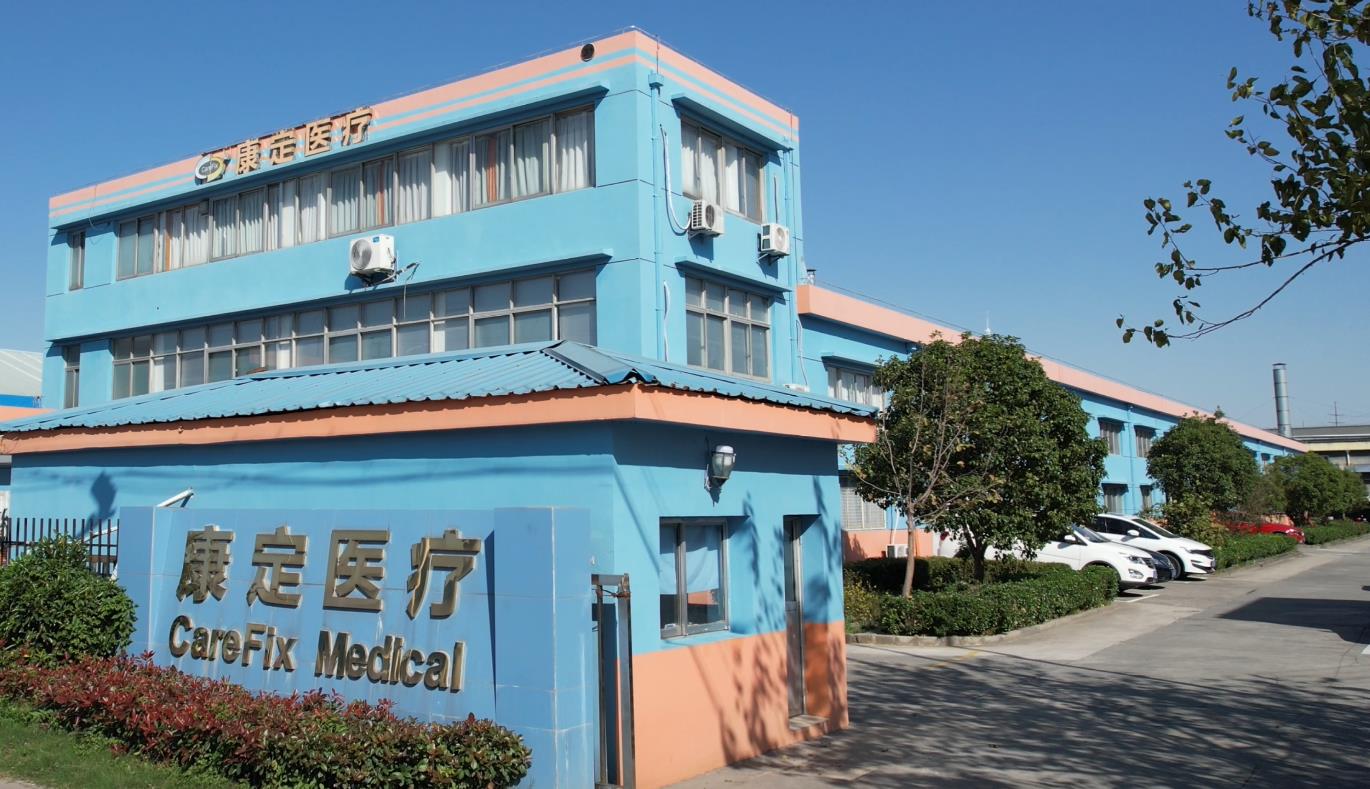
Shanghai CareFix Medical Instrument Co., Ltd (CareFix®) is a premier Chinese manufacturer specializing in high-precision orthopedic implants and surgical instrumentation. Operating from our state-of-the-art manufacturing center in the Shanghai Songjiang Economic and Technological Development Zone, we represent the ideal bridge between premium mechanical quality and competitive global pricing.
Self-Owned Manufacturing Base
Founded in 2009 with over ¥70 million total investment. Features 5-axis CNC machining centers, automated wire EDM, ultra-clean rooms, and state-of-the-art CMM testing laboratories.
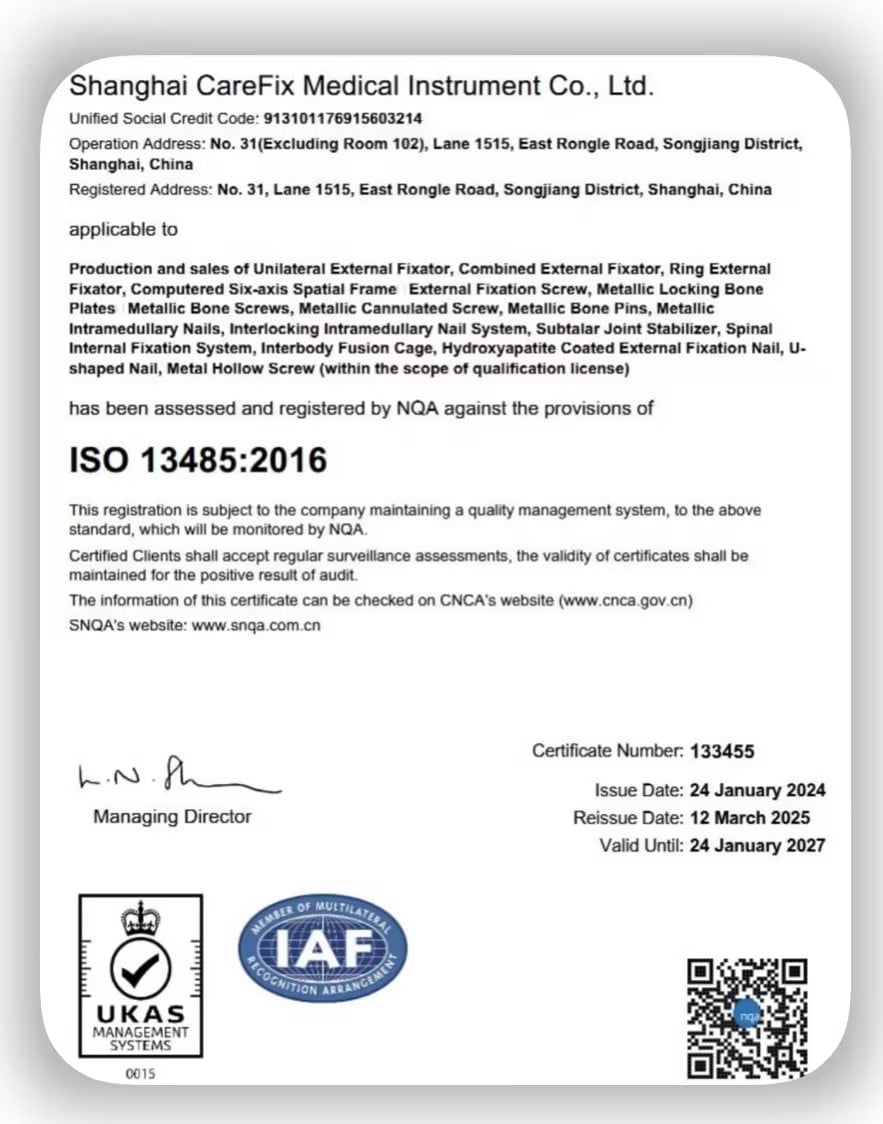
ISO 13485 Certified Excellence
Strict adherence to international medical device quality standards. Every batch undergoes 100% material verification, mechanical fatigue testing, and dimensional inspection.
CareFix Global Reach & Clinical Trust
Our orthopedic products are trusted by 365+ top-tier hospitals across 32+ countries, supported by a international distribution network of over 300 authorized agents. With over 30 patents and a dedicated R&D team working in close collaboration with leading university hospitals and clinical experts, CareFix delivers reliable, surgeon-approved orthopedic trauma and limb reconstruction solutions.
Frequently Asked Questions for Global Procurement & Sourcing Teams
Below are authoritative responses to the most critical technical, commercial, and regulatory questions submitted by medical device procurement officers, hospital purchasing agents, and orthopedic distributors.
1. What are the main structural stability advantages of a unilateral external fixator compared to ring fixators?
Unilateral external fixators present several key clinical and logistical advantages:
Surgical Efficiency: Application time is reduced by 50–60% compared to circular ring frames, making them superior for acute damage control orthopedics in severe polytrauma.
Soft-Tissue Preservation: Schanz screws are inserted from a single safe anatomical corridor (unidirectional), reducing the risk of neurovascular damage and muscle tethering associated with cross-transfixing wires.
Patient Comfort & Hygiene: Monolateral frames are significantly less bulky, lighter in weight, easier for patients to wear under clothing, and simplify daily pin-site hygiene care.
Targeted Micromotion: Modern unilateral fixators feature dynamic axial release mechanisms that permit controlled micro-strains under partial weight-bearing, directly stimulating secondary bone healing without sacrificing rotational or bending stability.
2. How do I choose between Titanium Alloy (Ti-6Al-4V) and Stainless Steel (316L) Schanz screws?
The choice depends on clinical application, duration of fixation, and hospital budget:
Titanium Alloy (Ti-6Al-4V ELI): Offers a lower modulus of elasticity closer to natural human cortical bone, reducing stress shielding at the pin-bone junction. Titanium is highly biocompatible, lightweight, non-magnetic (MRI compatible), and resists long-term osteolysis. Recommended for complex limb reconstruction, bone transport, and prolonged fixation (>6 weeks).
Stainless Steel (316L Medical Grade): Provides exceptional initial stiffness and high ultimate tensile strength at a more economical price point. Ideal for short-term emergency trauma bridging, acute fracture temporary stabilization, and budget-conscious public hospital procurement tenders.
3. What regulatory certificates and documentation does CareFix provide for hospital tenders?
CareFix supplies a complete regulatory dossier to streamline international importation and hospital registration:
ISO 13485:2016 Certified Quality Management System Certificate.
Free Sales Certificates (FSC) and Medical Device Registration Certificates.
Raw Material Mill Test Certificates (ISO 5832-3 / ASTM F136 / ASTM F138).
Biocompatibility & Cytotoxicity Test Reports (ISO 10993).
Mechanical Fatigue & Static Load Test Reports (ASTM F1541 standard test methods for external fixation devices).
Complete Instruction for Use (IFU), Surgical Technique Manuals, and Cleaning/Sterilization Validation protocols.
4. What is the recommended pin distance and placement strategy to prevent pin loosening?
Biomechanical stability relies on adhering to the "Wide Pin Spread" principle. Within each fragment clamp, place the outermost Schanz pin as far from the fracture site as anatomical safe zones allow, while placing the innermost pin near the fracture line (minimum 15–20 mm distance to avoid fracture hematoma contamination). Maintain the main longitudinal body rail as close to the skin as safely possible (ideally 20–30 mm clearing for tissue swelling), as bending moment increases exponentially with increased skin-to-rail distance.
5. Can CareFix accommodate custom OEM/ODM packaging, tray layouts, and branding?
Yes. As a direct manufacturer, CareFix specializes in flexible OEM/ODM collaboration for international brand owners and tender suppliers. Services include custom laser marking (logo, part numbers, UDI barcodes), specialized anodization color coding for clamps and rods, customized surgical instrument sterilization tray configurations, and custom sterile kit packaging.
6. What is the standard lead time, minimum order quantity (MOQ), and shipping protocol for bulk orders?
Standard catalog inventory items ship within 7 to 14 business days. For customized bulk orders or major hospital tender volumes, lead times generally range between 20 to 35 days. CareFix maintains strategic safety stock level alerts to support urgent hospital procurement. We offer flexible MOQs for initial evaluation orders and ship globally via DHL/FedEx express airfreight or ocean freight with full temperature and damage-controlled packaging.
Connect with CareFix Technical Sourcing Specialists
Get direct factory pricing, technical catalog specifications, and sample evaluation packages for your market.
.png)