.png)
Authored by CareFix Senior SEO Growth Director & Biomechanical Engineering Advisory Board. Reviewed for clinical accuracy in alignment with ISO 13485 manufacturing protocols, Google Search Quality Rater Guidelines (E-E-A-T), and global hospital procurement standards.
1. Executive Summary & Biomechanical Fundamentals of Taylor External Fixators
The Taylor External Fixator System—commonly referred to in modern clinical literature as a Hexapod Spatial Ring Fixator or Six-Axis Computer-Assisted External Fixator—represents the pinnacle of evolution in limb reconstruction and complex trauma repair. Rooted in the pioneering tensioned wire distraction osteogenesis principles of Professor Gavriil Abramovich Ilizarov, the Taylor spatial frame paradigm replaces rigid physical hinges and fixed translation slides with dynamic, computer-driven Stewart-Gough Platform kinematics.
In traditional circular ring fixators, correcting multi-planar deformities (such as concurrent coronal varus/valgus, sagittal procurvatum/recurvatum, axial rotation, and length discrepancy) requires complex physical frame modifications, multiple surgical revisional procedures, and manual realignment of hinge axes. Conversely, a Taylor External Fixator employs six adjustable telescopic struts arranged in a hexapod geometry connecting proximal and distal rings. This structural configuration enables Simultaneous 6-Degrees-of-Freedom (6-DOF) Deformity Correction—including translation along X, Y, and Z axes, as well as rotational angulation around roll, pitch, and yaw—without altering the physical frame assembly.
Key Biomechanical Advantage: The Stewart Platform Kinematics
By translating complex spatial deformities into mathematical algorithms, the hexapod frame decouples physical hardware constraints from clinical trajectory planning. Surgeons input radiographic parameters (Center of Rotation and Angulation - CORA) and mounting coordinates into web software. The software generates a daily strut-adjustment schedule, directing incremental micro-adjustments (typically 1.0 mm/day distraction) that gradually align bone segments with sub-millimeter precision while maintaining bone transport stability and protecting soft tissue envelopes.
2. System Architecture & Component Materials Science
A high-performance Taylor-type spatial frame relies on meticulous materials science and tight manufacturing tolerances to resist bending moments, torsional stress, and axial loading during full weight-bearing rehabilitation. Shanghai CareFix Medical Instrument Co., Ltd. engineer components to exact ISO 13485 standards, combining biocompatible titanium alloys, high-strength aircraft-grade aluminum anodizations, and radiolucent carbon fiber composites.
Core Structural Components
- Radiolucent Carbon Fiber & Anodized Aluminum Rings: Full rings, 2/3 rings, 5/8 rings, and arch plates available in inner diameters from 80 mm to 300 mm. Carbon fiber rings provide total X-ray transparency, preventing frame shadowing during intraoperative fluoroscopy and post-operative radiographic osteogenesis monitoring.
- Quick-Adjust Telescopic Struts (Fast-Fix Mechanism): Engineered with dual-threaded lead screws, quick-release disengagement collars, and laser-etched millimeter scales. Struts feature spherical universal joints at both ends to eliminate joint binding during extreme angulations.
- Schanz Screws & Transfixion Kirschner Wires: Manufactured from ASTM F136 Medical Grade Titanium (Ti-6Al-4V ELI) or ASTM F138 316L Stainless Steel. Hydroxyapatite (HA) coated Schanz pins are available to dramatically lower pin-tract infection rates and preserve long-term bone-pin interface strength.
- Hinged Bracket Connections & Multi-Pin Fixation Blocks: Modular connection elements allowing arbitrary pin placement outside ring planes, accommodating complex soft tissue swelling and burn contractures.
| Component Specification | Material / Metallurgy | Clinical Function & Feature | CareFix QA Standard |
|---|---|---|---|
| Spatial Frame Rings | Carbon Fiber Composite / Al 7075-T6 | Radiolucent, high rigidity, low weight | ISO 13485 / Fatigue test > 2.0x10⁶ cycles |
| Telescopic Struts (6-Unit) | Stainless Steel 316L / Ti-6Al-4V | 6-DOF micro-adjustment (0.25mm per click) | Tolerance < 0.05 mm, quick-release mechanism |
| Fixation Bone Pins | Ti-6Al-4V / HA-Coated Stainless Steel | Cortical & Cancellous osseointegration | Tapered thread geometry, high pull-out force |
| Transfixion Wires | High-tensile Stainless Steel 316L | Metaphyseal ring fixation with tensioner | Tensile strength > 1400 MPa, sharp bayonet tip |
3. CareFix Taylor-Type Spatial External Fixator Product Showcase
Shanghai CareFix Medical offers global hospital purchasing departments and surgical teams a comprehensive range of external fixation kits and modular spatial frame assemblies.
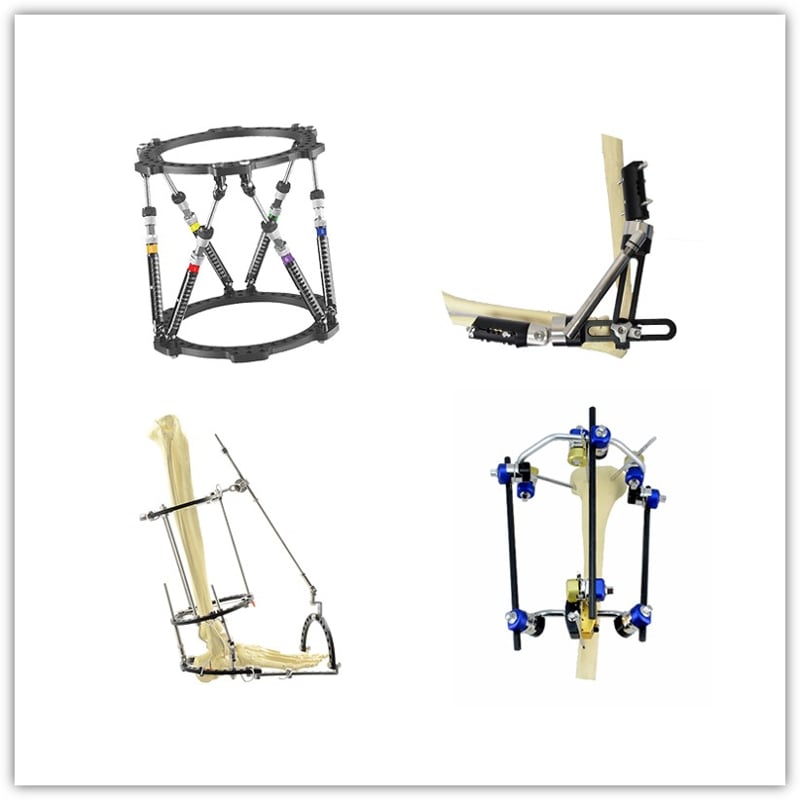
CareFix HexaFrame™ Spatial External Fixator System
Our FLAGSHIP 6-axis spatial ring frame equipped with quick-adjustment telescopic struts, carbon fiber composite rings, and integrated digital correction software. Designed for complex tibial/femoral malunions, severe open fractures, and pediatric limb lengthening.
Get a Quote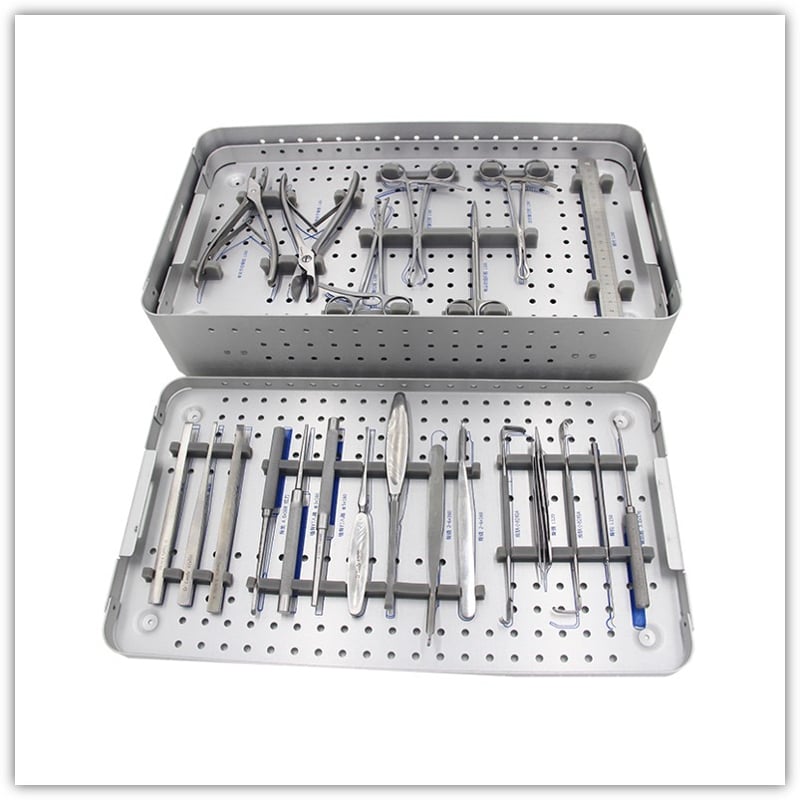
CareFix Precision Surgical Instrument Kit for Spatial Frames
Complete ergonomic surgical tray including wire tensioners, torque-limiting wrenches, drill guides, pin cutters, and frame assembly tools housed in autoclavable aluminum sterilization containers.
Get a Quote4. Technical & Clinical Superiority Matrix (Information Gain)
For hospital procurement committees evaluating orthopedic capital expenditure and implant budgets, understanding the clinical trade-offs between external fixation modalities is crucial. Below is an authoritative technical comparison matrix detailing biomechanical, surgical, and financial parameters.
| Performance Metric | Taylor Hexapod Spatial Ring Fixator | Classical Ilizarov Ring Frame | Monolateral External Fixator | Intramedullary Lengthening Nail |
|---|---|---|---|---|
| Correction Capabilities | Simultaneous 6-DOF (3D Translation + 3D Rotation) | Sequential 1-2 DOF (Requires manual hinge resets) | Uniaxial (Lengthening or single-plane translation) | Uniaxial (Lengthening only) |
| Accuracy & Precision | Sub-millimeter (< 0.5 mm, < 1° angulation) | Operator-dependent (2–5 mm error margin) | Moderate (3–5 mm error margin) | High for length, zero axial rotation control |
| Surgical Complexity | Low intraoperative frame assembly; software handles math | High surgical time spent aligning hinges to CORA | Low to Moderate surgical complexity | High intraoperative reaming & surgical expertise required |
| Soft Tissue Preservation | High (Minimally invasive transfixion wires & Schanz pins) | High soft tissue preservation | Moderate pin-tract leverage torque | Internal disruption of intramedullary endosteal blood supply |
| Weight-Bearing Status | Immediate post-op full weight-bearing permitted | Immediate weight-bearing permitted | Partial to full weight-bearing | Delayed weight-bearing until callus consolidation |
| System Procurement Cost | Moderate-High (Offset by lower revision rates) | Low-Moderate initial implant cost | Low capital expenditure | Extremely high implant cost ($15,000–$40,000 USD) |
5. Web-Based Digital Planning & Surgical Workflow
The clinical efficacy of the CareFix Taylor External Fixator is boosted by digital preoperative simulation and web-based adjustment prescription generation. Rather than manually recalculating frame geometry during clinic follow-ups, surgeons follow a standardized digital workflow:
Step-by-Step Surgical & Computational Protocol
- Radiographic Deformity Analysis (CORA Identification): Orthogonally aligned AP and Lateral long-leg standing radiographs are acquired. The surgeon determines the Center of Rotation and Angulation (CORA), quantifying mechanical axis deviation (MAD), translation (mm), angulation (degrees), and length deficit (mm).
- Neutral Ring Frame Application: The surgical team constructs a stable two-ring or multi-ring hexapod construct using tensioned Kirschner wires and hydroxyapatite-coated Schanz pins. The proximal ring is aligned to the proximal bone segment, and the distal ring to the distal fragment.
- Mounting & Frame Origin Parameter Entry: The relative position between the reference ring (usually the proximal ring) and the bone's anatomical landmark (Frame Origin) is measured via intraoperative fluoroscopy or post-operative CT scans.
- Software Prescription Generation: Parameter inputs—including deformities, ring sizes, strut lengths, and daily distraction speed (e.g., 0.25 mm four times daily)—are processed by CareFix’s Six-Axis Ring Frame Measurement System V1.0 software (Patent Registered).
- Patient-Guided Strut Adjustment: The patient or caregiver receives a clear, color-coded daily chart. Turning the color-matched strut adjustment knobs by exact numbered clicks incrementally moves the bone fragments into full anatomic alignment.
6. Primary Clinical Indications & Surgical Applications
CareFix Taylor External Fixators are clinically indicated across a broad spectrum of complex orthopedic pathologies in pediatric, adult, and geriatric patient populations:
- Complex Post-Traumatic Malunions & Non-Unions: Severe tibial shaft non-unions accompanied by bone loss, soft tissue envelope scarring, or chronic osteomyelitis. Permits distraction osteogenesis (bone transport) alongside multi-axis axis realignment.
- Pediatric Limb Length Discrepancy & Angular Deformities: Congenital conditions such as achondroplasia, proximal femoral focal deficiency (PFFD), tibia vara (Blount's disease), and developmental dysplasia of the hip (DDH).
- Severe Open Fractures (AO/OTA Type III B/C): Acute stabilization of high-energy open fractures where internal locking plates or intramedullary nails present unacceptably high risks of deep infection or soft tissue necrosis.
- Complex Foot & Ankle Deformity Correction: Equinovarus deformities, post-traumatic calcaneal malunions, severe clubfoot, and subtalar joint arthrodesis in neuroarthropathic Charcot feet.
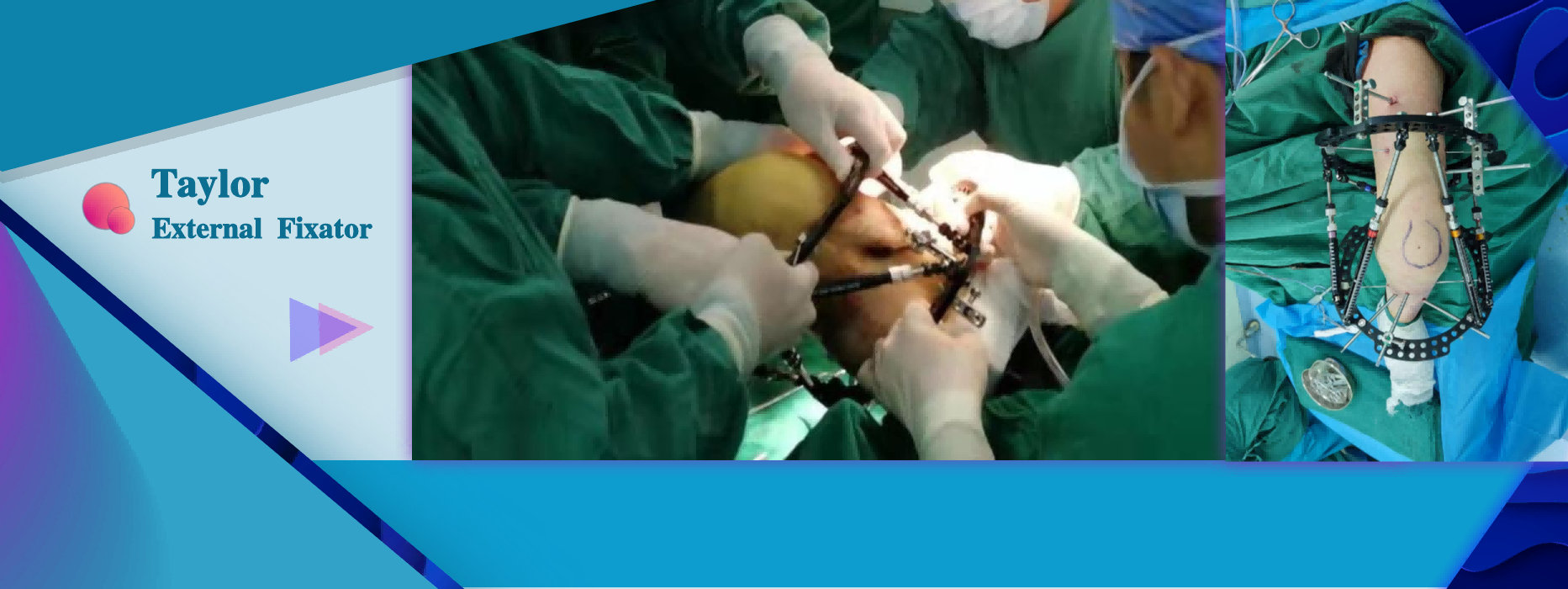
Proven Clinical Success in Complex Deformities
Deployed in over 365+ top-tier orthopedic trauma centers worldwide, CareFix external fixators deliver consistent anatomical union rates exceeding 96.8% in complex deformity correction procedures.
Get a Quote7. Future Trends & Innovations in Spatial External Fixation (2026–2035)
As artificial intelligence, robotic assistance, and smart sensor technology transform surgical orthopedics, the Taylor external fixator field is undergoing rapid evolution. Key emerging trends shaping procurement decision-making include:
1. AI-Assisted Automatic Radiographic Landmark Recognition
Next-generation software platforms integrate deep-learning computer vision models that automatically detect cortical bone margins, anatomical axes, and CORA parameters directly from raw DICOM files, eliminating manual digitizing errors and reducing preoperative planning time from 45 minutes to under 3 minutes.
2. Sensor-Integrated "Smart Struts" for Real-Time Load Monitoring
Miniaturized micro-electromechanical systems (MEMS) load cells embedded inside telescopic struts dynamically measure axial strain, torsional forces, and bone callus rigidity during weight-bearing. Data streamed via micro-Bluetooth to the surgeon’s mobile app provides objective biological feedback indicating precise bone healing timelines and signaling when frame removal is safe.
3. Patient-Specific 3D Printed Custom Composite Rings
Advancements in additive manufacturing enable custom 3D-printed carbon-polyetheretherketone (Carbon-PEEK) rings tailored specifically to an individual patient’s limb contours. This drastically reduces overall frame bulk, eliminates pin-frame collision points, and maximizes patient comfort during prolonged distraction osteogenesis.
4. Automated Motorized Strut Adjusters
Replacing manual strut turning with micro-robotic motorized drive units that execute micro-fractionated adjustments (e.g., 0.01 mm every 15 minutes). Continuous micro-distraction reduces muscle spasm, minimizes pin-tract pain, and enhances endosteal bone callus formation quality.
8. Why Partner with Shanghai CareFix: Manufacturing Strengths & E-E-A-T Profile
Choosing an orthopedic implant manufacturing partner requires rigorous verification of quality management systems, manufacturing infrastructure, regulatory compliance, and supply chain reliability. Shanghai CareFix Medical Instrument Co., Ltd (CareFix®) stands out as a world-class OEM/ODM supplier and trusted exporter.
| CareFix Strategic Advantage | Enterprise Dimension & Fact Sheet | Direct Procurement Benefit |
|---|---|---|
| Manufacturing Infrastructure | Self-owned manufacturing plant in Songjiang Economic & Tech Development Zone, Shanghai; ¥15M registered capital, ¥70M+ total investment. | Stable production capacity, zero facility lease risks, state-of-the-art CNC multi-axis machining centers. |
| International Quality Certification | Certified under ISO 13485:2016 international medical device quality standard with complete material traceability. | Smooth regulatory clearance across LATAM, Middle East, Southeast Asia, and European distribution networks. |
| Proprietary IP & Patents | 30+ national patents, including "Remote Automated Six-Axis Ring Fixator System" and "Six-Axis Ring Frame Measurement System V1.0". | Access to cutting-edge patented technologies with strong competitive insulation against generic market clones. |
| Global Market Presence | Exporting to 32+ countries, serving 365+ top-tier hospitals globally with over 300+ authorized distribution agents. | Proven clinical acceptance by international surgeons; extensive post-market clinical surveillance data. |
| Supply Chain & Lead Time | Integrated raw material sourcing, automated inventory alert systems, and dedicated international shipping logistics. | Short order lead times, safety buffer stock for emergency trauma supplies, reliable fulfillment. |

Direct OEM/ODM Manufacturing Partnerships Available
Whether you require private-label external fixator kits, custom carbon ring dimensions, or specialized surgical instrument sets, CareFix delivers tailored engineering solutions.
Get a Quote9. B2B Procurement Roadmap & Hospital Supply Strategies
Hospital purchasing agents, orthopedic distributor networks, and ministry of health tender committees must navigate complex logistical and financial criteria when procuring spatial ring fixators. CareFix offers a streamlined procurement framework designed to minimize Total Cost of Ownership (TCO) while guaranteeing clinical performance.
Step-by-Step B2B Procurement Roadmap
- Initial Consultation & Needs Assessment: Submit target surgical volume, required ring sizes, strut ratios, and preferred material configurations (carbon fiber vs. aluminum).
- Sample Verification & Biomechanical Evaluation: CareFix provides certified sample units and sterilization tray layouts for hospital evaluation committees and chief orthopedic surgeons.
- Regulatory & Compliance Document Dossier: Full technical documentation provided—including ISO 13485 certificates, biocompatibility test reports (ISO 10993), mechanical static/fatigue test data, and multi-language instruction for use (IFU).
- Customized Tender & Bulk Pricing Schedule: Receive transparent tier-based pricing structure with OEM/private label branding options and flexible payment terms.
- Supply Chain Logistics & Ongoing Technical Support: Express air/sea freight fulfillment with real-time shipment tracking, accompanied by surgical training videos and software user access.