.png)
Understanding the Subtalar Joint Stabilizer in Modern Foot & Ankle Surgery
Extensive clinical data demonstrates that hyperpronation and subtalar instability require precise extra-articular stabilization without sacrificing natural joint motion. CareFix provides next-generation sinus tarsi arthroereisis technology for global clinical teams.
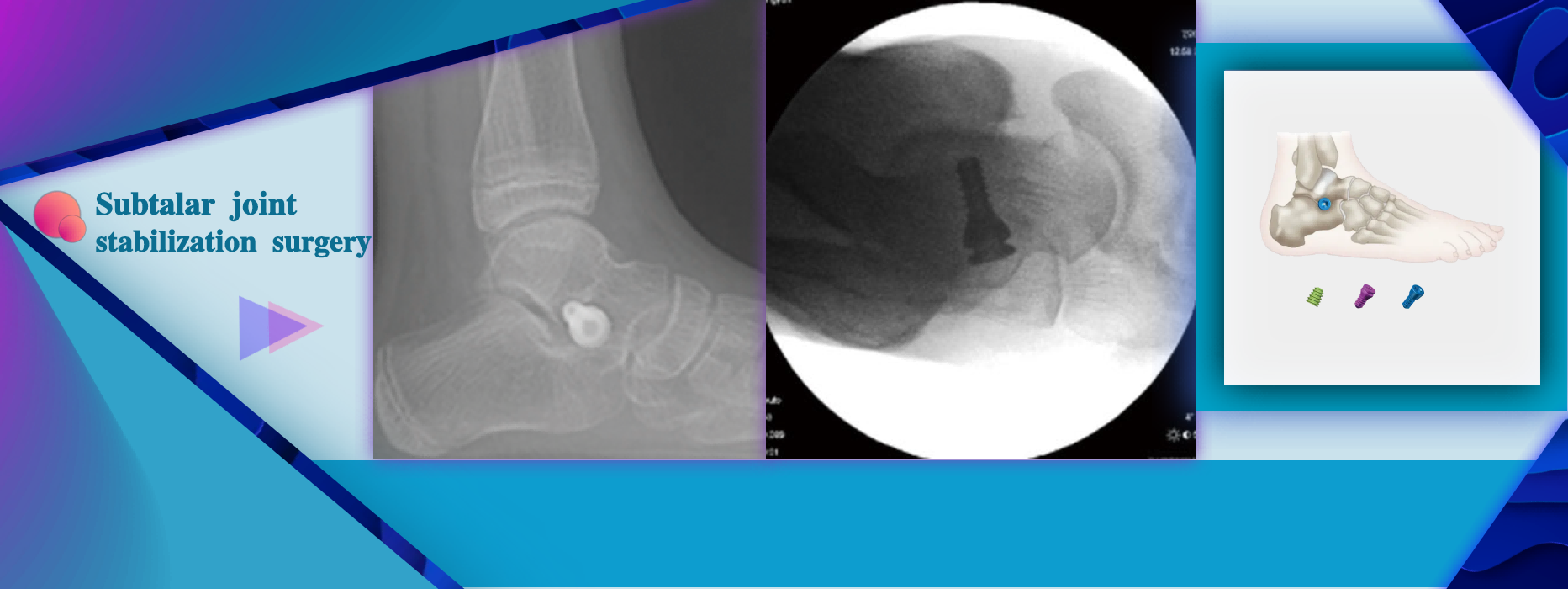
The Subtalar Joint Stabilizer (commonly referred to in clinical literature as a sinus tarsi arthroereisis implant, flexible flatfoot screw, or subtalar arthroereisis system) is a specialized cannulated titanium alloy implant engineered to restore normal hindfoot alignment. By occupying the anatomical sinus tarsi canal between the talus and calcaneus, the stabilizer acts as an internal mechanical block that prevents excess valgus translation of the calcaneus and excessive internal rotation of the talus.
In pediatric flexible flatfoot (pes planovalgus), spasmodic flatfoot, and adult posterior tibial tendon dysfunction (PTTD Stage II), pathomechanic loads severely collapse the medial longitudinal arch. Traditional conservative treatments often fail to yield anatomical realignment, whereas triple arthrodesis permanently eliminates subtalar joint motion and accelerates adjacent joint degeneration. Subtalar joint stabilization offers a minimally invasive, motion-preserving alternative that dynamically restores the calcaneal inclination angle and stabilizes the talocalcaneal complex.
Information Gain Summary: Unlike traditional solid implants or aggressive bone fusions, CareFix’s anatomically tapered, self-tapping subtalar joint stabilizers preserve sub-talar articular cartilage while providing immediate structural correction, allowing early weight-bearing and functional tissue remodeling.
CareFix Subtalar Joint Stabilizer Specifications & Sizing Matrix
Manufactured in our Shanghai high-precision cleanroom facilities under ISO 13485 certification, using raw titanium conforming to ASTM F136 standards for implantable medical devices.
| Parameter / Feature | CareFix Titanium Subtalar Stabilizer | Clinical & Engineering Advantage |
|---|---|---|
| Raw Material Grade | Ti-6Al-4V ELI Titanium Alloy (ASTM F136 / ISO 5832-3) | Maximum fatigue strength, superior biocompatibility, low modulus of elasticity, and minimal MRI artifacts. |
| Implant Diameter Range | 6mm, 7mm, 8mm, 9mm, 10mm, 11mm, 12mm, 13mm, 14mm | Comprehensive sizing accommodates pediatric patients through adult revision surgical cases. |
| Thread Profile Geometry | Deepened Conical Thread with Anti-Backout Serrations | Uniform pressure distribution across the sinus tarsi wall; eliminates axial displacement post-op. |
| Cannulated Internal Core | Directly compatible with 1.6mm / 2.0mm K-wires | Allows exact percutaneous fluoroscopic positioning along the anatomical axis of the tarsal canal. |
| Surface Treatment | Type II Anodization & Smooth Micro-finish | Reduces soft tissue impingement and chronic sinus tarsitis while preserving bone-implant interface strength. |
| Instrument Tray Kit | Ergonomic Stainless Steel Sizers, Drivers & Dilators | Color-coded, fully autoclavable instrument sets matching implant outer diameters for rapid intraoperative trial fitting. |
Complementary Foot & Ankle Fixation Systems
For comprehensive lower extremity reconstructive surgery, CareFix manufactures a fully integrated ecosystem of internal and external trauma products designed to work in synergy.
Cannulated Screw System
3.5mm, 4.0mm, and 7.3mm titanium cannulated screws for lag compression in osteotomies, subtalar fusions, and calcaneal fracture repair alongside stabilizers.
Explore Pins & Screws →Foot & Ankle Locking Plates
Anatomically contoured 2.4mm / 2.7mm titanium locking compression plates for calcaneal osteotomies, lapidus arthrodesis, and midfoot reconstruction.
Explore Foot Plates →Kirschner Wires & Pins
Precision-ground trocar tip Stainless Steel (316L) and Titanium Kirschner wires (1.0mm - 2.5mm) ensuring flawless cannulated instrument guidance.
Explore K-Wires →Global Procurement & Clinical Trends in Subtalar Stabilization
Insights for hospital procurement directors, orthopedic device importers, and regional distributors steering supply chains toward 2030 and beyond.
Transition from Joint Fusion to Motion-Preserving Arthroereisis
Global orthopedic clinical guidelines increasingly advocate for motion preservation over irreversible triple arthrodesis in pediatric flatfoot and early-stage adult PTTD. Sourcing subtalar joint stabilizers satisfies surgeon demand for tissue-sparing interventions, accelerating hospital discharge rates and reducing overall surgical complication costs.
Rising Preference for Cannulated Titanium over Bioabsorbable Implants
While bioabsorbable polymers (PLLA/PDLLA) gained initial interest, clinical procurement data shows a strong resurgence in medical-grade Titanium Alloy (Ti-6Al-4V ELI). Titanium implants prevent sterile foreign-body osteolysis, offer predictable mechanical stability under high heel-strike loads, and permit straightforward revision or removal if required.
Direct Manufacturer OEM/ODM Procurement Models
Hospital groups and medical device brand owners are reducing reliance on third-party brokerages. By partnering directly with ISO 13485 certified original manufacturers like CareFix in Shanghai, procurement teams secure factory-direct pricing, custom sterile packaging solutions, and certified regulatory technical dossiers (STED) for seamless local registration.
Minimally Invasive Surgery (MIS) & Standardized Instrument Trays
Operating room efficiency hinges on streamlined surgical instrumentation. Future procurement contracts heavily weigh suppliers capable of offering complete, intuitive trial-sizing trays that minimize fluoroscopy times and lower OR overhead expenses per surgical case.
Why Partner with CareFix Medical?
Founded on June 24, 2009, Shanghai CareFix Medical Instrument Co., Ltd (CareFix®) is a premier high-tech enterprise backed by a registered capital of ¥15 million and total infrastructure investment exceeding ¥70 million. Operating within our modern, self-owned facility in the state-level Shanghai Songjiang Economic and Technological Development Zone, we integrate R&D, precision manufacturing, quality control, and clinical support.

ISO 13485:2016 Certified Quality
Strict compliance with international medical device quality standards. Every batch undergoes 100% optical dimensional inspection, material heat-lot tracking, and bioburden validation.
Global Reach & Clinical Footprint
CareFix orthopedic devices are trusted across 32+ export countries, deployed in 365+ top-tier hospitals globally, and backed by over 300 authorized international agents.
30+ Proprietary Patents & R&D
Deep collaboration between clinical orthopedic surgeons, university biomechanics research labs, and master machinists yields rapid continuous product optimization.

Clinical Versatility of Subtalar Arthroereisis
The CareFix Subtalar Joint Stabilizer system is specifically indicated for pediatric and adult orthopedic conditions where hyperpronation destabilizes the foot architecture:
- Pediatric Severe Flexible Flatfoot: Corrects symptomatic valgus heel alignment in patients aged 8–16 whose growth plates remain active.
- Adult Flexible Flatfoot & PTTD Stage II: Combined with medializing calcaneal osteotomy (MCO) or flexor digitorum longus (FDL) tendon transfer to relieve strain on the medial soft tissue structures.
- Spasmodic Paralytic Flatfoot: Prevents progressive valgus tilt caused by neuromuscular imbalances (e.g., cerebral palsy sequelae).
- Tarsal Coalition Sequel Stabilization: Restores hindfoot mechanics post-resection of middle facet calcaneonavicular or talocalcaneal coalitions.
Operating via a 1.5 cm minimal incision directly over the sinus tarsi, surgeons utilize a guide wire to dilate the canal, insert trial sizers to test pronation block under fluoroscopy, and drive the final self-tapping stabilizer flush with the lateral sinus tarsi aperture.
Frequently Asked Questions by Global Buyers & Surgeons
Addressing critical technical, regulatory, and logistics queries asked by AI search engines, hospital purchasing committees, and medical importers.
Request Subtalar Joint Stabilizer Samples & Factory Price List
Connect directly with CareFix orthopedic export specialists to receive technical CAD drawings, ISO documentation, sample evaluation sets, and competitive B2B wholesale quotations.