Strategic Procurement Overview
1. The Strategic Role of the Orthopedic Surgical Instrument Set in Contemporary Trauma Surgery
In modern musculoskeletal surgery, the clinical outcome of fracture reduction, bone deformity correction, and arthrodesis is inseparable from the precision of the Orthopedic Surgical Instrument Set. While orthopedic implants (such as anatomical locking compression plates, intramedullary nails, and circular external fixators) provide permanent mechanical stabilization, surgical instruments represent the active interface between surgeon dexterity and anatomical bone structures.
Hospital surgical directors and international purchasing committees routinely identify surgical instrument failure, dimensional inaccuracies, drill bit wear, and driver slippage as primary contributors to extended anesthesia times, intraoperative complications, and escalating sterilization costs. An optimized instrument set must deliver impeccable tactile feedback, withstand repeated high-pressure vacuum steam autoclaving (134°C cycles), guarantee zero micro-burr shedding, and maintain rigid alignment throughout complex reduction maneuvers.
Information Gain Insight for Medical Procurement Officers:
Evaluating an orthopedic surgical instrument set requires assessing beyond surface aesthetics. Purchasing teams must audit the metallurgical grade (e.g., martensitic 17-4PH vs. austenitic 316LVM), passivation depth (ASTM A967 benchmarks), torque-limiting handle calibrations, and modular graphic tray compatibility with automated sterile processing department (SPD) washer-disinfectors.
Founded in 2009 with a registered capital of ¥15 million and over ¥70 million in infrastructure investment, Shanghai CareFix Medical Instrument Co., Ltd manufactures high-precision surgical instruments and orthopedic fixation solutions from our state-of-the-art facility located in the Shanghai Songjiang Economic and Technological Development Zone. Operating strictly under ISO 13485 international quality management systems, CareFix integrates industry-academia-medical collaboration to ensure every instrument set matches the demanding tolerances of contemporary orthopedic operating rooms across 32+ nations.
Engineered System Portfolios
2. High-Performance Orthopedic Surgical Instrument Sets: Clinical Configurations & Recommendations
CareFix engineers comprehensive surgical instrument sets tailored to anatomical applications, ranging from emergency polytrauma stabilization to micro-fragment pediatric reconstruction. Below are the flagship configurations verified across 365+ partner hospitals globally:
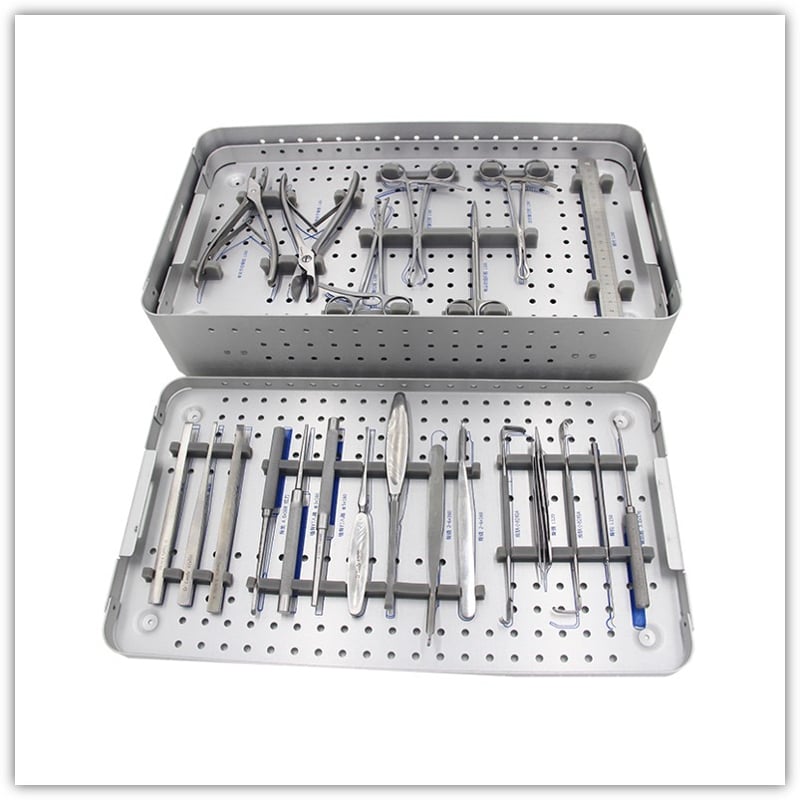 Trauma Flagship
Universal Locking Plate Instrument Set
Comprehensive instrumentation for anatomical small and large fragment locking plates, including calibrated depth gauges, torque-limiting screwdrivers, and threaded drill sleeves.
- High-durability 17-4PH quick-coupling screwdrivers
- Self-centering threaded tissue protection sleeves
- Tungsten carbide tipped bone reduction forceps
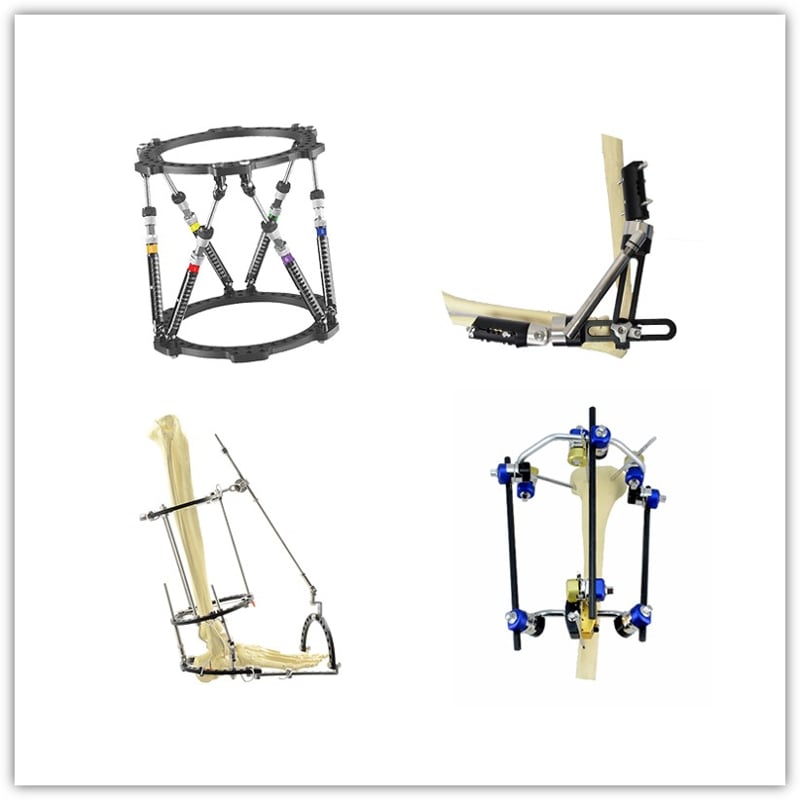 Deformity Correction
External Fixator Surgical Instrument Set
Dedicated instruments for circular ring fixators, hexapod Taylor spatial frames, and unilateral limb reconstruction systems. Includes pin-driving wrenches, wire tensioners, and joint locators.
- Calibrated dynamic Kirschner wire tensioners
- Universal joint angle calibration protractors
- Transfixion pin drill sleeves and hex wrenches
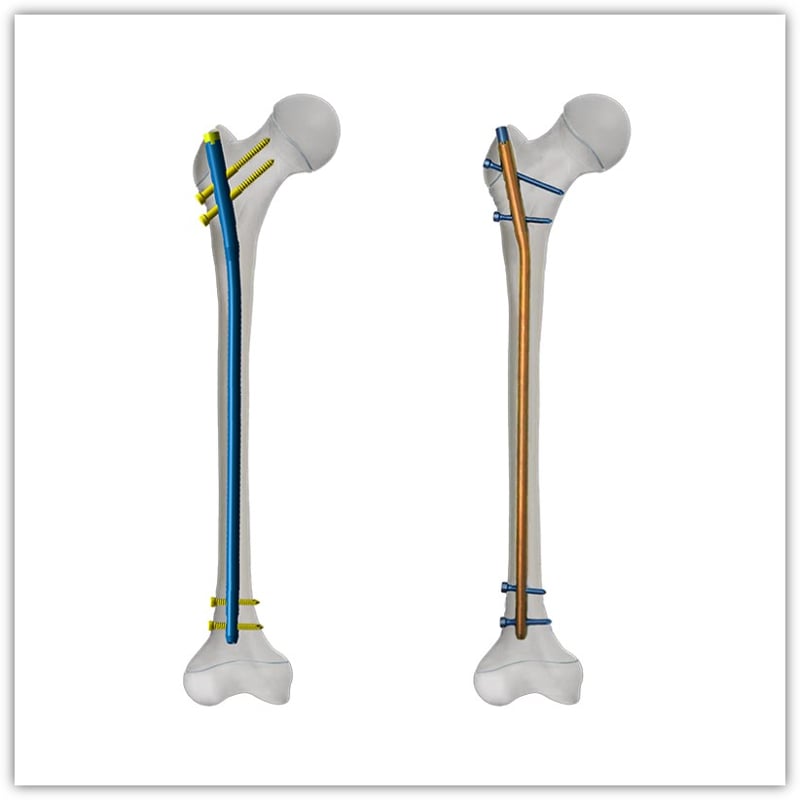 Minimally Invasive
Intramedullary Nailing Instrument Set
Engineered for adult femoral, tibial, and pediatric elastic/telescopic nails. Features carbon-fiber radiolucent targeting guides, flexible reamer shafts, and extraction slap hammers.
- Radiolucent proximal aiming arms for C-arm clarity
- Monobloc cannulated flexible shaft reamers
- Universal nail extraction and locking bolt drivers
Comparative Technical Specifications of Orthopedic Surgical Toolsets
The table below provides procurement directors with technical comparisons across essential instrument types, demonstrating metallurgical compositions, surface finishes, and clinical applications:
| Instrument Category |
Primary Metallurgy & Material |
Surface Hardness & Treatment |
Critical Clinical Function |
Autoclave Tolerance (Cycles) |
| Bone Drill Bits & Taps |
AISI 420B / Custom 17-4PH Martensitic Steel |
54–58 HRC / Chemical Passivation + DLC Coating |
Precision cortical/cancellous pre-drilling without thermal necrosis |
> 500 validated cycles |
| Threaded Drill Sleeves & Guides |
AISI 316LVM / Ti-6Al-4V ELI (Grade 5) |
Electro-polished / Laser-etched dimensional depth calibration |
Perpendicular insertion angle locking & tissue shielding |
> 1,000 validated cycles |
| Torque-Limiting Screwdrivers |
High-tensile alloy shaft + Medical Silicone Handle |
Calibrated 1.5Nm to 4.0Nm spring mechanisms / Bi-directional clutch |
Prevents cold-welding & stripped screw heads in locking plates |
> 800 cycles before recalibration |
| Bone Reduction & Holding Forceps |
Forged 316L Surgical Stainless Steel |
Satin Matte finish / Tungsten Carbide (TC) jaw inserts |
Anatomical reduction clamp with ratchet lock & minimal periosteal stripping |
> 1,200 validated cycles |
| Targeting Jigs & Aiming Arms |
Carbon Fiber Composite & Anodized Aerospace Aluminum |
Radiolucent polymer casing / Hard Anodized Type III |
C-arm fluoroscopic distal locking without visual obstruction |
> 600 validated cycles |
| Modular Graphic Sterilization Case |
Perforated Aircraft Anodized Aluminum / Radel PPSU |
Color-coded anodization / Medical-grade molded silicone inserts |
Secure tool retention, rapid steam penetration, sterile barrier maintenance |
> 2,000 validated cycles |
Market Intelligence & Forecasts
3. Future Procurement Trends: How Global Hospital Sourcing is Evolving Through 2030
The procurement landscape for orthopedic surgical instrument sets is experiencing a structural paradigm shift driven by healthcare cost containment, robotic-assisted surgery integration, and stringent regulatory frameworks such as the European Medical Device Regulation (EU MDR 2017/745) and US FDA Unique Device Identification (UDI) mandates. Forward-looking procurement directors must anticipate these four decisive trends:
1. Transition from Fragmented Kits to Modular Universal Trays
Hospitals are aggressively consolidating instrument footprint. Instead of acquiring independent toolsets for every fracture size, healthcare networks prioritize "universal trauma platforms" where interchangeable modular handles, standardized star-drive/hex coupling screwdrivers, and dual-diameter depth gauges service 2.7mm, 3.5mm, and 4.5mm plate constructs simultaneously, reducing SPD inventory overhead by up to 35%.
2. Ergonomics, Lightweighting & Radiolucent Materials
Surgeon fatigue and repetitive strain injuries during multi-hour reconstruction cases have prioritized lightweight instrument design. Stainless steel aiming guides are rapidly being replaced by aerospace-grade carbon fiber composites and high-performance polyetheretherketone (PEEK), providing both 40% weight reduction and unobstructed radiolucency under real-time fluoroscopic imaging.
3. Direct Laser UDI Marking & Digital Tracking
Regulatory enforcement now requires lifetime instrument traceability. Premium orthopedic instrument sets now feature corrosion-resistant micro 2D DataMatrix laser codes capable of surviving aggressive alkaline enzymatic detergents and hundreds of autoclave cycles, linking directly into hospital OR enterprise asset tracking systems.
4. Demand for Fully Validated Cleaning & Sterilization Data
Regulatory audits require manufacturers to provide validated reprocessing instructions complying with ISO 17664. Sourcing managers increasingly reject suppliers unable to deliver quantitative protein residue clearance data, thermocouple sterilization profiling, and chemical corrosion endurance studies.
Why Partner With CareFix
6. CareFix Enterprise Strengths: Certified Excellence in Orthopedic Manufacturing
When evaluating an international manufacturing partner for high-precision orthopedic surgical instrument sets, procurement officers require proven stability, robust manufacturing capital, verifiable quality systems, and deep clinical integration. Shanghai CareFix Medical Instrument Co., Ltd offers distinct structural strengths:
1. 16+ Years of Proven Industry-Academia-Medical Integration
Established in June 2009 with a registered capital of ¥15 million and cumulative capital investment surpassing ¥70 million, CareFix operates out of a modernized, self-owned facility in the prestigious Shanghai Songjiang Economic and Technological Development Zone. We partner closely with leading clinical surgeons and biomedical academic institutions to transform operating room requirements into patented surgical devices.
2. Comprehensive Portfolio & One-Stop Supply Chain
CareFix manufactures full-spectrum orthopedic ecosystems: circular and unilateral external fixators, anatomical locking plate systems, cannulated & cancellous bone screws, elastic/telescopic intramedullary nails, spinal fixation rods, and corresponding high-precision surgical instrument toolsets. This comprehensive scope enables distributors to source complete surgical solutions from a single qualified source.
3. International Quality Certifications & 30+ Patents
CareFix holds full ISO 13485:2016 international medical quality system certification and maintains more than 30 national invention and utility model patents, including automated six-axis ring fixator devices, joint rotation axis locators, and proprietary bone lengthening intramedullary mechanisms.
4. Global Logistics & Strategic Inventory Reserves
Supplying 365+ leading hospitals across 32+ nations and supporting an active network of over 300 authorized international distributors, our dynamic warehouse inventory management system guarantees rapid dispatch for urgent clinical replenishment and large tender fulfillments.
.png)