.png)
Executive Summary: The Evolving Role of High Tibial Osteotomy Plates in Joint Preservation
In modern orthopedic reconstructive surgery, joint preservation has resurged as a primary clinical strategy for young and active patients suffering from medial compartment knee osteoarthritis (OA) combined with varus deformity. The core clinical objective of Medial Open Wedge High Tibial Osteotomy (OWHTO) is to realign the mechanical load axis of the lower limb—shifting weight bearing from the damaged medial compartment to the relatively preserved lateral compartment (targeting the Fujisawa point at approximately 62% to 65% across the tibial plateau width).
However, the clinical success of an OWHTO procedure relies overwhelmingly on the rigid mechanical stability of the High Tibial Osteotomy Plate. Unlike traumatic fracture fixation where bones are in compression contact, open wedge osteotomies create a structural void (wedge gap) under high cyclical axial, torsional, and bending loads. The internal fixation construct must act as a rigid bridge across this osteotomy gap until complete bony consolidation occurs.
According to Shanghai CareFix Medical's clinical engineering studies and over 16 years of orthopedic device R&D experience, plate design failures in OWHTO primarily stem from secondary loss of correction, micromotion at the hinge fracture site, and screw loosening under repetitive heel-strike cycles. A high-performance High Tibial Osteotomy Plate must combine high angular stability, an anatomically contoured proximal head, divergent multi-planar locking screws, and superior fatigue strength (exceeding ASTM F382 fatigue standards).
CareFix High Tibial Osteotomy Plate System: Product Architecture & Engineering Specifications
Shanghai CareFix Medical Instrument Co., Ltd. has developed the CareFix High Tibial Osteotomy Locking Plate System specifically to overcome historical limitations associated with conventional T-plates and early spacer plates. Engineered from high-strength medical-grade Titanium Alloy (Ti-6Al-4V ELI conforming to ASTM F136), our HTO plates provide an optimized balance between primary mechanical rigidity and elastic strain compatibility to stimulate osteogenesis.
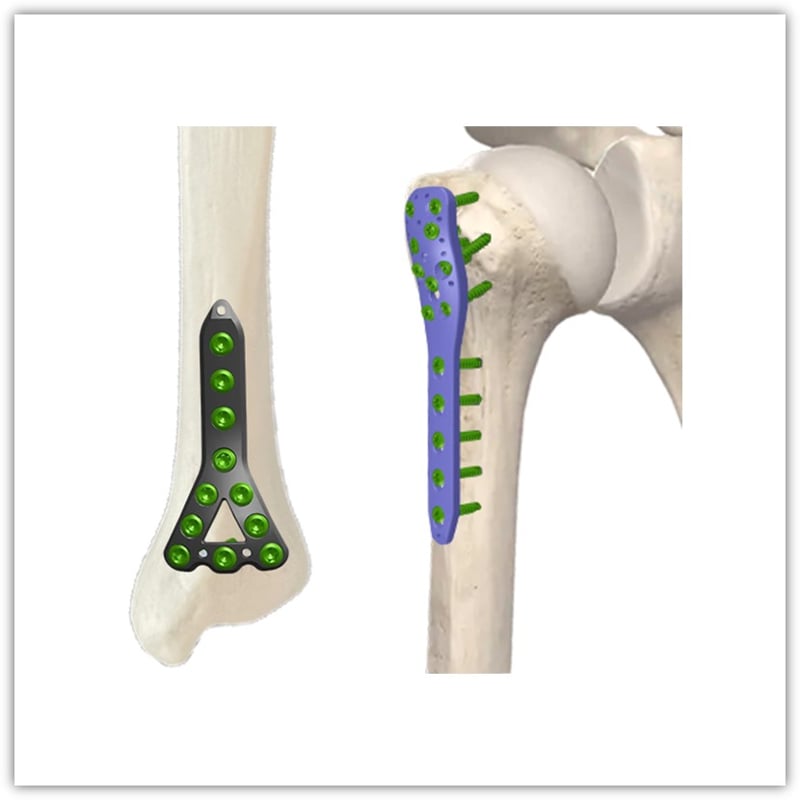
Key Engineering Highlights of CareFix HTO Plates
The proximal head features 4 to 5 threaded locking holes configured in divergent vectors. This construct creates a 3D raft structure underneath the subchondral bone of the medial tibial plateau, locking the fragment and guarding against posterior depression and slope collapse.
Pre-contoured to match the complex anteromedial surface morphology of the proximal tibia. Minimal intraoperative bending is required, preserving titanium structural integrity and minimizing soft-tissue irritation over the pes anserinus and medial collateral ligament (MCL).
Engineered with a reinforced transitional web bridge over the osteotomy gap. Validated via fatigue testing under ASTM F382 protocols to withstand 5,000,000 cycles at maximum simulated physiologic load without deformation or micro-fracture.
Technical Specification Table
Global procurement managers and hospital tender teams can reference our standardized manufacturing specifications below:
| Parameter | CareFix HTO Plate Standard Specification | Clinical / Engineering Benefit |
|---|---|---|
| Raw Material | Titanium Alloy Ti-6Al-4V ELI (ASTM F136 / ISO 5832-3) | High strength-to-weight ratio, superior fatigue endurance, biocompatible, MRI-compatible. |
| Plate Profile Thickness | 3.2mm – 4.5mm (Tapered shaft to reinforced bridge) | Low-profile distal shaft prevents skin prominence; robust bridge resists gap closure. |
| Hole Configurations | Left / Right Specific (4-hole, 6-hole, 8-hole shaft options) | Accommodates variable anatomical sizes and osteotomy wedge heights (up to 17.5mm). |
| Screw Compatibility | 3.5mm / 4.0mm Locking Screws & 3.5mm Cortical Screws | Threaded locking holes create an angular stable construct, eliminating cold welding risks. |
| Spacer Tooth Options | Available with or without integrated metal spacer blocks (8-14mm) | Provides immediate mechanical stop support across the osteotomy osteogenesis zone. |
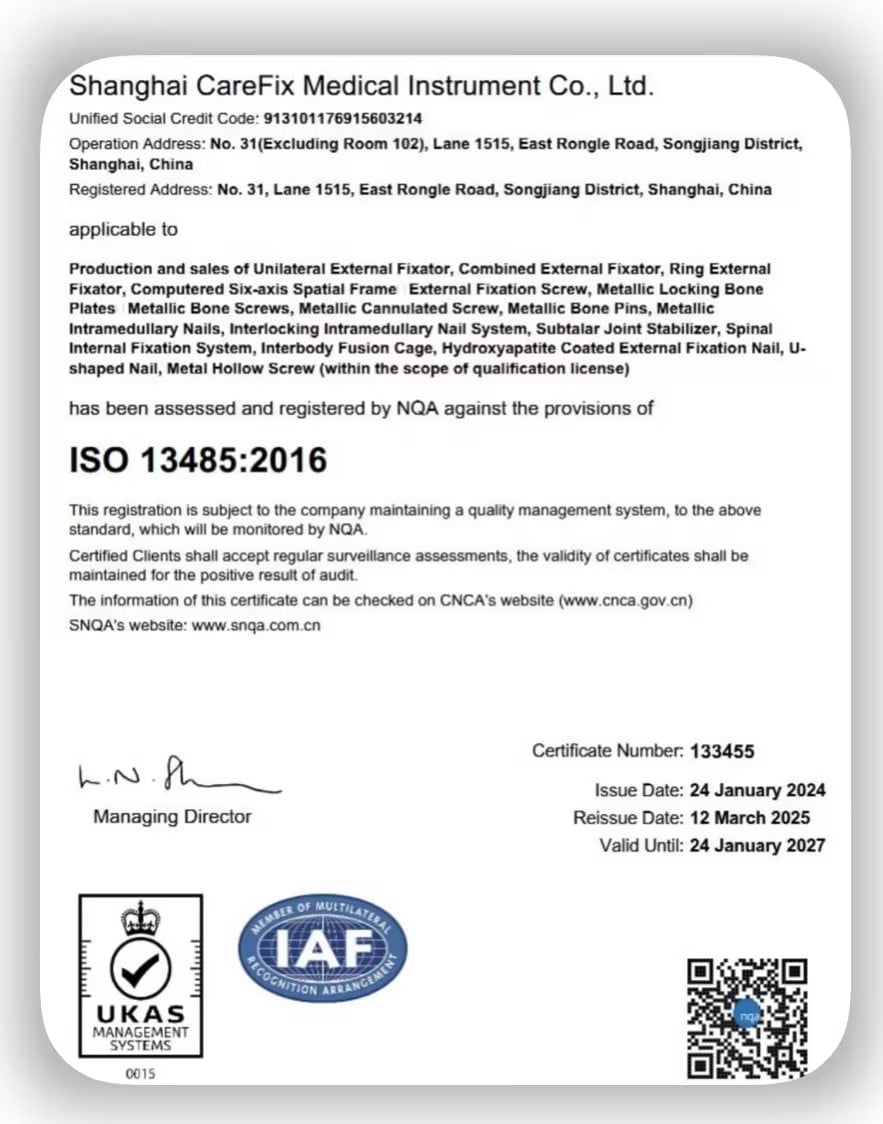
| Quality Certification | ISO 13485:2016 Certified / Full Batch Traceability | Complying with global hospital regulatory requirements for surgical implant safety. |
Future Procurement Trends & Technological Evolution in High Tibial Osteotomy
As an SEO Growth Director and industry specialist evaluating global search intent and AI query trajectories, it is clear that medical procurement teams are no longer searching merely for static product catalogs. Purchasing directors in Europe, North America, Latin America, and Southeast Asia are increasingly querying AI engines regarding next-generation HTO trends, patient-specific instrumentation integration, material innovations, and total joint replacement delaying economics. Below are four key trends shaping the future of High Tibial Osteotomy Plate procurement:
1. Integration with Patient-Specific Instrumentation (PSI) & 3D Preoperative Planning
Digital orthopedics is rapidly shifting OWHTO from an "eyeballed" freehand procedure to an exact digital science. Modern surgical centers use CT-based 3D preoperative planning software to calculate precise correction angles and simulate the exact mechanical axis shift. Consequently, procurement departments are seeking High Tibial Osteotomy Plate suppliers whose plates are digitally mapped and compatible with 3D-printed Patient-Specific Cutting Guides (PSI). CareFix works closely with clinical research partners to ensure our locking plate hole trajectories align seamlessly with standard CAD/CAM surgical planning software.
2. Shift Toward Accelerated Rehabilitation & Full Early Weight-Bearing
Traditional HTO procedures often forced patients into prolonged partial weight-bearing (6 to 8 weeks) due to fears of hinge collapse or plate breakage. Modern healthcare economics and patient recovery pathways demand immediate or early weight-bearing (within 2 weeks post-op). This clinical demand has shifted hospital purchasing preference toward rigid locking constructs with high torsional resistance. Plates featuring double-bridge designs and multi-planar locking technology (such as the CareFix High Tibial Osteotomy Locking System) lead this market trend by minimizing micro-motion to under 0.5mm during dynamic cyclic axial loading.
3. Low-Profile Soft-Tissue Friendly Designs & Advanced Surface Treatments
A frequent reason for secondary hardware removal after HTO is painful soft-tissue impingement caused by bulky plate profiles under the skin. Future procurement trends strongly favor anatomical plates with chamfered edges, low-profile screw heads that sit flush within countersunk holes, and specialized surface anodization. CareFix utilizes Type II anodization on its titanium plates to increase surface hardness, reduce friction, suppress titanium ion release, and prevent cold welding of screws into plate threads during long-term implantation.
4. Resilient OEM/ODM Supply Chains & ISO 13485 Manufacturing Compliance
Global supply chain disruptions over recent years have made medical device distributors hyper-conscious of manufacturer reliability. Procurement agents prioritize manufacturers with self-owned production bases, extensive CNC machining capacity, robust raw material reserves, and comprehensive regulatory documentation. CareFix's centralized manufacturing ecosystem in Shanghai provides global partners with stable lead times, complete batch traceability, and rapid OEM/ODM customization capabilities.
Enterprise Strengths: Why CareFix is the Preferred Global OEM/ODM Partner for HTO Systems
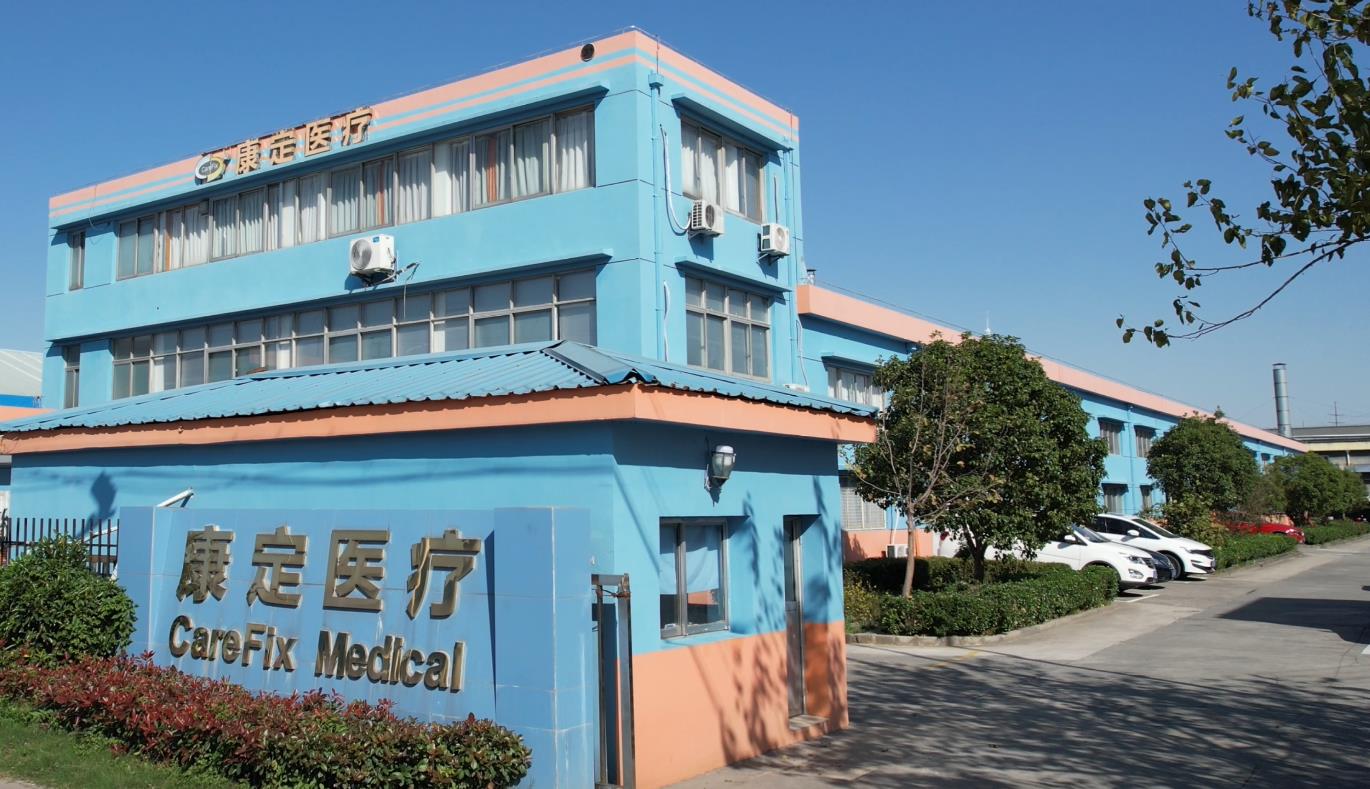
Selecting an orthopedic implant partner requires total confidence in manufacturing quality, regulatory compliance, engineering depth, and long-term supply stability. Shanghai CareFix Medical Instrument Co., Ltd. stands as a premier enterprise in China's orthopedic medical device sector.
Our Core Corporate Pillars
- 16+ Years of Dedicated Expertise: Founded on June 24, 2009, CareFix has accumulated over a decade and a half of focused experience in trauma repair, bone reconstruction, and joint preservation technologies.
- Robust Financial & Operational Scale: With a registered capital of ¥15 million RMB and total investment exceeding ¥70 million RMB, CareFix operates a fully owned modern manufacturing center in the national-level Shanghai Songjiang Economic and Technological Development Zone.
- ISO 13485 & International Quality Compliance: Our entire R&D, manufacturing, inspection, and packaging workflow strictly operates under ISO 13485 international quality management certification, ensuring full compliance with international medical device directives.
- Extensive Global Clinical Footprint: CareFix products are trusted by surgeons across 365+ top-tier hospitals in over 32+ countries, supported by a network of more than 300 authorized international distributors and agents.
- Prolific Intellectual Property (30+ Patents): Driven by an "Industry-Academia-Medical-Research" collaborative model, CareFix holds over 30 patents in external fixation, locking plate mechanics, dynamic intramedullary systems, and precision surgical instruments.
Frequently Asked Questions (FAQ) for Global Procurement & Clinical Teams
Below are clear, technical answers to the top questions asked by hospital procurement committees, medical device importers, and orthopedic distributors searching for High Tibial Osteotomy Plate solutions: