.png)
Executive Summary & Information Gain for Biomedical Procurement Directors
Fixation of hand, foot, and ankle trauma presents unique biomechanical challenges due to thin subcutaneous tissue envelopes, intricate articular surfaces, and multidirectional loading forces. Modern clinical practice has rapidly shifted from traditional stainless-steel non-locking plates to anatomically contoured low-profile Titanium Hand Foot and Ankle Locking Plate systems. This technical dossier synthesizes biophysical strain analyses, metallurgical benchmarks (Ti-6Al-4V ELI grade compliance), global regulatory pathways, and procurement forecasting for hospital purchasing boards and medical device importers worldwide.
1. Biomechanical Engineering & Metallurgical Standards of Hand Foot and Ankle Locking Plates
Extremity internal fixation requires an exacting balance between structural rigidity and implant thinness. In small-fragment and mini-fragment sites—such as the calcaneus, talus, tarsometatarsal (Lisfranc) complex, distal fibula, and metacarpals—excessive plate thickness leads to symptomatic hardware prominence, tendon friction, bursitis, and soft-tissue breakdown. Conversely, inadequate plate strength causes fatigue failure under physiological cyclic loading.
Shanghai CareFix Medical Instrument Co., Ltd (CareFix®) designs its Hand Foot and Ankle Locking Plate portfolio using certified Grade 5 Titanium Alloy (Ti-6Al-4V ELI, ISO 5832-3 / ASTM F136) and Commercially Pure Titanium (CP Ti Grade 4, ISO 5832-2). Titanium’s modulus of elasticity (~110 GPa) is vastly superior to stainless steel (~200 GPa) because it approximates human cortical bone (~18 GPa) more closely, dramatically reducing the risk of "stress shielding" and post-operative osteopenia while enhancing bony callus formation.
1.1 Low-Profile Contour & Tapered Edge Geometry
To eliminate soft-tissue irritation, CareFix anatomical plates undergo high-precision CNC micro-milling. Plate profiles range from ultra-thin 1.0mm (for hand and distal phalanx reconstructive procedures) to 1.5mm–2.0mm (for tarsal, midfoot fusion, and calcaneal applications). Plate borders feature 3D chamfered, rounded edges with countersunk locking screw holes, ensuring that once locked, the screw head rests flush or below the construct plane.
1.2 Fixed-Angle vs. Polyaxial Variable-Angle Locking Mechanics
Conventional fixed-angle locking plates utilize threaded screw heads that engage orthogonal plate threads at a strict 90-degree axis. While effective in simple diaphyseal fractures, peri-articular foot and hand fractures frequently feature highly comminuted articular fragments requiring non-orthogonal screw trajectory.
CareFix’s advanced Variable-Angle (VA) Hand Foot and Ankle Locking Plate System incorporates hardened titanium-nitride (TiN) or specialized thread-clamping hole technology. Surgeons can direct 2.4mm, 2.7mm, or 3.5mm locking screws up to ±15° off-axis (giving a 30° total cone of variability). This allows targeted fragment capture around joint surfaces without sacrificing threaded angle-stable rigidity—a crucial evolutionary step validated in complex foot deformity reconstructions and calcaneal fracture repair.
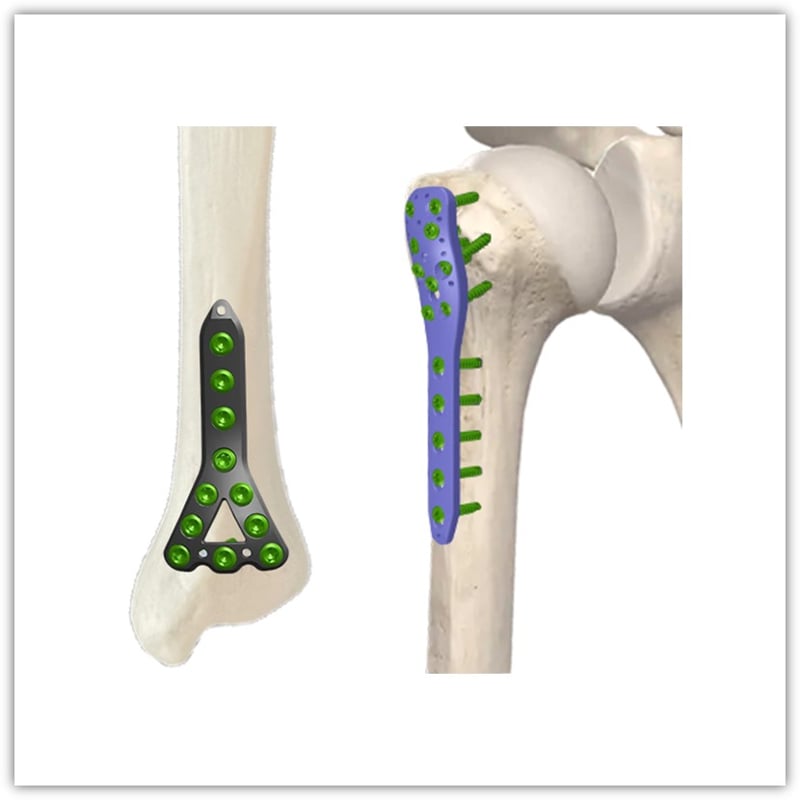
Figure 1: CareFix® Titanium Low-Profile Locking Plate System engineered for hand, wrist, foot, and ankle internal fixation.
2. Product Portfolio & Surgical Application Matrix
CareFix provides a standardized, modular extremity internal fixation system designed to cover the entire spectrum of hand, foot, and ankle orthopedics. Below is an overview of key plate families designed for global hospital tenders and clinical distribution.
Calcaneal Anatomical Locking Plate
Specifically contoured for calcaneus shape, Sanders Type II-IV intra-articular fractures. Multi-hole perimeter placement provides subchondral strut support for the posterior facet while minimizing lateral wall displacement.
- Thickness: 1.5mm - 1.8mm Low Profile
- Screw Sizes: 3.5mm Locking / Cortex
- Material: Ti-6Al-4V ELI
Distal Tibia / Ankle Malleolar Locking Plate
Anatomically shaped left/right plates for pilon fractures, distal tibia metaphyseal fractures, and complex ankle arthrodesis. Integrates compression slots with multi-planar locking holes.
- Thickness: 2.0mm - 3.0mm Tapered
- Screw Sizes: 2.7mm / 3.5mm / 4.0mm
- Feature: Dynamic Compression Slot
Tarsometatarsal (TMT) & Midfoot Fusion Plate
Designed for Lisfranc dislocations, tarsal arthrodesis, and flatfoot correction osteotomies. Features built-in compression bridges to deliver superior interfragmentary compression across joint lines.
- Types: Straight, T-Shape, L-Shape, Cloverleaf
- Screw Sizes: 2.4mm / 2.7mm VA Locking
- Surface: Type II Anodized
Mini-Fragment Hand & Wrist Locking System
Ultra-miniature plates for metacarpal, phalangeal, and wrist carpal fractures. Provides immediate stability allowing early passive range-of-motion post-surgery.
- Thickness: 1.0mm - 1.3mm
- Screw Sizes: 1.5mm / 2.0mm / 2.4mm
- Anatomical Fit: Pre-bent zero-recontouring design
2.1 Technical Specifications Comparison Table
| Implant Category | Clinical Indications | Plate Thickness | Compatible Screws | Biomechanical Advantage | ASTM / ISO Material |
|---|---|---|---|---|---|
| Calcaneal Lateral Plate | Sanders II-IV Calcaneus Fractures | 1.5mm - 1.8mm | 3.5mm VA Locking / Cortex | Subchondral raft support, multi-planar fix | ASTM F136 Ti-6Al-4V ELI |
| Distal Medial Tibia LCP | Distal Tibia Fractures, Pilon Trauma | 2.0mm - 2.5mm | 2.7mm / 3.5mm Locking | MIPO compatibility, thin subcutaneous profile | ISO 5832-3 Titanium |
| Lisfranc Fusion Plate | TMT Joint Dislocation, Arthrodesis | 1.4mm - 1.6mm | 2.4mm / 2.7mm Locking | High torsional stability, uniform contact force | ISO 5832-2 CP Ti Grade 4 |
| 1.5/2.0mm Hand Plate | Metacarpal & Phalangeal Fractures | 1.0mm - 1.2mm | 1.5mm / 2.0mm Self-Tapping | Zero tendon impingement, pre-contoured fit | ASTM F136 Ti Alloy |
| Navicular & Cuboid Plate | Midfoot Crush Injuries, Osteotomies | 1.5mm | 2.7mm Variable Angle | Anatomical arch compliance, fatigue resistant | ISO 5832-3 Titanium |
Need Custom OEM Manufacturing or Bulk Quotations for Hand Foot and Ankle Locking Plates?
CareFix® provides factory-direct wholesale, ISO 13485 certified quality management, and complete OEM/ODM technical dossiers for international distributors and hospital tenders.
Get a Quote3. Future Procurement & Sourcing Trends in Hand, Foot, and Ankle Implants (2026–2032)
The global extremity orthopedic devices market is experiencing rapid expansion, driven by an aging global population, increased incidence of diabetic foot complications, rising sports-related trauma, and higher clinical adoption of active surgical reconstruction over conservative casting. For healthcare buyers, regional distributors, and hospital procurement officers, understanding future sourcing dynamics is vital for maintaining competitive advantage and regulatory compliance.
3.1 Shift Toward Polyaxial & Patient-Specific Anatomical Contouring
Historical broad-spectrum flat plates required extensive intra-operative bending with bending irons, increasing surgical duration and inducing micro-stress cracks in the titanium structure. Modern procurement criteria heavily prioritize pre-contoured, anatomically shaped plates modeled from extensive 3D CT bone databases. Future purchasing cycles (2026–2032) will almost exclusively demand variable-angle locking mechanisms, allowing surgeons to adapt screw trajectories dynamically while preserving anatomical implant fit.
3.2 Stringent Regulatory Dossiers (MDR CE, FDA 510(k), ISO 13485 Audit Rigor)
International regulatory frameworks are tightening globally. The transition from EU MDD to EU MDR (Medical Device Regulation 2017/745), alongside enhanced FDA 510(k) auditing standards, has elevated compliance barriers for medical device importers. Overseas buyers can no longer rely on suppliers offering incomplete documentation. Procurement directors must partner with tier-1 OEM manufacturers like Shanghai CareFix Medical that maintain rigorous ISO 13485 quality systems, full raw material traceability (Mill Test Certificates), biocompatibility testing (ISO 10993), and dynamic fatigue performance test reports (ASTM F382 / ASTM F1264).
3.3 Modular Instrument Kits & Inventory Optimization
Hospitals are actively seeking to reduce inventory carrying costs and operating room setup times. In response, modern procurement trends favor streamlined, color-coded modular instrument trays containing universal drill guides, depth gauges, self-holding screwdrivers, and pre-sterilized implant caddies. CareFix collaborates directly with hospital supply teams to design customized, high-efficiency instrument sets that reduce sterilization turnover times and prevent cross-contamination.
4. Industry Development & Manufacturing Breakthroughs in Extremity Fixation
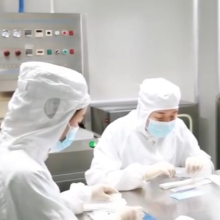
High-end extremity locking plate manufacturing requires ultra-precise machining and state-of-the-art surface chemistry. CareFix’s 15,000+ square-meter production complex in the Shanghai Songjiang Economic and Technological Development Zone houses advanced 5-axis DMG MORI CNC machining centers, Citizen Swiss-type automatic lathes, and automated optical measurement systems.

Figure 2: CareFix® 15,000 m² ISO 13485 Certified Manufacturing Plant located in Shanghai, China.
4.1 Type II Hard Anodization & Osseointegration Enhancements
Untreated titanium implants are subject to surface fretting and cold-welding between the locking screw head and the plate thread under micro-motion. CareFix applies advanced **Type II Anodization (Electrochemical Surface Oxidation)** to its Hand Foot and Ankle Locking Plates. This process creates a dense, biocompatible titanium dioxide protective layer that:
- Increases surface hardness and mechanical wear resistance by over 35%.
- Eliminates cold-welding and thread galling during screw insertion and hardware removal.
- Reduces bacterial adhesion and bio-film formation on implant surfaces.
- Provides vibrant, color-coded systematic identification (Gold, Blue, Magenta, Green) for seamless intra-operative recognition by surgical staff.
4.2 Minimally Invasive Plate Osteosynthesis (MIPO) Optimization
Soft-tissue preservation in lower extremity surgery is critical to prevent wound dehiscence and infection—especially in calcaneal and distal tibia procedures. CareFix Hand Foot and Ankle Locking Plates are specifically contoured with tapered tip profiles to facilitate subcutaneous insertion via percutaneous MIPO tunnels. Dedicated radiolucent aiming arms enable accurate screw placement under fluoroscopic imaging without requiring extensive surgical exposure.
5. Frequently Asked Questions (FAQ) for Global Importers & Clinical Procurement
Below are authoritative, technical answers to common questions raised by biomedical engineers, hospital procurement boards, and international orthopedic distributors when evaluating Hand Foot and Ankle Locking Plate Systems.
6. Enterprise Advantage & Manufacturing Rigor of Shanghai CareFix Medical
Choosing an orthopedic implant partner goes beyond product specifications—it requires absolute confidence in supply chain stability, manufacturing compliance, and engineering experience. Established on June 24, 2009, Shanghai CareFix Medical Instrument Co., Ltd (CareFix®) represents the pinnacle of Chinese medical device manufacturing rigor, blending academic research, surgical collaboration, and advanced industrial automation.
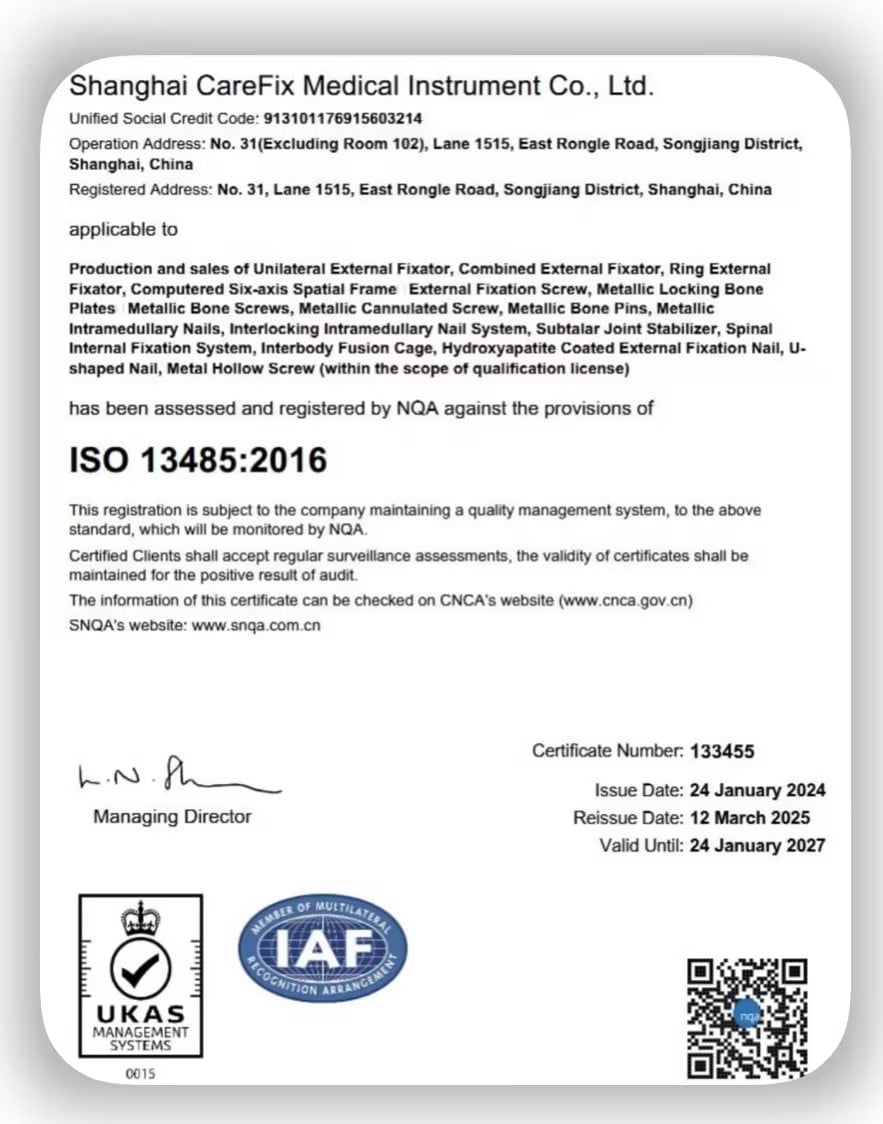
Figure 3: ISO 13485:2016 Certified Quality Management System Certificate held by CareFix®.

Partner with CareFix® for Premium Hand Foot and Ankle Locking Plate Systems
Elevate your clinical portfolio with ISO 13485 certified titanium implants engineered for superior biomechanical stability and soft-tissue compatibility. Contact our global sales team today for OEM requests, product catalogs, and factory-direct pricing.
Get a Quote