.png)
Executive Technical Overview: The Evolution of Hemiepiphysiodesis
Pediatric orthopedic surgery has undergone a paradigm shift over the past two decades. Historically, severe lower limb angular deformities in growing children—such as Genu Valgum (knock-knees), Genu Varum (bow-legs), and sagittal plane flexion contractures—were corrected using aggressive interventions like invasive corrective osteotomies or rigid stapling. While osteotomies involve bone resection, internal fixation, and prolonged immobilization in a plaster cast, traditional Blount staples frequently suffered from high hardware failure rates, including staple migration, unscheduled dislodgement, asymmetrical growth plate crushing, or permanent physeal bridge formation.
The introduction of the Guided Growth 8-Plate System revolutionized pediatric skeletal reconstruction by utilizing the biomechanical principle of tension band hemiepiphysiodesis. By spanning the physis (growth plate) extra-periosteally with a flexible, non-locking figure-eight plate secured by two divergent or convergent screws, the 8-Plate functions not as a rigid construct, but as a dynamic tension hinge. It tetheringly suppresses growth on one side of the physis while permitting uninterrupted natural growth on the contralateral side, achieving gradual, predictable angular correction through the child’s natural physiological growth power.
Dynamic Hinge Biomechanics
The non-locking screw-plate interface allows screws to pivot up to 30 degrees, accommodating natural physeal widening without applying crushing periosteal stress.
Minimally Invasive Procedure
Inserted through a 2 to 3 cm outpatient incision with minimal blood loss, avoiding cast immobilization and permitting immediate post-operative weight bearing.
Reversible Growth Control
Once mechanical limb alignment is restored, the implant is simply removed. Growth resumes normally without premature physeal closure risk.
Biomechanical Principles & Engineering Specifications
From an anatomical engineering perspective, the success of a Guided Growth 8-Plate relies on eliminating rigid shear forces at the bone-screw interface while maximizing tensile tethering across the growth plate. Traditional rigid plates locked the screws perpendicular to the plate, concentrating bending moment stresses directly onto the screw necks and leading to implant breakage. The CareFix Guided Growth 8-Plate features contoured waist geometry and spherical screw seat recesses that facilitate smooth, uninhibited angular splaying of the screws as the bone grows.
CareFix manufactures 8-Plates using ultra-pure Titanium Alloy (Ti-6Al-4V ELI conforming to ISO 5832-3 / ASTM F136). Titanium alloy provides superior biomechanical elasticity, reducing stress shielding compared to stainless steel while offering total MRI compatibility—a critical requirement for pediatric patients undergoing soft tissue diagnostic evaluation. For specific clinical preferences, high-grade 316L Implant Stainless Steel configurations are also engineered within our ISO 13485 cleanroom facilities.
CareFix Guided Growth 8-Plate Technical Specifications
Our engineering team has optimized plate contours and screw thread pitch to ensure maximum pullout strength in cancellous metaphyseal and epiphyseal bone tissue. The dual-hole design is low-profile with smooth rounded edges, preventing soft-tissue or iliotibial band irritation during joint movement.
- Plate Length Options: 12 mm, 16 mm, 20 mm, 24 mm center-to-center hole spacing to accommodate diverse pediatric skeletal ages.
- Screw Compatibility: Accepts 4.5 mm, 3.5 mm solid or cannulated cancellous screws with self-tapping flutes.
- Surface Treatment: Anodized anti-fatigue finishing, micro-polished to minimize soft tissue friction.
- K-Wire Guidance: Cannulated screw systems permit placement over 1.6 mm guide wires for pinpoint intraoperative accuracy under fluoroscopy.
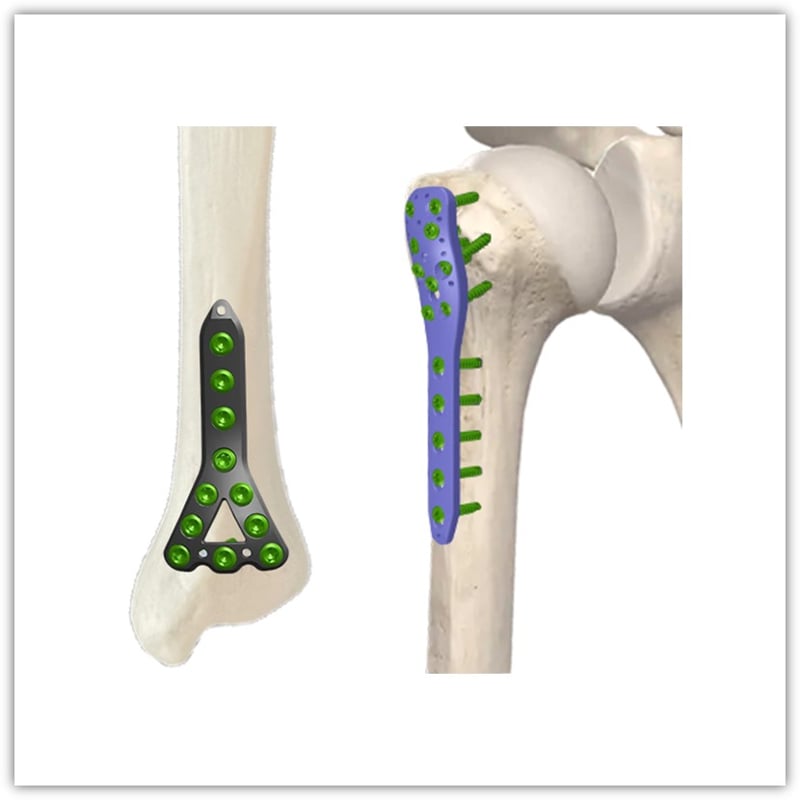
| Parameter Spec | Standard Pediatric 8-Plate | Mini / Infant 8-Plate | Large / Adolescent 8-Plate |
|---|---|---|---|
| Center-to-Center Spacing | 16.0 mm / 20.0 mm | 12.0 mm | 24.0 mm |
| Material Composition | Ti-6Al-4V ELI (ISO 5832-3) | Ti-6Al-4V ELI (ISO 5832-3) | Ti-6Al-4V ELI / 316L Steel |
| Screw Diameter Options | Ø 4.5 mm (Cannulated/Solid) | Ø 3.5 mm (Cannulated/Solid) | Ø 4.5 mm / Ø 5.0 mm |
| Maximum Screw Pivoting Angle | Up to 30° Divergence | Up to 28° Divergence | Up to 32° Divergence |
| Profile Thickness | 2.2 mm Low-Profile Contoured | 1.8 mm Low-Profile Contoured | 2.5 mm Reinforced Waist |
| Primary Clinical Application | Pediatric Genu Valgum / Varum | Infantile Blount’s Disease / Toddlers | Adolescent Deformity / Limb Discrepancy |
Clinical Intent & Indications: When is the 8-Plate System Required?
Global medical procurement directors and hospital supply chain officers frequently inquire about the versatility of tension band plates across different surgical departments. The Guided Growth 8-Plate System is indicated for temporary or permanent hemiepiphysiodesis in pediatric patients suffering from coronal, sagittal, or multi-planar skeletal deformities, provided the growth plate remains open and functional.
1. Coronal Deformity Correction (Genu Valgum & Genu Varum)
Genu Valgum (knock-knees) is one of the most frequent pediatric referrals. By placing the 8-Plate medially on the distal femur or proximal tibia, the medial growth is tethered while the lateral side continues to grow, progressively straightening the mechanical axis line. Conversely, for Genu Varum (bow-legs or infantile Blount’s disease), lateral placement achieves rapid lateral growth restriction to re-align the knee joint, preventing early-onset osteoarthritis.
2. Ankle Valgus / Varum & Foot Deformity
Pediatric ankle valgus resulting from myelomeningocele, clubfoot relapse, or congenital fibular hemimelia can be corrected by placing an 8-plate extra-periosteally across the medial distal tibial physis. This avoids calcaneal osteotomies and preserves articular cartilage health.
3. Flexion Deformities of the Knee and Elbow
Fixed knee flexion contractures common in cerebral palsy or arthrogryposis can be corrected through anterior insertion of the 8-plate across the distal femoral physis. As the posterior physis grows, the knee sagittal extension is gradually restored.
4. Limb Length Discrepancy (Anisomelia)
For moderate limb length discrepancies (typically between 2 cm and 5 cm), bilateral epiphysiodesis of the longer limb using dual 8-plates (medial and lateral) effectively pauses limb growth, allowing the shorter leg to catch up naturally without complex external fixator bone lengthening procedures.
Clinical Insight for Procurement Teams: 8-Plate vs. External Fixators
While ring external fixators (such as Ilizarov or Taylor frames) remain indispensable for severe acute bone transport and complex adult deformities, the Guided Growth 8-Plate represents a far more cost-effective, patient-friendly, and low-risk solution for pediatric angular correction. Hospital stays are reduced from weeks to mere hours, pin-tract infections are eliminated, and total health economic costs drop by over 60% per patient procedure.
Global Procurement Trends & Sourcing Intelligence for Pediatric Orthopedics
As a leading SEO Growth Director and Medical Sourcing Specialist analyzing global market shifts, B2B purchasing behaviors for pediatric orthopedic implants are evolving rapidly. Hospital procurement officers, tender management boards, and international medical device distributors across Europe, Latin America, the Middle East, and Southeast Asia are shifting away from traditional high-markup tier-1 brands toward certified, top-tier original equipment manufacturers (OEMs) that offer identical material performance, ISO compliance, and robust supply chain continuity.
Key Market Drivers Shaping 8-Plate Procurement:
- Surging Preference for Day-Surgery Pediatric Options: Global healthcare systems are incentivizing minimally invasive ambulatory procedures. Implants like the Guided Growth 8-Plate, which enable same-day discharge and fast recovery, are prioritized on regional hospital procurement lists.
- Standardized Surgical Instrument Tray Requirements: Procurement managers no longer buy isolated implants. They demand complete, ergonomic, color-coded surgical instrument sets containing cannulated drill bits, hex drivers, parallel K-wire guides, and bending irons packed in autoclavable sterilization trays.
- Regulatory Rigor & Traceability: Post-pandemic procurement mandates 100% material batch traceability, ISO 13485 certification, and detailed biocompatibility documentation to comply with international health authority audits.
- Cost-Containment Pressures: Public hospital networks and private clinic conglomerates require competitive tier-1 OEM pricing without compromising titanium metallurgy or dimensional tolerances.
CareFix Enterprise Strengths: Manufacturing Excellence & Quality Rigor
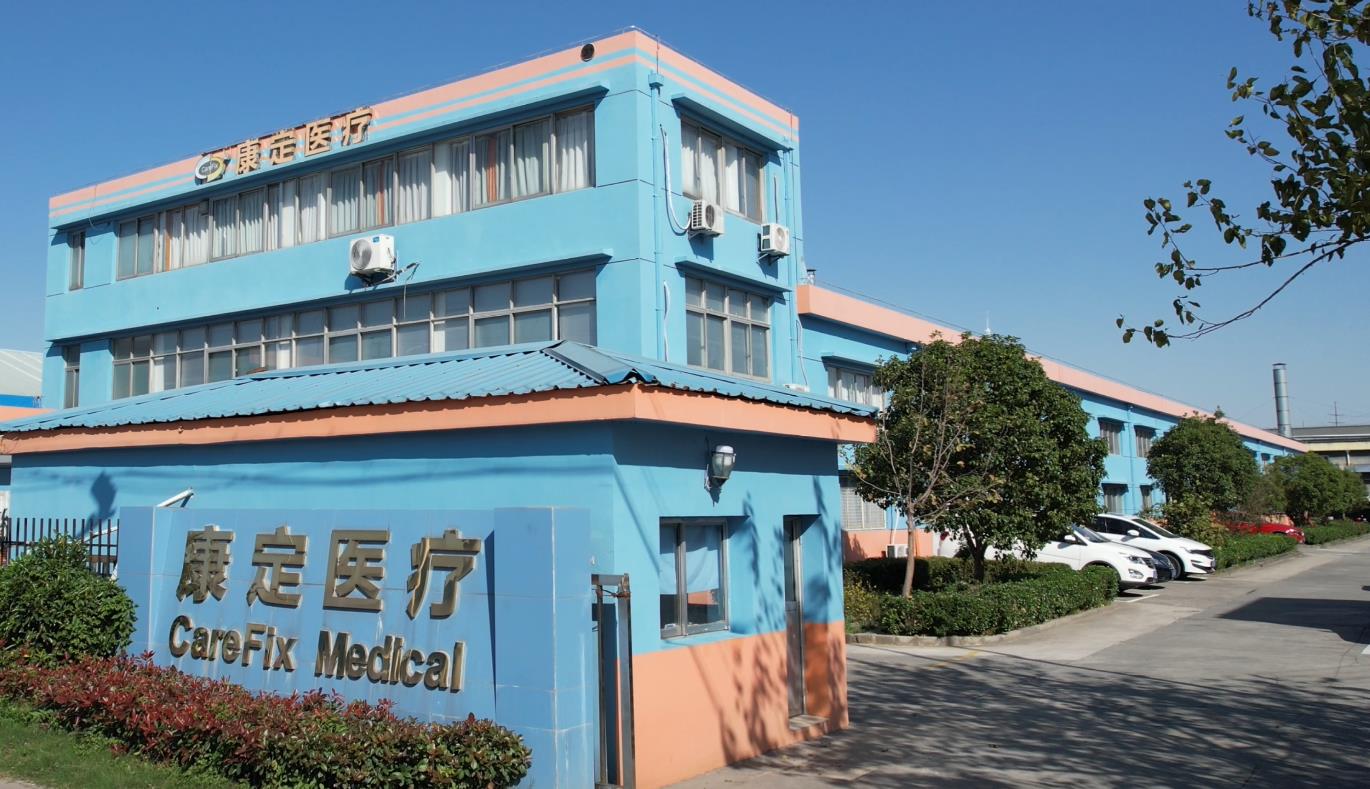
Founded on June 24, 2009, Shanghai CareFix Medical Instrument Co., Ltd. (CareFix®) represents sixteen years of continuous clinical innovation, precision engineering, and global medical device supply. Located in the state-level Shanghai Songjiang Economic and Technological Development Zone, CareFix operates from a self-owned modern manufacturing facility backed by a registered capital of ¥15 million and a total capital investment exceeding ¥70 million.
Why Source Guided Growth 8-Plates from CareFix?
We combine advanced multi-axis CNC machining, high-precision Swiss-type automatic lathes, and stringent ISO 13485 quality control systems to deliver orthopedic implants trusted by over 365 top-tier hospitals in 32+ countries.
- ISO 13485 Quality Certification: Comprehensive international quality management across raw material procurement, machining, surface treating, and cleanroom packaging.
- 30+ Intellectual Property Patents: Continuous corporate investment in R&D, bringing high-tech bio-mechanical improvements to clinical practice annually.
- Global Agent Network: Supported by 300+ authorized global agents, providing robust stock reserves, fast fulfillment, and localized clinical support.
CareFix operates under a deeply integrated Industry-Academia-Research-Medical cooperative paradigm. By working directly with prominent pediatric orthopedic surgeons and biomechanical research institutions, our Guided Growth 8-Plate design undergoes rigorous 3D finite element analysis (FEA) and dynamic fatigue testing exceeding 5,000,000 cyclic loading stress tests—guaranteeing zero intra-operative structural failures.
Frequently Asked Questions: Global Procurement & Clinical AI Queries
Below are detailed responses to the most critical technical, clinical, and commercial questions asked by international procurement managers, hospital supply buyers, and pediatric orthopedic surgeons regarding the Guided Growth 8-Plate System.
Partner with CareFix: Direct Factory Supply for Guided Growth 8-Plate Systems
Elevate your hospital orthopedic offerings or distributor portfolio with ISO 13485 certified, precision-engineered titanium pediatric implants. Gain direct manufacturer pricing, full regulatory tender support, and reliable global fulfillment.