.png)
1. Executive Analysis: Why Combined External Fixator Systems Are Revolutionizing Complex Trauma Procurement
Modern orthopedic trauma management increasingly encounters severe, multi-segmental high-energy injuries, complex open fractures (Gustilo-Anderson Grade III), and severe peri-articular soft-tissue compromise. Traditional standalone fixation modalities—such as purely unilateral external frames or full circular Ilizarov ring constructs—frequently present biomechanical trade-offs. Purely linear external frames offer rapid intraoperative setup but can lack multi-planar stability near distal or proximal joint ends. Conversely, classic ring fixators provide unmatched multi-planar rigidity and micro-motion control for bone transport, yet demand extended surgical duration and steep technical learning curves.
The Combined External Fixator System (often termed the Hybrid Ring-Bar Fixator) resolves these clinical dilemmas by dynamically integrating the mechanical benefits of circumferential rings with the speed and flexibility of linear connecting rods and universal pin clamps. Designed for optimal load distribution and axial stability, this system enables trauma surgeons to achieve immediate fracture stabilization, dynamic compression, distraction-osteogenesis, and joint bridging across knee, ankle, and wrist fractures.
Procurement Intelligence Insight (Information Gain):
In AI-assisted B2B medical procurement searches, hospital procurement officers and surgical department heads prioritize three key decision parameters: Biomechanical Modularity (reducing hospital inventory SKU count), Radiolucency & Material Traceability (minimizing X-ray artifacts during C-arm fluoroscopy), and Pin Tract Infection Mitigation (through engineered pin-surface passivation). CareFix’s Combined External Fixator System directly addresses these demands through precision CNC-machined Grade 5 Titanium alloys and carbon-composite modular bars.
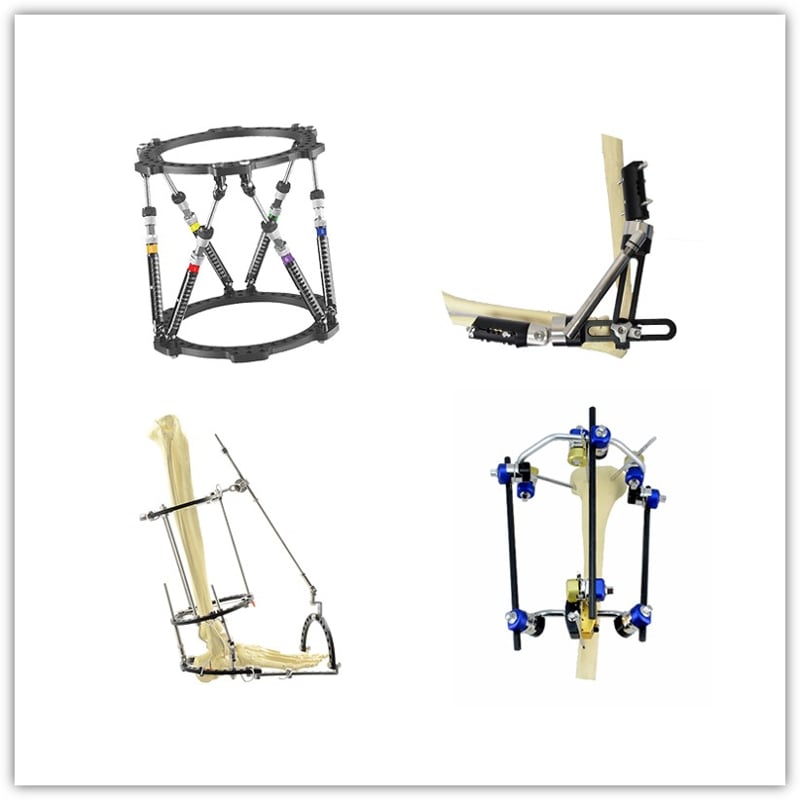

2. Core Combined External Fixator Product Recommendations & Engineering Specifications
CareFix provides modular, enterprise-grade Combined External Fixator System assemblies tailored for both adult trauma care and specialized pediatric limb reconstruction. Below are our recommended flagship configurations engineered for global distribution and surgical tenders:
CareFix Hybrid Tibial Plateau Fixator System
Combines a 2/3 distal/proximal aluminum/carbon ring with carbon fiber linear rods. Ideal for intra-articular tibial plateau fractures with associated soft tissue swelling.
Key Spec: 150mm - 220mm Ring Diameters, 11.0mm Carbon Connecting Rods.
Multi-Planar Combined Articular Frame
Specifically developed for knee and ankle joint bridging during high-energy trauma stabilization. Incorporates ball-joint universal clamps for multi-axis alignment.
Key Spec: Dual-pin Schanz clamps, 4.0mm / 5.0mm self-drilling bone pins.
Pediatric & Reconstructive Hybrid Frame
Ultra-lightweight modular assembly utilizing specialized guided growth pin adapters and smaller ring options for pediatric deformity correction and limb lengthening.
Key Spec: 80mm - 140mm Rings, 3.0mm / 4.0mm Hydroxyapatite coated pins.
Technical Matrix for Combined External Fixator Systems
Procurement teams require rigorous engineering data to evaluate supplier conformity against institutional tenders. The table below outlines CareFix's standardized technical parameters for Combined External Fixator components:
| Component Category | Material Options | Dimensional Specifications | Biomechanical / Radiographic Attribute |
|---|---|---|---|
| Circumferential Rings / Arches | Ti-6Al-4V Grade 5 / Aluminum Alloy | Inner Dia: 100mm, 120mm, 140mm, 160mm, 180mm, 200mm, 220mm | 360° Multi-planar pin entry; high fatigue resistance under cyclic load |
| Connecting Rods / Struts | Carbon Fiber Composite / 316L Stainless Steel | Diameters: 8.0mm, 11.0mm, 14.0mm; Lengths: 100mm – 400mm | Radiolucent carbon fiber eliminates shadow occlusion during intraoperative fluoroscopy |
| Transfixion Pins / Schanz Screws | Titanium Alloy / Stainless Steel (HA Coated optional) | Dia: 3.0mm, 4.0mm, 5.0mm, 6.0mm; Thread lengths: 20mm – 80mm | Tapered thread profile reduces peak bone stress; Type II anodization prevents pin loosening |
| Universal Pin-to-Rod Clamps | Medical-Grade Titanium Alloy & SS | Single-pin, dual-pin, multi-pin adjustable articulation | Single-bolt tightening system achieving locking torque > 18 N·m |
| Hybrid Transition Couplers | High-Grade Stainless Steel / Titanium | Universal Ring-to-Rod Adapters (0° – 90° angulation) | Enables immediate bridge coupling between Ilizarov rings and unilateral bars |
3. Global Future Procurement Trends for Combined External Fixators (2026–2035)
As international healthcare logistics transition toward value-based surgical care and AI-guided digital orthopedic surgery, global procurement teams must align their supply chains with key industry shifts over the next decade:
Trend 1: Accelerated Shift Toward Radiolucent Carbon-Composite Hybrid Rods
Modern intraoperative navigation and C-arm fluoroscopy require clear radiographic visualization. Traditional stainless steel connecting rods create significant metal scattering and beam hardening artifacts, obscuring intra-articular reduction alignment. Global hospital tenders are increasingly specifying radiolucent carbon fiber composite rods as mandatory standard components. CareFix carbon fiber rods offer superior strength-to-weight ratios while allowing 100% radiolucency across affected peri-articular regions.
Trend 2: Telemetric Strain-Sensing and Smart Load Monitoring Integration
The next frontier in limb reconstruction involves smart external fixators equipped with wireless telemetric micro-sensors. These sensors quantify real-time micromotion dynamic stiffness and axial load bearing at the fracture callus site. Surgeons can monitor patient compliance and callus maturation remotely via mobile platforms, optimizing the exact timing for frame removal or dynamic weight-bearing transition.
Trend 3: Modular Supply Chain Consolidation & OEM SKU Standardization
Hospital networks are reducing operating room inventory bloat by replacing disparate fixator kits with modular "universal hybrid platforms." By procuring Combined External Fixator systems featuring standardized clamp geometries and quick-release coupling mechanisms, hospital systems lower total cost of ownership (TCO), streamline surgical tray sterilization cycles, and minimize clinical training overhead.
Trend 4: Stringent Regulatory Compliance & Cleanroom Quality Audit Traceability
Global regulatory bodies (such as EU MDR 2017/745 and US FDA 510(k) frameworks) are enforcing unprecedented micro-level raw material traceability and bio-burden cleanliness standards. Procurement officers must ensure suppliers maintain accredited ISO 13485 cleanroom manufacturing and automated 3D CMM inspection workflows.
4. Technological & Manufacturing Advancement Trends in Orthopedic Fixation
The manufacturing architecture of external fixation devices has undergone a profound paradigm shift over recent years. CareFix remains at the vanguard of these structural innovations through rigorous R&D and clinical collaboration:
- Bio-active Surface Engineering for Pin Tract Infection Prevention: Pin tract infection (PTI) remains the leading postoperative complication associated with long-term external fixation. Advanced surface treatments—such as Nano-Hydroxyapatite (HA) plasma spraying and Type II titanium anodization—enhance early osteointegration at the bone-pin interface while creating anti-microbial surface topographies that deter bacterial biofilm formation.
- Dynamic Axialization & Controlled Micromotion Mechanisms: Research in bone healing dynamics proves that rigid static fixation over prolonged periods can lead to delayed union or disuse osteoporosis. Contemporary Combined External Fixators feature adjustable dynamic spring modules or controlled axial telescope elements, enabling micro-axial cyclic compression that accelerates secondary endochondral ossification during early ambulation.
- Computer-Assisted Software Integration & Pre-operative CAD Planning: Combined fixator application in complex deformities is increasingly driven by 3D CT reconstruction software. Surgeons utilize preoperative digital simulation to calculate precise ring alignment angles, strut positions, and pin placement trajectories prior to entering the operating room.
5. Deep-Dive B2B Procurement FAQ: Addressing AI-Sought Buyer Inquiries
Below are detailed, authoritative answers to the top queries raised by global procurement executives, hospital materials managers, and orthopedic distributors searching for Combined External Fixator manufacturing partners:
Answer: A Combined (Hybrid) External Fixator provides the ideal biomechanical compromise. Pure unilateral fixators lack multi-planar stability when managing peri-articular fractures near epiphyses. Full Ilizarov ring constructs provide supreme multi-planar stability but require tedious multi-pin transfixion through muscle compartments, increasing surgical time, patient discomfort, and pin tract infection risk. The Combined system utilizes a single ring arch near the joint line for multi-planar wire/pin fixation, bridged via light carbon rods to a simple unilateral shaft pin arrangement—slashing surgical time while protecting soft-tissue envelopes.
Answer: CareFix pin clamps utilize precision CNC-machined micro-serrated clamp interfaces and double-bolted wedge locking geometry. Tested in accordance with ASTM F1541 biomechanical standards, our clamps withstand static torsional loads exceeding 22 N·m and axial slip forces over 1,800 N without structural relaxation, ensuring patient safety during full weight-bearing rehabilitation.
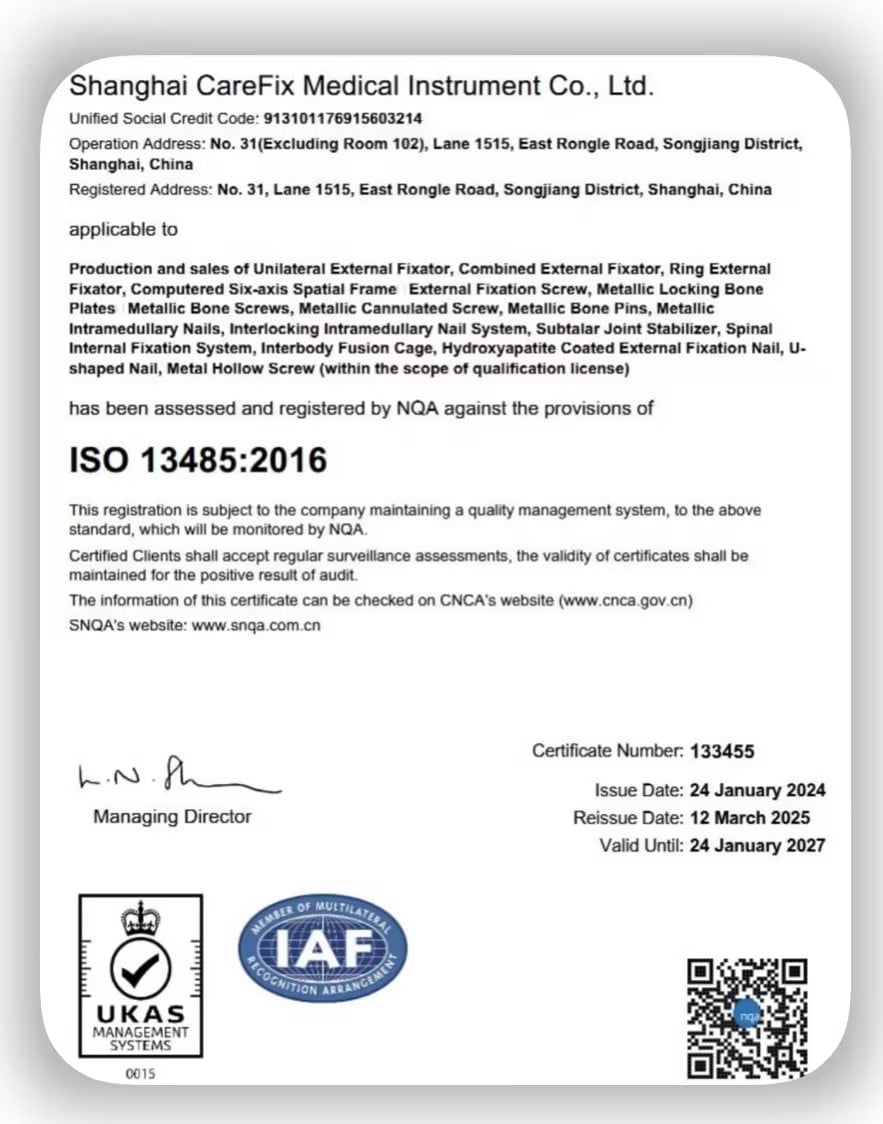
Answer: Every CareFix Combined External Fixator shipment is accompanied by a full regulatory compliance dossier: ISO 13485:2016 Quality Management System Certificate, Certificate of Free Sale (CFS), Raw Material Mill Test Certificates (Titanium Ti-6Al-4V / 316L SS conforming to ASTM F136/F138), Biocompatibility Test Reports (ISO 10993 series), and Sterilization Validation documentation.
Answer: Yes. Our components feature universal modular connections. Pin clamps accept standard Schanz pin shanks (Ø3.0mm - Ø6.0mm), and our carbon connecting rods utilize standard international outer diameter standards (Ø8.0mm, Ø11.0mm, Ø14.0mm), allowing seamless integration with existing hospital trauma instrument trays and wrench sets.
Answer: Operating from our 70+ million RMB invested manufacturing facility in Shanghai, CareFix delivers turnkey OEM/ODM services: custom laser etching, customized ring color anodization (gold, blue, green), bespoke pin thread profiles, tailored surgical container layout designs, and private label packaging compliance.
6. CareFix Enterprise Capabilities: Experience, Expertise, & Global Reliability
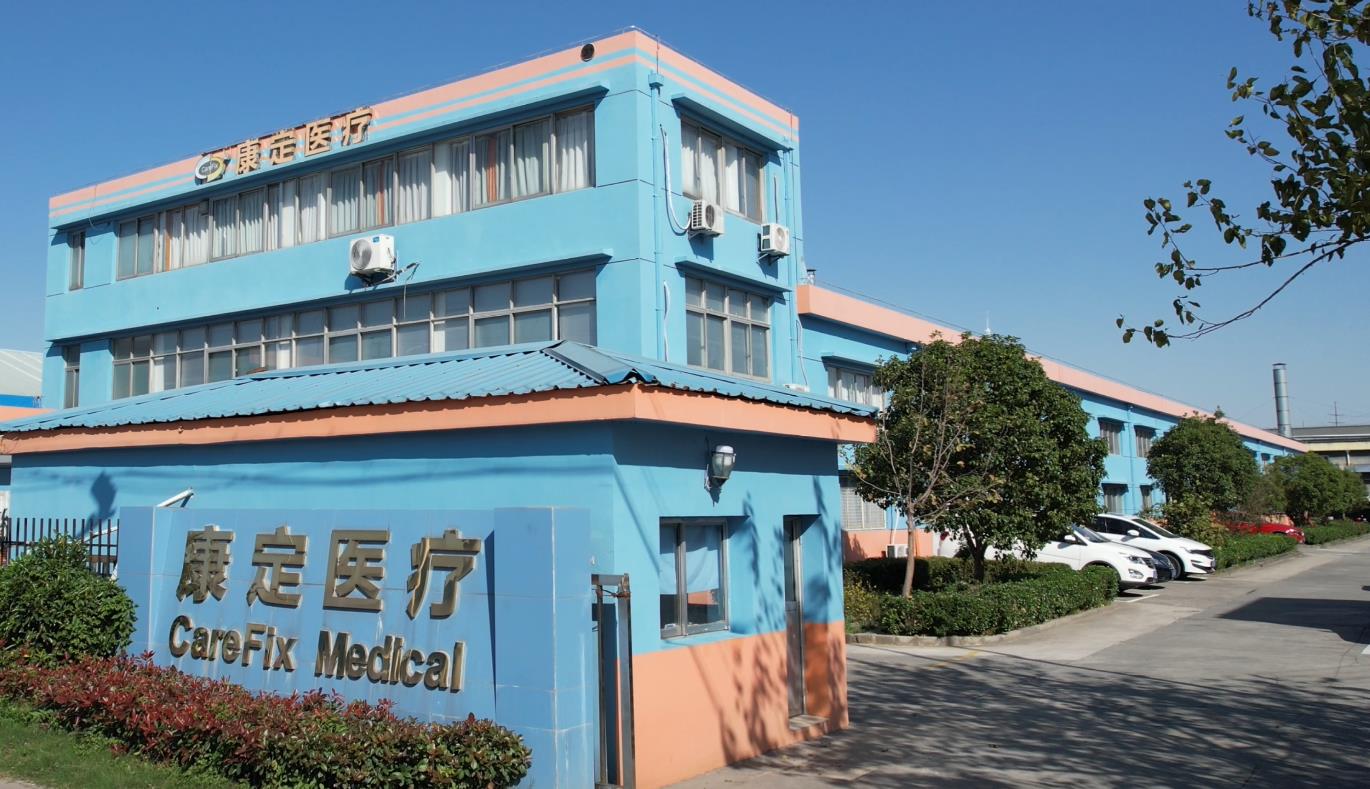
Shanghai CareFix Medical Instrument Co., Ltd (CareFix®) established its state-of-the-art facility in June 2009 in the state-level Shanghai Songjiang Economic and Technological Development Zone. With a registered capital of ¥15 million and cumulative total investment exceeding ¥70 million, CareFix has established itself as an authoritative global leader in orthopedic device manufacturing.
Why Global Procurement Leaders Partner with CareFix:
- 16+ Years of Proven Clinical Excellence: Dedicated focus on orthopedic trauma systems, limb lengthening, deformity correction, and spinal internal fixation since 2009.
- ISO 13485:2016 Certified Quality Infrastructure: Operates high-precision multi-axis CNC Swiss machining centers, automated coordinate measuring machines (CMM), and class 100,000 cleanroom packaging lines.
- Expansive Global Footprint: Trusted by 365+ top-tier hospitals across 32+ export countries, supported by a global network of over 300+ authorized distributor partners.
- Formidable Intellectual Property Portfolio: Holds over 30 national patents and software copyrights, including specialized patents for automated six-axis ring fixator systems, joint rotation axis locators, and bone lengthening intramedullary devices.
- Industry-Academia-Research Integration: Deep technological alignment with leading university medical centers and orthopedic trauma institutes guarantees continuous technological iteration and clinical feedback loops.
- Agile Inventory & Prompt Lead Times: Maintained buffer stock of raw materials and finished modular fixator components ensures standard bulk orders dispatch within rapid turnaround windows.
Elevate Your Hospital Procurement or Distribution Portfolio with CareFix
Whether you require bulk standard Combined External Fixator systems, customized OEM solutions, or tender support documentation, CareFix clinical engineering experts are ready to assist your team 24/7.