Global B2B Procurement & Engineering Guide to Cannulated Screw Systems
Comprehensive clinical technical analysis, material specifications (Ti-6Al-4V ELI & 316L Stainless Steel), biomechanical evaluation, future market procurement trends, and direct OEM manufacturing solutions from Shanghai CareFix Medical Instrument Co., Ltd.
1. Executive Overview & Fundamental Biomechanics of Cannulated Screws
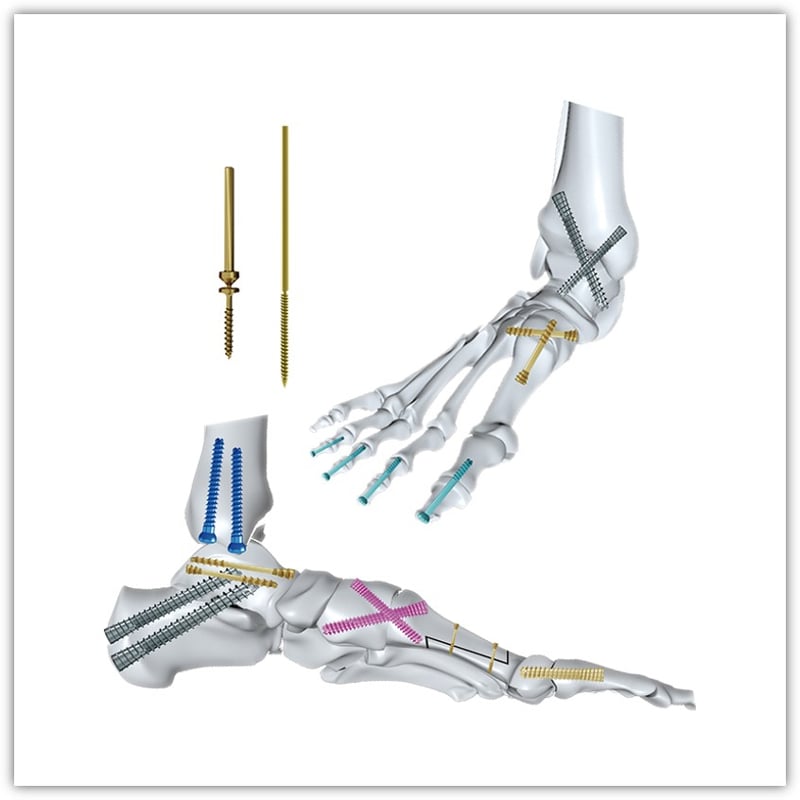
In modern orthopedic trauma surgery and reconstructive osteosynthesis, the cannulated screw represents one of the most critical structural innovations of the past half-century. Engineered with a continuous longitudinal internal lumen along its central axis, the cannulated screw enables orthopedic surgeons to achieve precise percutaneous or minimally invasive placement over a pre-placed guide wire (Kirschner wire / K-wire) under intraoperative C-arm fluoroscopy. This hollow design eliminates the necessity for extensive soft-tissue dissection, dramatically reduces periosteal disruption, minimizes patient blood loss, and significantly lowers intraoperative infection risks while preserving the local biological healing environment.
From a structural engineering perspective, the performance of a cannulated screw depends on maintaining an optimal ratio between the outer thread diameter ($D_o$), inner core diameter ($D_i$), and internal cannulation diameter ($D_c$). Because introducing an axial lumen removes material from the solid core, the polar moment of inertia ($J$) and torsional rigidity ($G \cdot J$) of a hollow shaft are intrinsically lower than those of a solid screw of identical outer diameter. To counteract this biomechanical trade-off without increasing the overall profile, high-precision manufacturers like CareFix Medical employ advanced CNC Swiss turning techniques and medical-grade Ti-6Al-4V ELI (ASTM F136) titanium alloy or 316L Stainless Steel (ASTM F138). These materials provide high ultimate tensile strength ($\ge 860\text{ MPa}$ for Grade 5 Titanium) and superior fatigue endurance, ensuring that interfragmentary compression forces of $200\text{ N}$ to over $1,200\text{ N}$ can be sustained across complex fracture gaps without permanent deformation or screw shear failure.
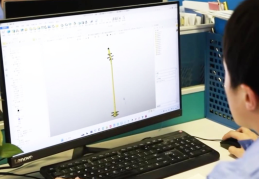
CareFix guarantees a strict cannulation wall concentricity tolerance within ±0.02mm along the entire shaft length. This ultra-tight dimensional accuracy prevents eccentricity during high-speed insertion, eliminating local stress concentrations that could cause guide wire bind-up, K-wire shearing, or intraoperative core splitting.
To assist global hospital procurement committees, biomedical engineering departments, and medical device distributors in selecting the correct implant configurations, the standardized engineering specifications for CareFix Cannulated Screw Systems are summarized below:
2. Product Portfolio Recommendations for International Healthcare Procurement
Selecting the ideal cannulated screw variant requires balancing clinical biomechanical demands against hospital inventory standardization. Below are CareFix’s featured product configurations recommended for trauma centers, pediatric orthopedic facilities, and joint reconstruction surgeons worldwide:
Heavy Trauma & Femoral Fixation
6.5mm & 7.3mm Large Cannulated Screw System
Engineered for maximum interfragmentary compression in intracapsular femoral neck fractures and sacroiliac joint disruptions. Features low-profile hemispherical screw heads to minimize trochanteric soft tissue impingement, self-tapping cutting flutes, and variable thread lengths (16mm and 32mm).
Optimized for articular surface stabilization, medial malleolar fractures, and calcaneal trauma osteosynthesis. Incorporates deep buttress thread profiles to maximize pullout strength in cancellous bone structures while maintaining low insertion torque.
Designed specifically for scaphoid fractures, osteochondral lesions, and intra-articular small bone fixation. The differential pitch between proximal and distal threads draws bone fragments together automatically upon screw drive completion, burying completely below articular cartilage surfaces.
3. Global B2B Procurement Trends in Orthopedic Fixation Screws (2026-2030)
As global healthcare expenditure faces mounting budget constraints alongside rigorous regulatory scrutinies, hospital procurement directors and regional distributors are shifting their purchasing strategies. AI-driven purchasing systems and real-world clinical outcomes analysis reveal four major procurement trends shaping the cannulated screw market over the next decade:
Pre-Sterilized Single-Use Kit Adoption
Hospitals are transitioning away from reusable bulk implant trays to pre-packaged, pre-sterilized single-use procedure kits. This eliminates reprocessing costs, eliminates hospital-acquired cross-contamination risks, and simplifies UDI compliance.
Preference for Ultra-Clean Ti-6Al-4V ELI
Procurement teams are prioritizing Extra Low Interstitial (ELI) Titanium alloys over traditional stainless steel due to superior MRI compatibility, zero nickel-allergy risks, lower modulus of elasticity (reducing stress shielding), and higher long-term biocompatibility.
Direct Manufacturer Supply Chain Reshoring
Distributors are disintermediating middle-tier brokerage firms to partner directly with source-manufacturing enterprises like CareFix. Direct sourcing guarantees origin-certified raw materials, reliable inventory reserves, and direct engineering customization support.
4. Technological & Clinical Innovation Trends in Cannulated Screw Design
The field of orthopedic internal fixation is evolving rapidly from purely passive structural hardware toward bio-interactive, smart, and robot-guided implant systems. Medical device R&D centers are currently driving breakthrough developments in the following key areas:
A. Type II Anodization & Antibacterial Nano-Surface Coatings
To prevent surgical site infections (SSI) and implant-associated biofilms, advanced chemical surface treatments such as Electrochemical Anodization (Type II per AMS 2488) are becoming standard. Type II anodization hardens the surface titanium oxide layer, dramatically decreases coefficient of friction during screw insertion, increases fatigue life by up to 20%, and prevents metal ion leaching into adjacent osseous tissues.
B. Additive Manufacturing (3D Printing) & Porous Thread Geometry
Next-generation cannulated screws are leveraging Selective Laser Melting (SLM) 3D printing to create integrated porous lattice structures along the non-load-bearing shaft sections. These biomimetic pore networks (300µm - 500µm) promote vascularization and osteoblast ingrowth, facilitating true biological bone-to-implant integration for compromised osteoporotic patient populations.
C. Surgical Robotics & Navigation-Assisted Cannulation Protocols
With the global expansion of robotic spine and trauma surgical platforms, cannulated screw cannulation cores are being manufactured to hyper-exact concentricity tolerances. This ensures seamless alignment with optical tracking arrays and computerized stereotactic drill guides, reducing intraoperative radiation exposure for surgical teams while guaranteeing sub-millimeter screw trajectory accuracy.
5. Why Leading Global Distributors Partner with CareFix Medical
Founded in 2009, Shanghai CareFix Medical Instrument Co., Ltd (CareFix®) has established itself over 16+ years as a premier OEM/ODM manufacturer and global exporter of high-precision orthopedic trauma implants. Located in the state-level Shanghai Songjiang Economic and Technological Development Zone, our state-of-the-art facility integrates advanced manufacturing, clinical research, and strict quality assurance.
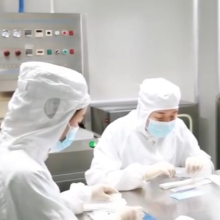
CareFix operates under a validated ISO 13485:2016 International Medical Device Quality Management System, utilizing multi-axis CNC Swiss automatic lathes (Star, Citizen) and high-precision EDM cannulation drilling machines. Our core corporate strengths include:
Proven Clinical Track Record: CareFix implants are trusted by more than 365+ top-tier hospitals worldwide and supported by over 300+ authorized global distribution agents across 32+ countries.
Robust Intellectual Property: Driven by continuous research and clinical collaboration, CareFix holds 30+ national and international patents in orthopedic fixation systems and smart instrument design.
Complete OEM/ODM Customization Capabilities: From laser marking, specialized anodization color coding, and custom thread pitch profiles to cleanroom sterile blister packaging, CareFix provides end-to-end private label production tailored to your market's regulatory demands.
Rigorous Lot-by-Lot Quality Verification: Every batch of cannulated screws undergoes 100% optical dimensional inspection, laser micrometer concentricity verification, and mechanical testing per ASTM F543 standards (Torsional Yield, Breakage Torque, Axial Pullout).
Below are authoritative technical and commercial answers to the most frequently asked questions submitted by international medical device buyers, hospital tender boards, and distribution partners:
Q1: How does CareFix guarantee guide wire clearance and prevent intraoperative jamming inside the cannulation channel?
+
CareFix maintains a precision-calibrated clearance gap of precisely 0.15mm to 0.20mm between the inner cannulation wall ($D_c$) and the recommended Kirschner wire outer diameter ($D_w$). Furthermore, all inner cannulated bores undergo high-pressure electrochemical flushing and ultrasonic de-burring to remove residual titanium micro-shavings, ensuring smooth, friction-free movement over the guide pin without risk of intraoperative mechanical jamming.
Q2: What is the primary clinical difference between using partially threaded and fully threaded cannulated screws?
+
Partially threaded cannulated screws are specifically designed for lag-screw compression. As the threads engage only the distal bone fragment while the smooth shank glides through the proximal fragment, tightening the screw head against the outer cortex generates high interfragmentary compression forces across the fracture line. Fully threaded cannulated screws are utilized primarily for structural stabilization, fracture neutralization, or bridging osteopenic bone where interfragmentary compression is either unnecessary or contraindicated (e.g., preventing collapse in comminuted metaphyseal fractures).
Q3: What material standards and raw material certifications are supplied with each export shipment?
+
All raw titanium bars and stainless steel rods used by CareFix are sourced exclusively from certified medical-grade titanium suppliers complying with ASTM F136 / ISO 5832-3 (Ti-6Al-4V ELI) and ASTM F138 / ISO 5832-1 (316L Stainless Steel). Every shipment is accompanied by complete Material Test Reports (MTR), heat lot chemical analysis certificates, mechanical yield testing sheets, and ISO 13485 conformity documentation required for local health authority customs clearance.
Q4: Can CareFix manufacture headless compression cannulated screws with custom dual-thread ratios for OEM partners?
+
Yes. CareFix provides full OEM contract manufacturing capabilities. Our engineering department can customize proximal and distal thread pitch differentials, variable lead angles, overall lengths (from 10mm micro-screws up to 130mm heavy trauma screws), cannulation diameters, and custom color anodization schemes (e.g., gold, blue, green, pink) to match your brand's unique surgical technique protocols.
Q5: What are the Minimum Order Quantities (MOQ) and production lead times for standard vs customized cannulated screws?
+
For standard CareFix branded catalog items in titanium or stainless steel, we maintain strategic inventory reserves allowing dispatch within 5 to 7 business days. For OEM/ODM private-label orders, our standard MOQ starts at 100 pieces per size specification, with typical production lead times ranging from 3 to 4 weeks, depending on surface anodization, custom marking, and sterile packaging requirements.
Q6: What mechanical testing standards are applied during batch quality audits at CareFix?
+
CareFix performs mandatory batch testing according to ASTM F543 (Standard Specification and Test Methods for Metallic Medical Bone Screws). Our quality control protocol measures Torsional Yield Strength, Maximum Torque to Failure, Drive Torque Insertion/Removal Forces, and Axial Pull-out Strength in standardized synthetic bone foam (ASTM F1839). Test reports are permanently archived for full product lifecycle traceability.
Q7: How can international buyers initiate a sample evaluation or tender quotation with CareFix?
+
Procurement managers and authorized distributors can click our direct instant inquiry button Get a Quote to connect immediately with a senior product specialist. You can also submit formal RFP/tender documentation directly to our international export department at [email protected] for a formal commercial quotation within 24 hours.
Partner with a Trusted ISO 13485 Cannulated Screw Manufacturer
Expand your orthopedic product portfolio with CareFix high-precision titanium and stainless steel cannulated screw systems. Contact our clinical engineering team today for factory-direct quotes, sample kits, and OEM manufacturing agreements.
.png)