Stay updated with surgical technique guides, clinical case analyses, and orthopedic fixation advancements.
Integrating clinical research and practical surgical strategies for trauma repair and bone reconstruction.
From external fixators to spinal internal fixation systems — trusted by 365+ hospitals in 32+ countries.
Choosing a supplier for a Pediatric Interlocking Intramedullary Nail involves more than comparing product names. Pediatric bones vary in size and shape, and treatment decisions depend on the fracture, the child’s development, and the clinician’s assessment. Small details matter. Nail diameter, length options, locking features, and compatible instruments can all affect whether a system suits a particular case.
This guide introduces ten suppliers associated with pediatric interlocking nail systems and offers a practical framework for comparing them. It considers product range, technical documentation, quality controls, regional availability, and support for clinicians. These factors are useful starting points, not proof that one supplier is best for every hospital or patient. Buyers should verify current specifications, regulatory status, and service terms directly with each manufacturer or authorized distributor. Clinical teams should also assess whether a device fits their established protocols and the needs of the child. A catalogue can look complete on screen, yet a missing size or delayed instrument set may matter in practice.
No ranking can replace careful review. Supplier information changes, and public materials may not answer every question. That limitation deserves attention. The comparisons ahead are intended to help readers ask clearer questions, check claims against reliable documentation, and identify systems for further evaluation—not to provide medical advice or a universal purchasing recommendation.
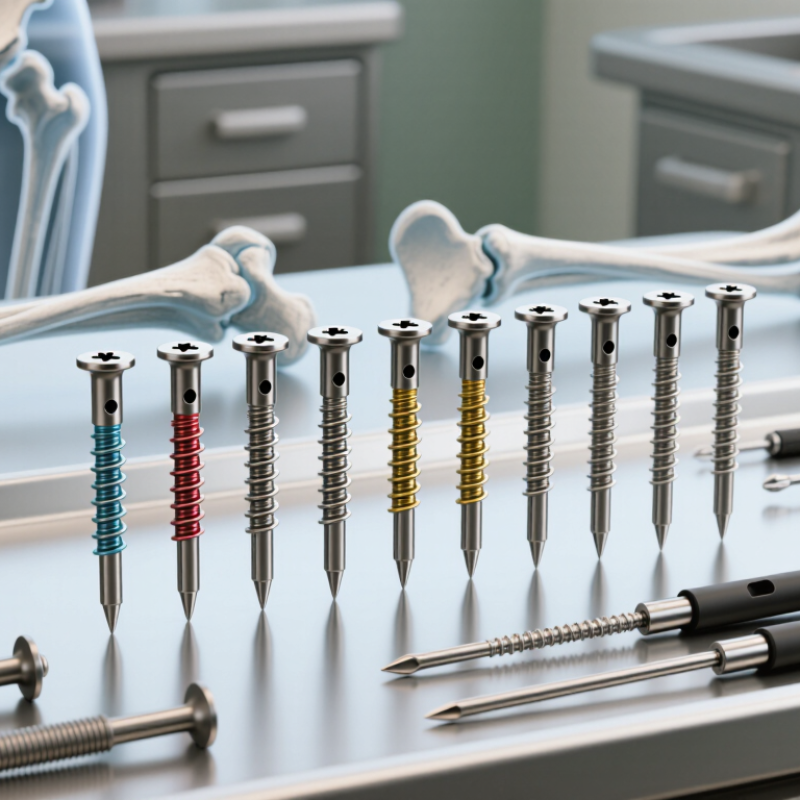
Pediatric interlocking nails must fit a growing skeleton, not simply a smaller adult one. A child’s medullary canal is narrow, and bone shape changes with age. Nail diameter, length, curvature, and locking options should match the fracture and the child’s anatomy. Small details count. A poorly matched nail may make insertion difficult or compromise stability.
Growth plates need particular attention. These cartilage zones sit near the ends of long bones, so entry points and screw paths require careful planning. Physeal-sparing approaches are often preferred when suitable, but the safest choice depends on fracture location, remaining growth, and the child’s anatomy. There is no single design for every case. That is worth remembering.
For supplier evaluation, clear device dimensions, compatible instrumentation, material specifications, and accessible clinical documentation help teams assess whether a system suits pediatric use. Surgeons also consider imaging before and after fixation, checking alignment, implant position, and growth over time. A technically sound procedure cannot remove every uncertainty; children heal and grow at different rates. Follow-up matters.
Supplier-neutral comparison framework: This table lists ten product and support areas to assess when comparing suppliers. It is not a ranked list of companies, and it does not imply that any particular supplier offers every feature.
| No. | Assessment Area | Information to Verify | Pediatric Design and Clinical Considerations |
|---|---|---|---|
| 1 | Nail size range | Available nail diameters and lengths, sizing increments, and the method recommended for measuring the medullary canal. | Children have smaller, changing bone dimensions. Nail size should be selected for the individual bone and fracture, rather than inferred from age alone. |
| 2 | Locking configuration | Proximal and distal locking options, compatible screw dimensions, and instructions for static or dynamic locking where applicable. | Interlocking screws can improve control of length and rotation in selected fractures. Screw placement must account for the child’s anatomy and nearby growth plates. |
| 3 | Growth-plate planning | Operative guidance on entry points, nail and screw trajectories, imaging views, and any stated restrictions related to open physes. | Growth plates are areas of developing cartilage. Planning generally aims to avoid unnecessary physeal injury; any trajectory near or across a physis requires case-specific clinical judgment. |
| 4 | Anatomical compatibility | Indicated bone and fracture locations, available nail geometries, and guidance on entry site and alignment. | Bone shape and canal dimensions vary with age, skeletal maturity, and the specific bone. A design suitable for one anatomical site may not be suitable for another. |
| 5 | Material and implant specifications | Documented implant material, applicable material standards, surface finish, and compatibility information for associated components. | Implant material and construction affect strength, imaging appearance, and clinical handling. Confirm the exact specifications in the product documentation. |
| 6 | Insertion and extraction instruments | Instrument list, compatibility with the implant system, instructions for insertion and removal, and availability of required extraction tools. | Children may require later implant removal depending on the treatment plan. The surgeon should consider removal access and instrumentation before implantation. |
| 7 | Imaging and targeting support | Locking-targeting method, alignment checks, and guidance for confirming nail and screw position with intraoperative imaging. | Accurate imaging helps assess reduction, implant position, screw length, and proximity to the physis and joint surfaces. |
| 8 | Indications and limitations | Current instructions for use, stated indications, contraindications, warnings, and any age- or anatomy-related limitations. | Interlocking nails are not appropriate for every pediatric fracture or patient. Treatment choice depends on factors such as fracture pattern, bone size, skeletal maturity, and clinical assessment. |
| 9 | Regulatory and quality documentation | Market-specific authorization or clearance, labeling, traceability, sterilization information, and applicable quality-system documentation. | Regulatory status and labeling differ by country and product. Verify the documentation for the exact implant and intended market before procurement or use. |
| 10 | Clinical and technical support | Access to current surgical technique materials, product training, technical support, and published evidence relevant to the specific device. | Reliable, device-specific information supports informed evaluation. Published outcomes should be interpreted in context, including patient age, fracture type, and study design. |
Children have narrower medullary canals, and their bones change shape as they grow. Nail diameter, length, and curvature should fit the child’s anatomy. Small details matter.
Growth plates are cartilage zones near the ends of long bones. Entry points and screw paths need careful planning to limit growth-plate impact.
No. The fracture location, remaining growth, and individual anatomy all matter. One design cannot fit every case.
Ask for a size matrix showing nail diameters, lengths, and compatible locking screws. Children of similar ages can have different bone dimensions.
Request documented material composition and performance testing. Stainless steel and titanium alloys have different mechanical properties. A label alone is not enough.
Check proximal and distal locking options, including static or dynamic choices. Ask whether targeting guides and instruments fit the full nail range.
Review market-specific authorization, intended-use labeling, quality-system evidence, and traceability details. Confirm that sterilization information matches the supplied product.
Evidence should relate to the actual system, not just intramedullary nails generally. Imaging can help assess alignment and implant position over time. Growth remains variable.
No. Supplier information supports purchasing decisions, while clinical teams assess patient suitability. Some answers may remain unclear; record them and seek clarification.
This article introduces the design and clinical considerations behind the Pediatric Interlocking Intramedullary Nail, including how nail dimensions, locking features, and placement relate to a child’s anatomy and developing growth plates. It also reviews the clinical context for treating femoral fractures in children aged 5–11, with reference to AAOS 2020 guidance, while emphasizing that implant selection should be individualized by qualified clinicians.
The supplier overview compares product ranges and company capabilities without endorsing a particular provider. Key evaluation factors include available sizes, materials, locking options, regulatory status, clinical evidence, market reach, and technical support. Together, these considerations offer a practical framework for assessing whether a supplier’s products and services may meet the needs of pediatric orthopedic care.

.png)