Stay updated with surgical technique guides, clinical case analyses, and orthopedic fixation advancements.
Integrating clinical research and practical surgical strategies for trauma repair and bone reconstruction.
From external fixators to spinal internal fixation systems — trusted by 365+ hospitals in 32+ countries.
Choosing the Top Hand Foot and Ankle Locking Plate Manufacturers requires more than comparing product catalogs. Surgeons need implants that match complex anatomy, fracture patterns, and real operating-room demands. A reliable manufacturer should demonstrate design expertise, consistent quality control, and documented clinical experience.
Orthopedic trauma expert Dr. Michael J. Gardner offers a useful principle: “Implant selection must follow the fracture, not replace surgical judgment.” This observation matters when evaluating a Hand Foot and Ankle Locking Plate. A well-designed plate may provide stable fixation, but it cannot correct poor reduction or unsuitable placement. Small details count. Consider screw trajectories, plate contour, edge thickness, and instrument handling through a limited incision.
Look closely.
This guide will compare leading manufacturers through practical criteria. These include material selection, locking performance, anatomical coverage, sterilization systems, testing procedures, and surgeon feedback. It will also consider whether companies support education, responsive service, and traceable production records. Titanium may reduce weight and improve imaging, while stainless steel can offer different strength and cost advantages. Neither option is automatically superior.
The assessment is not perfectly simple. Published evidence may vary, and marketing language can sound stronger than clinical data. Some manufacturers provide excellent engineering but limited long-term outcomes. Others offer broad portfolios with uneven regional support. That uncertainty deserves attention.
Readers should treat this overview as a starting point, not a substitute for clinical judgment, regulatory review, or hospital procurement standards. The best Hand Foot and Ankle Locking Plate manufacturer is the one that consistently connects sound engineering with dependable patient care.
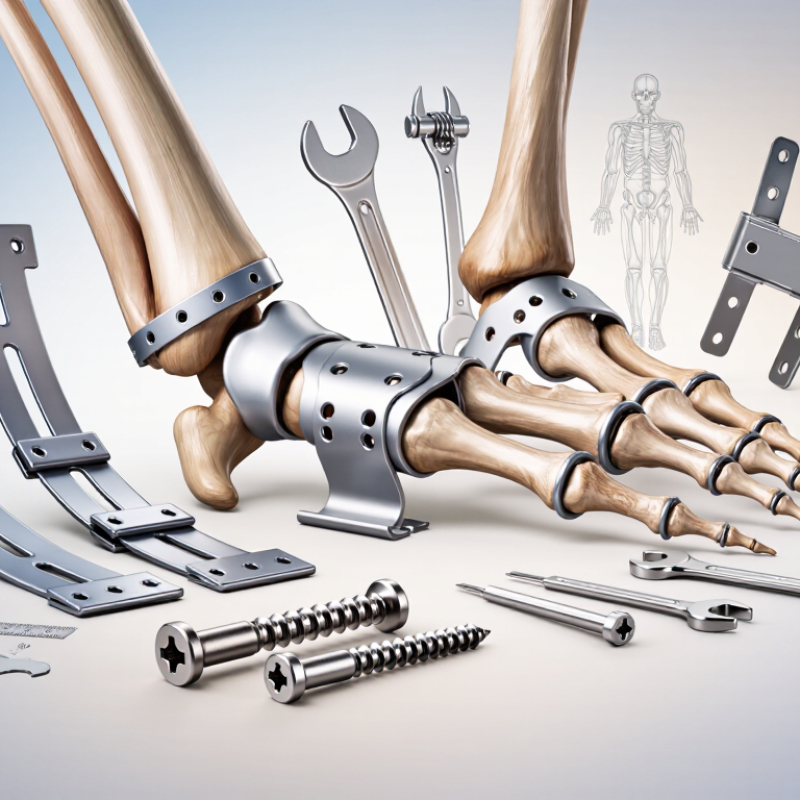
Hand, foot, and ankle locking plates are small orthopedic implants designed to stabilize broken or weakened bones. They support areas such as the wrist, fingers, heel, midfoot, and ankle. Unlike standard plates, locking plates secure screws directly into threaded plate holes. This creates a fixed-angle structure that can support fragile bone and reduce screw loosening.
Their shapes often match complex anatomy. A foot plate may curve around a joint, while an ankle plate may include holes for different fracture patterns. Common materials include surgical stainless steel and titanium alloys. Selection depends on bone quality, fracture location, soft-tissue coverage, and the surgeon’s treatment plan. Manufacturing quality also matters. Precise hole alignment, smooth edges, consistent thickness, and reliable sterilization support safe clinical use. Still, no plate fits every patient perfectly.
Tips: Review the plate’s intended anatomy, screw compatibility, imaging visibility, and documented quality controls. Ask whether the design supports the required fixation method. Clinical evidence should guide decisions, not attractive packaging or low price. In practice, even a well-designed plate can fail when positioning, reduction, or rehabilitation is poor. That uncomfortable detail deserves attention. Surgeons and hospitals should also check traceability, training support, and inventory consistency before choosing a supplier.
| Plate Category | Typical Anatomical Area | Common Clinical Applications | Key Design Characteristics | Typical Materials | Potential Advantages | Important Selection Considerations |
|---|---|---|---|---|---|---|
| Hand and Finger Locking Plates | Metacarpals, proximal phalanges, middle phalanges, and selected distal phalanx regions | Unstable fractures, comminuted fractures, intra-articular fractures, and fractures requiring stable fixation for early motion | Low-profile contour, small screw holes, fixed-angle screw compatibility, and options for compression or neutral fixation | Implant-grade stainless steel or titanium alloy | Angular stability may improve fixation in small or osteoporotic fragments while helping reduce screw toggling | Plate thickness, soft-tissue coverage, tendon clearance, screw trajectory, and preservation of joint surfaces |
| Wrist and Distal Radius Locking Plates | Volar or dorsal distal radius, including the radial styloid and distal articular region | Extra-articular and intra-articular distal radius fractures, including unstable or osteoporotic fracture patterns | Anatomically contoured shape, multiple distal fixed-angle screw positions, and proximal shaft holes for fixation or compression | Titanium alloy or stainless steel | Fixed-angle support can help maintain reduction in metaphyseal bone and provide subchondral support | So-called watershed-line positioning, screw length control, tendon protection, articular penetration prevention, and plate-to-bone fit |
| Hand and Wrist Fusion Plates | Selected carpometacarpal, radiocarpal, or intercarpal fusion sites | Arthrodesis for arthritis, post-traumatic deformity, instability, or salvage procedures | Rigid plate profile, locking and non-locking hole combinations, and contours designed to bridge or span the fusion site | Titanium alloy or stainless steel | May provide stable fixation across a fusion site and help maintain alignment during bone healing | Fusion position, bone preparation, graft placement, implant prominence, and compatibility with the selected surgical approach |
| Foot and Ankle Small-Bone Plates | Tarsal bones, metatarsals, phalanges, and selected midfoot or hindfoot regions | Traumatic fractures, osteotomies, corrective procedures, and reconstruction of small or irregular bone segments | Low-profile shapes, multiple contouring options, small locking holes, and variable plate lengths | Titanium alloy or stainless steel | Locking fixation can be useful when fragment size, bone quality, or limited screw purchase makes conventional fixation difficult | Local soft-tissue thickness, implant prominence, plate contour, weight-bearing demands, and the need for supplemental fixation |
| Lisfranc and Midfoot Locking Plates | Tarsometatarsal joints, intercuneiform region, naviculocuneiform area, and adjacent midfoot structures | Unstable midfoot injuries, fracture-dislocations, arthrodesis, and selected corrective reconstructions | Low-profile bridge or fusion configurations, locking screw options, and plate shapes adapted to midfoot anatomy | Titanium alloy or stainless steel | Can provide angular stability and maintain alignment across complex midfoot structures | Joint-specific surgical objectives, reduction quality, plate prominence, soft-tissue tolerance, and whether primary fusion is planned |
| Distal Fibula and Lateral Malleolus Plates | Distal fibula and lateral malleolus | Ankle fractures, rotational injuries, short distal fragments, and fractures with compromised bone quality | Anatomical contour, distal cluster of locking holes, options for syndesmotic fixation, and shaft fixation holes | Titanium alloy or stainless steel | Fixed-angle distal fixation may improve stability where the distal fragment is short or metaphyseal bone is weak | Fibular morphology, fracture level, syndesmotic stability, implant prominence, screw direction, and soft-tissue coverage |
| Medial Malleolus Plates | Medial malleolus and distal medial tibia | Vertical, transverse, oblique, comminuted, or osteoporotic medial malleolar fractures | Small anatomical profile, fixed-angle options, and holes designed for fragment capture or buttress support | Titanium alloy or stainless steel | May supplement screw fixation and resist displacement in selected fracture patterns | Fragment size, fracture orientation, proximity to the ankle joint, saphenous structures, and need for independent lag screws |
| Posterior Malleolus Plates | Posterior distal tibia and posterior malleolar fragment | Selected posterior malleolar fractures requiring direct reduction and fixation | Low-profile posterior contour, locking and non-locking screw options, and designs intended to function as a buttress | Titanium alloy or stainless steel | Direct buttress fixation can help support the posterior fragment and restore ankle-joint congruity when indicated | Fragment morphology, neurovascular anatomy, surgical approach, screw length, and relationship to the ankle joint |
| Calcaneal Locking Plates | Calcaneus, including the posterior facet, lateral wall, and tuberosity region | Selected displaced intra-articular calcaneal fractures and reconstructive procedures | Three-dimensional anatomical contour, multiple small fixed-angle screw positions, and lateral-wall coverage | Titanium alloy or stainless steel | Multiple locking trajectories may support articular and cortical fragments in a complex three-dimensional bone | Soft-tissue condition, fracture classification, reduction of the posterior facet, implant prominence, and wound-healing risk |
| Talus Locking Plates | Talar neck, body, and selected lateral or medial talar regions | Selected talar fractures, osteotomies, and reconstructive procedures requiring low-profile fixation | Anatomical contour, small locking screw options, and fixation paths intended to avoid critical articular surfaces | Titanium alloy or stainless steel | Fixed-angle fixation may assist with small fragments while limiting dependence on bone compression | Talar blood supply, fracture displacement, articular cartilage, screw trajectory, implant profile, and avascular-necrosis risk |
| Midfoot and Hindfoot Fusion Plates | Subtalar, talonavicular, calcaneocuboid, and selected hindfoot or midfoot fusion sites | Arthritis, deformity correction, post-traumatic reconstruction, and salvage arthrodesis | Rigid low-profile or curved configurations, locking and compression holes, and options for spanning irregular anatomy | Titanium alloy or stainless steel | May maintain alignment and provide stable fixation across a fusion construct, particularly in challenging bone quality | Fusion angle, correction plan, bone contact, grafting, weight-bearing protocol, implant prominence, and supplemental screw use |
| General Manufacturer Evaluation Criteria | Hand, foot, and ankle trauma or reconstruction systems | Product selection, hospital procurement, clinical evaluation, and regulatory review | Anatomical coverage, screw compatibility, instrumentation, contouring options, and availability of locking and non-locking fixation | Implant-grade titanium alloy or stainless steel, subject to the product specification | A complete system can improve procedure planning, implant compatibility, and operating-room workflow | Regulatory clearance, biocompatibility documentation, sterilization instructions, fatigue testing, instrument quality, traceability, training, and clinical support |
Note: Locking plates use threaded plate holes and compatible locking screws to create a fixed-angle construct. They may be used with conventional screws when the system permits, but implant choice and fixation technique must be determined by a qualified orthopedic surgeon according to fracture pattern, bone quality, soft-tissue condition, and applicable regulatory requirements.
They are small orthopedic implants that stabilize broken or weakened bones. They support wrists, fingers, heels, midfoot areas, and ankles. Locking screws attach directly to threaded plate holes. This creates a fixed-angle structure. It may reduce screw loosening in fragile bone.
Locking plates secure screws into the plate itself. Standard plates usually depend more on screw compression against bone. The locking design can support weak bone and maintain screw angles. It is not automatically better for every fracture.
Surgical stainless steel and titanium alloys are common choices. Material selection depends on bone quality, fracture location, imaging needs, and soft-tissue coverage. Titanium may offer useful imaging characteristics. The surgeon must match material properties with the treatment plan.
Designs may support metacarpals, fingers, the wrist, ankle malleoli, heel bones, and midfoot structures. A foot plate may curve around a joint. An ankle plate may include holes for different fracture patterns. Small differences matter.
Review material certificates, lot traceability, fatigue testing, sterilization validation, and dimensional inspection records. Check screw compatibility and replacement-screw availability. Ask for clear surgical technique guides. A polished catalog is not proof.
No. A controlled quality system supports manufacturing consistency, but it cannot replace clinical evidence. Review peer-reviewed outcomes, complication reports, and post-market surveillance. Evidence may still be incomplete.
Small bones leave limited room for error. The plate should sit close to the cortex without excessive contouring. Poor fit may affect reduction, soft tissue, or screw placement. Anatomical drawings and surgical photographs can reveal practical differences.
Yes. Positioning, fracture reduction, bone quality, and rehabilitation strongly influence results. Even strong hardware cannot correct every clinical problem. That detail is uncomfortable. It deserves review.
The supplier should provide consistent inventory, training materials, traceability, and prompt answers about instruments or revisions. Response time matters during an early-morning procedure. I would also examine change-control records. No supplier is perfect.
Hand Foot and Ankle Locking Plate systems are specialized orthopedic implants designed to stabilize fractures in the small, complex bones of the hand, foot, and ankle. Unlike conventional plates, their locking screws engage directly with threaded holes in the plate, creating a fixed-angle structure that can improve stability, preserve alignment, and support healing in difficult fracture patterns. These systems are available in different shapes, sizes, materials, and screw configurations to accommodate varying anatomy and surgical requirements.
When comparing Hand Foot and Ankle Locking Plate manufacturers, healthcare providers should evaluate product precision, material quality, design flexibility, biomechanical performance, sterilization options, and consistency in production. Manufacturer selection should also consider clinical support, regulatory compliance, supply reliability, surgeon training, and compatibility with existing instruments. A well-chosen manufacturer can provide dependable solutions that support efficient procedures, patient-specific treatment, and long-term fixation performance.

.png)