Stay updated with surgical technique guides, clinical case analyses, and orthopedic fixation advancements.
Integrating clinical research and practical surgical strategies for trauma repair and bone reconstruction.
From external fixators to spinal internal fixation systems — trusted by 365+ hospitals in 32+ countries.
Choosing a supplier for a Proximal Femoral Locking Plate is not just a price comparison. For surgeons and procurement teams, the details matter: plate contour, hole configuration, screw options, material traceability, and the clarity of technical documentation. A mismatch may complicate planning around a fracture pattern or a patient’s anatomy. Small details count.
Orthopedic trauma surgeon Prof. Harald Tscherne is associated with the principle, “The soft tissues are the most important part of the fracture.” It is a useful reminder that a plate is one part of a broader treatment decision, not a substitute for clinical judgment. This guide examines ten China-based suppliers through practical, checkable factors, including product range, manufacturing information, quality-system documentation, and responsiveness to technical questions. Readers should verify current certificates, specifications, and availability directly with each company; supplier information can change.
A directory is not a clinical endorsement. Nor does a polished catalogue prove consistent production. Buyers may want to request drawings, material details, and applicable inspection records before comparing offers. There is room for uncertainty here: public information alone cannot show how a supplier performs in every case. The aim is a clearer starting point for careful evaluation, not a shortcut to choosing an implant.
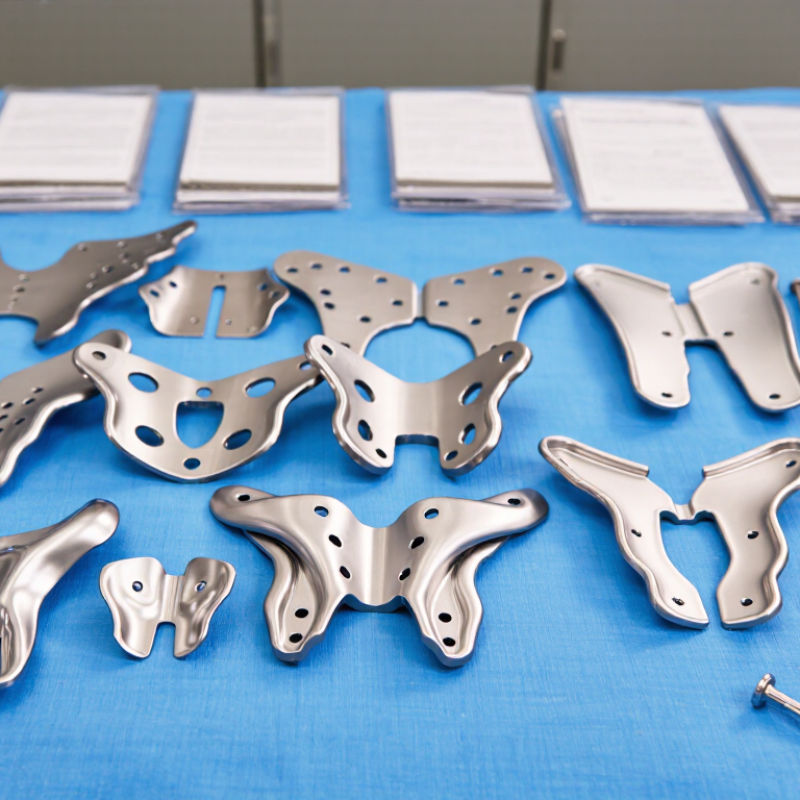
A proximal femoral locking plate is a metal implant placed along the outer side of the upper thighbone. Its upper section sits near the hip, while its long body follows the femur. Surgeons use it to stabilize certain fractures, including breaks near the top of the bone or around previous implants. The exact design and screw positions depend on the fracture pattern and the patient’s bone quality.
Here is how it works. Screws pass through the plate and into the bone, often at fixed angles. This connection helps the plate and screws act as a stable framework, limiting unwanted movement while the bone heals. In surgery, the team checks alignment with imaging and places screws to support important fragments. The plate does not make healing happen by itself. Blood supply, fracture stability, and gradual rehabilitation also matter. No plate is a perfect answer.
For example, a surgeon may use several angled screws near the hip to hold a short upper fragment, then secure the plate farther down the femur. Poor bone quality or a complex fracture can make fixation more challenging. A plate that looks well positioned on an image may still need careful clinical follow-up. Patients should ask their treating team about weight-bearing limits, wound care, and signs that need prompt review.
Supplier-neutral technical overview: This table explains ten relevant plate features and selection considerations. It is not a ranked supplier list; implant specifications vary by system and should be checked against the manufacturer’s instructions for use.
| No. | Feature | What It Is | How It Works or Typical Details | Why It Matters |
|---|---|---|---|---|
| 1 | Proximal femoral anatomy | The upper femur includes the head, neck, greater trochanter, and lesser trochanter. | A proximal femoral plate is contoured and configured to sit along the outer side of the upper femur, with fixation directed into the proximal bone. | Plate position and screw direction must suit the patient’s anatomy and the fracture pattern. |
| 2 | Fixed-angle locking screws | Locking screws engage threaded holes in the plate. | When tightened as designed, the screw head locks into the plate hole, creating a fixed-angle connection between plate and screw. | This can provide a stable construct, particularly where bone quality is reduced, but does not replace appropriate reduction or surgical planning. |
| 3 | Proximal screw configuration | Proximal holes accept screws aimed into the femoral head, neck, or trochanteric region, depending on the plate design. | Hole number, orientation, and permitted screw types differ among systems; some designs allow more than one screw trajectory. | The configuration should provide suitable fixation for the specific fracture while avoiding joint penetration. |
| 4 | Plate-shaft fixation | The plate’s shaft section lies alongside the femoral shaft and contains holes for distal fixation. | Surgeons may use locking screws, non-locking screws, or a combination when the system permits. | Distal fixation helps connect the plate to the shaft and contributes to overall construct stability. |
| 5 | Fracture patterns treated | Proximal femoral locking plates may be used for selected fractures around the trochanteric and subtrochanteric regions. | Indications depend on the fracture, the implant design, local practice, and the device’s approved labeling. | These plates are not suitable for every proximal femur fracture; implant choice is a clinical decision. |
| 6 | Plate length and hole count | Systems may offer different plate lengths and shaft-hole configurations. | A longer plate can provide more options for shaft fixation and may span a larger area; the appropriate length depends on the case and surgical plan. | Length affects available fixation locations and should be selected with the fracture extent and anatomy in mind. |
| 7 | Implant materials | Orthopedic fixation plates are commonly made from implant-grade stainless steel or titanium alloys. | Material, surface finish, and compatible screw options are specific to each implant system. Different metals should not be mixed unless the manufacturer permits it. | Material compatibility and device-specific instructions are important for safe implant selection and use. |
| 8 | Contouring and plate fit | The plate is shaped to follow the lateral contour of the proximal femur. | Some systems provide precontoured plates; any permitted contouring must follow the manufacturer’s instructions. | Fit and placement can affect screw trajectories, plate-to-bone relationship, and surgical access. |
| 9 | Reduction and fixation sequence | Reduction restores the alignment of the fractured bone before or during implant fixation. | The plate and screws hold the selected alignment; the exact sequence and technique depend on the fracture and implant system. | A locking plate does not itself reduce a fracture. Reduction quality and correct placement remain essential. |
| 10 | Postoperative loading and follow-up | Weight-bearing instructions and follow-up are determined by the treating surgeon. | Progression of activity depends on factors such as fracture stability, healing, bone quality, and the overall treatment plan. | Patients should follow their clinical team’s instructions; a plate does not guarantee immediate or unrestricted weight bearing. |
The profiles include trauma-focused makers, custom-design suppliers, and manufacturers with larger production capacity. Some focus on documentation or smaller trial orders. These are supplier types, not verified rankings.
Ask for current drawings, material specifications, inspection records, and production-process details. Check plate contours, hole placement, surface finish, and packaging. Small details matter.
Ask how each material batch is identified through machining, inspection, and packaging. Records should connect the finished plate to its material batch and inspection results. If that link is unclear, pause and ask again.
Request reports covering dimensions, screw-hole alignment, locking performance, and mechanical fatigue. Confirm that test methods match the product configuration and intended market. A report alone is not proof of consistent production.
Review validity, scope, and the production site covered. A certificate may look complete yet leave a gap. Verify the details directly.
Ask how design or process changes are reviewed and documented. Confirm who will notify you if materials or manufacturing steps change. Get the process in writing.
They can help clarify production practices and sample details. Neither guarantees that future batches will be identical. I would treat them as useful checks, not a promise.
Compare lead times, minimum order quantities, complaint handling, and change-control procedures using the same checklist. Check whether smaller trial quantities are available. Have qualified professionals review suitability for the intended use.
This article explains what a Proximal Femoral Locking Plate is and how its locking screws and contoured plate design help stabilize fractures near the upper femur. It introduces common plate configurations and their potential clinical applications, while noting that implant selection depends on fracture pattern, bone quality, patient needs, and the treating surgeon’s judgment.
The article also outlines practical ways to assess suppliers in China, including product documentation, manufacturing capability, quality-control processes, and communication during procurement. Profiles of ten suppliers are presented as a starting point for comparison rather than a substitute for independent due diligence. The final section highlights quality standards and purchasing considerations, such as confirming specifications, evaluating traceability and inspection procedures, and clarifying delivery and after-sales support before placing an order.

.png)