Choosing the top 10 Cancellous Bone Screw manufacturers worldwide requires more than comparing production volume. A reliable review must examine engineering quality, clinical experience, material control, and documented manufacturing systems. These screws are used in softer bone, where thread design, insertion torque, and purchase depth can influence fixation stability.
Small details matter. A sharp thread can reduce insertion resistance. A suitable cannulated design may support accurate guidewire placement. Titanium alloys, stainless steel, surface finishing, and dimensional consistency also deserve close attention. Orthopedic trauma specialist Dr. Jesse B. Jupiter has emphasized, “Fracture treatment is a balance between biology and mechanics.” That principle remains highly relevant when evaluating every Cancellous Bone Screw supplier.
Evidence should lead the ranking.
This article compares ten global manufacturers through practical and professional criteria. It considers product portfolios, regulatory quality systems, surgeon feedback, distribution reach, and published technical information. Manufacturing scale matters, but it should not replace clinical credibility. A large factory cannot compensate for weak traceability or inconsistent inspection.
No ranking is perfect. Public data can be incomplete, outdated, or shaped by regional availability. Some respected manufacturers may receive less attention because their clinical evidence is not widely published in English. That limitation deserves honest recognition. Readers should verify approvals, implant compatibility, sterilization status, and local procurement requirements before making decisions. The companies discussed here represent important market participants, not automatic recommendations for every fracture pattern or surgical setting.
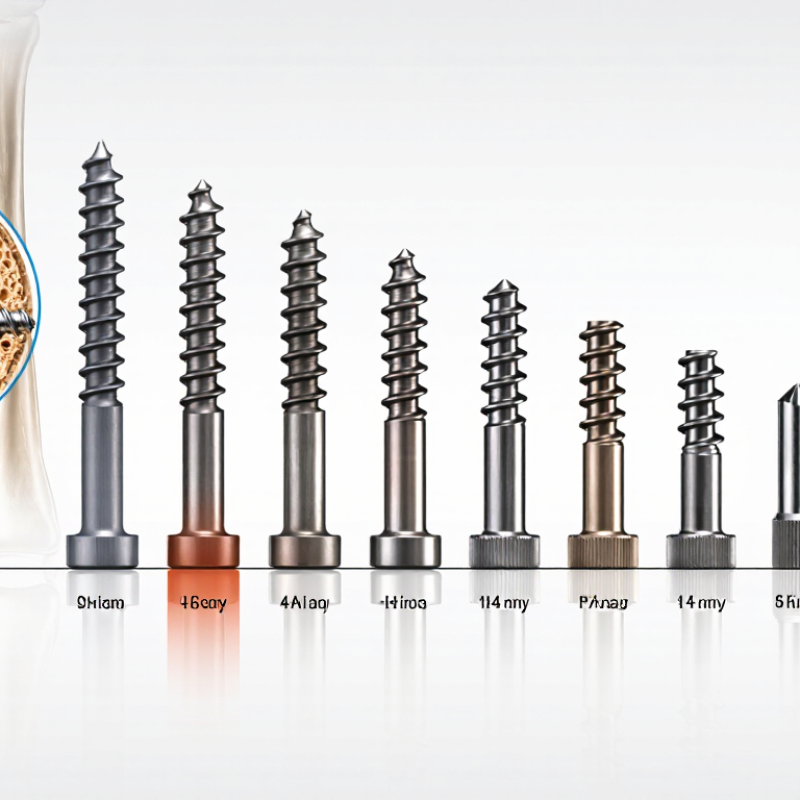
What Are Cancellous Bone Screws and Where Are They Used?
Cancellous bone screws are fixation devices designed for soft, porous trabecular bone. Their threads are deeper and wider than cortical screw threads. This geometry improves grip in the metaphysis and epiphysis, where dense outer bone is limited. Common sites include the distal radius, ankle, tibial plateau, and proximal humerus. Surgeons may use partially threaded screws for lag compression, or fully threaded screws for position control.
The International Osteoporosis Foundation reports that one in three women and one in five men over 50 may experience an osteoporotic fracture. That risk increases the need for reliable fixation in fragile bone. Industry analyses, including Grand View Research’s orthopedic devices reports, identify trauma fixation as a continuing growth area. However, market growth does not prove that one screw design suits every patient. I would treat forecasts carefully.
Clinical selection depends on fracture pattern, bone quality, screw diameter, thread length, and purchase depth. A washer can distribute force across a thin cortical surface. In some cases, a plate provides better stability than an isolated screw. Improper insertion may strip trabecular bone or leave inadequate compression. That detail matters.
Material choice also influences performance. Titanium offers lower stiffness and strong corrosion resistance, while stainless steel remains widely used in trauma fixation. The FDA’s orthopedic device guidance emphasizes mechanical testing, fatigue evaluation, and biocompatibility. These tests support safety decisions, but they cannot replace surgical judgment or patient-specific imaging.
How to Evaluate Cancellous Bone Screw Manufacturers
Top 10 Cancellous Bone Screw Manufacturers Worldwide?
Evaluating cancellous bone screw manufacturers requires more than comparing catalog prices. WHO reports that 1.71 billion people live with musculoskeletal conditions worldwide. Demand is substantial, but procurement decisions still depend on patient safety, engineering, and traceability. Check whether screws follow ASTM F543 testing requirements and whether the manufacturer operates under ISO 13485 quality management. Ask for recent audit evidence, not attractive certificates alone.
Material selection deserves close attention. Titanium alloys may reduce imaging interference, while stainless steel can offer different strength and cost profiles. Review thread geometry, core diameter, pitch, insertion torque, and pullout data for cancellous bone models. Independent 2024 orthopedic-device market reports estimate roughly 5% annual market growth through 2030, increasing pressure on suppliers to scale without weakening inspection controls. Growth is not proof of quality.
Request batch-level certificates, sterilization validation, packaging integrity data, and shelf-life studies. Confirm that design changes trigger documented risk assessments under ISO 14971. Speak with surgeons about insertion feel and stripping resistance. Laboratory results can miss real operating-room problems. A low quotation may hide training gaps, inconsistent coatings, or slow complaint handling. No scorecard is perfect. I would also inspect failed samples when possible, although many buyers overlook this uncomfortable step. Reliability appears in small details: readable markings, stable packaging, responsive technical staff, and complete post-market records.
How to Evaluate Cancellous Bone Screw Manufacturers
This assessment framework uses due-diligence weighting for key purchasing criteria. It is not a company ranking or market-share comparison. The criteria reflect commonly required controls for medical-device suppliers, including quality management, risk management, biocompatibility, mechanical performance, sterilization, traceability, and supply reliability.
Evaluation weights should be supported by objective evidence such as current certificates, test reports, validation records, technical files, inspection data, and documented corrective-action performance.
Top 10 Cancellous Bone Screw Manufacturers Worldwide
Top 10 Cancellous Bone Screw Manufacturers Worldwide
The worldwide top ten cancellous bone screw manufacturers are best evaluated through evidence, not visibility alone. Reliable producers usually offer screws for metaphyseal fixation, where soft bone requires deep threads and dependable purchase. Their designs may include partially threaded shafts, blunt tips, and cannulated options for accurate placement.
Material choice matters. Titanium alloys can support biocompatibility and imaging compatibility, while stainless steel remains valued for strength and manufacturing consistency. Experienced manufacturers control thread geometry, head dimensions, surface finish, and dimensional tolerances. Small deviations can affect insertion torque and fragment compression.
Quality systems deserve close attention. Look for documented testing, traceability, sterile packaging controls, and regulatory clearance in the intended market. Clinical studies and surgeon feedback provide stronger evidence than attractive product photographs. Manufacturing capacity also matters when hospitals need consistent sizes during trauma procedures.
The ranking is not absolute. Different surgeons value different features. A compact screw may suit a small fragment, while a longer design may improve fixation in a larger cancellous region. I would also question rankings based only on revenue or export volume. They can overlook training support, complaint handling, and long-term performance data.
Some manufacturers invest heavily in engineering but publish limited clinical evidence. Others provide strong studies but fewer size options. That gap deserves scrutiny. For buyers, the strongest choice combines dependable production, transparent documentation, practical surgical design, and evidence that matches real operating conditions.
How Leading Manufacturers Compare in Products and Capabilities
Top 10 Cancellous Bone Screw Manufacturers Worldwide
Comparing the leading cancellous bone screw manufacturers requires more than reviewing product catalogs. Their systems differ in thread design, core diameter, pitch, head geometry, and available materials. Experienced surgical teams often examine how easily each screw engages softer bone without excessive insertion torque. Small details matter, especially during fixation near joints.
Manufacturing capability also separates the top ten. Strong suppliers usually offer titanium and stainless-steel options, multiple screw lengths, and compatible instruments. Their production lines should support consistent thread accuracy and clean surface finishing. Quality systems, material traceability, sterilization controls, and batch documentation provide practical evidence of reliability. Independent testing data is more persuasive than polished claims.
Product breadth remains another useful comparison. Some manufacturers provide only individual screws, while others supply complete fixation sets, drills, depth gauges, and drivers. Distribution capacity can influence hospital access and replacement speed. Technical support matters too. Clear surgical instructions and responsive training reduce avoidable handling errors.
Not every ranking is definitive. Public information may overlook regional production strengths or recent design changes. A manufacturer with fewer products may still deliver better consistency in one procedure. My own evaluation would include surgeon feedback, instrument ergonomics, packaging integrity, and performance after repeated use. Laboratory results help, but real operating-room conditions can expose weaknesses that brochures never mention.
What to Consider When Choosing a Global Supplier
Top 10 Cancellous Bone Screw Manufacturers Worldwide: What to Consider When Choosing a Global Supplier
A top-ten list can identify experienced manufacturers, but rankings should not replace technical evaluation. Cancellous bone screws require dependable thread geometry, suitable core strength, and consistent surface quality. Ask for material certificates, dimensional reports, and fatigue-test data. Titanium and stainless-steel options may serve different surgical needs. The supplier should explain these differences clearly.
Global sourcing adds practical risks. Verify quality-system certification, manufacturing-site traceability, and change-control procedures. Check whether each production batch has a complete inspection record. Review sterilization responsibilities, packaging protection, and shelf-life evidence. Delivery promises also matter. A strong supplier should provide realistic lead times, stable minimum order quantities, and responsive engineering support. Site audits or independent assessments can reveal gaps that brochures hide. No supplier is perfect. My own evaluation can still miss problems when documentation looks unusually polished.
Tips: Request samples from regular production, not special demonstration lots. Compare thread sharpness under magnification. Test insertion torque with the intended instruments. Confirm compatibility with plates, drivers, and imaging requirements. Ask how complaints are investigated and how quickly corrective actions are communicated. Consider backup capacity in another facility or region. A cheaper quotation may become expensive after delays, rejected batches, or redesign work. Clinical feedback is useful, but it should be separated from unsupported marketing claims. Look for evidence, not confidence alone.
FAQS
Compare documented evidence, not catalog prices or online visibility. Review testing, traceability, manufacturing controls, and technical support. Growth alone proves little.
Ask for evidence of ASTM F543 testing and an ISO 13485 quality system. Request recent audit records. Attractive certificates are not enough.
Titanium alloys may reduce imaging interference and support biocompatibility. Stainless steel can offer strength and consistent production. The best choice depends on clinical needs.
Review thread depth, pitch, core diameter, head dimensions, and insertion torque. Check pullout results in cancellous bone models. Small dimensional changes can affect fixation.
Request batch certificates, sterilization validation, packaging integrity results, and shelf-life studies. Confirm readable markings on every package. Missing records create avoidable uncertainty.
It is highly important. Surgeons can assess insertion feel, stripping resistance, and fragment compression. Laboratory testing may miss problems during real procedures.
Not necessarily. A low price may hide training gaps, uneven surface finishes, or slow complaint handling. Look beyond the first invoice.
No. Different surgeons need different sizes, lengths, and thread patterns. Revenue and export volume can overlook clinical evidence and long-term performance.
Confirm that each change triggers a documented risk assessment under ISO 14971. Review dimensional data, testing updates, and complaint records. Details matter.
Inspect stable packaging, clear labels, consistent dimensions, and responsive technical staff. If possible, examine failed samples. This uncomfortable step is often skipped.
Conclusion
This article provides a practical overview of the Cancellous Bone Screw, including its structure, mechanical purpose, and common use in procedures involving soft or porous bone. It explains how these screws support fracture fixation, improve stability, and accommodate different surgical requirements. Readers will also learn how to evaluate manufacturers by examining product quality, material selection, design consistency, production standards, regulatory documentation, and quality-control systems.
The article compares ten leading manufacturers worldwide according to their product ranges, customization capabilities, technical expertise, manufacturing capacity, and service support, without focusing on brand promotion. It also discusses how suppliers differ in areas such as screw configurations, instrument compatibility, packaging, delivery performance, and after-sales communication. Finally, it outlines key considerations for selecting a global supplier, including clinical needs, compliance, traceability, pricing, supply reliability, and long-term cooperation potential.

.png)