CareFix Knowledge Hub — Orthopedic Implants & Clinical Insights
Clinical Knowledge Center

Orthopedic Surgical Insights & Clinical Knowledge

Stay updated with surgical technique guides, clinical case analyses, and orthopedic fixation advancements.
CareFix — 16 Years of Orthopedic Innovation
Surgical Excellence

Clinical Innovation & Technique Guides

Integrating clinical research and practical surgical strategies for trauma repair and bone reconstruction.
CareFix Orthopedic Product Portfolio
Global Healthcare Support

Comprehensive Orthopedic Solutions

From external fixators to spinal internal fixation systems — trusted by 365+ hospitals in 32+ countries.

0%

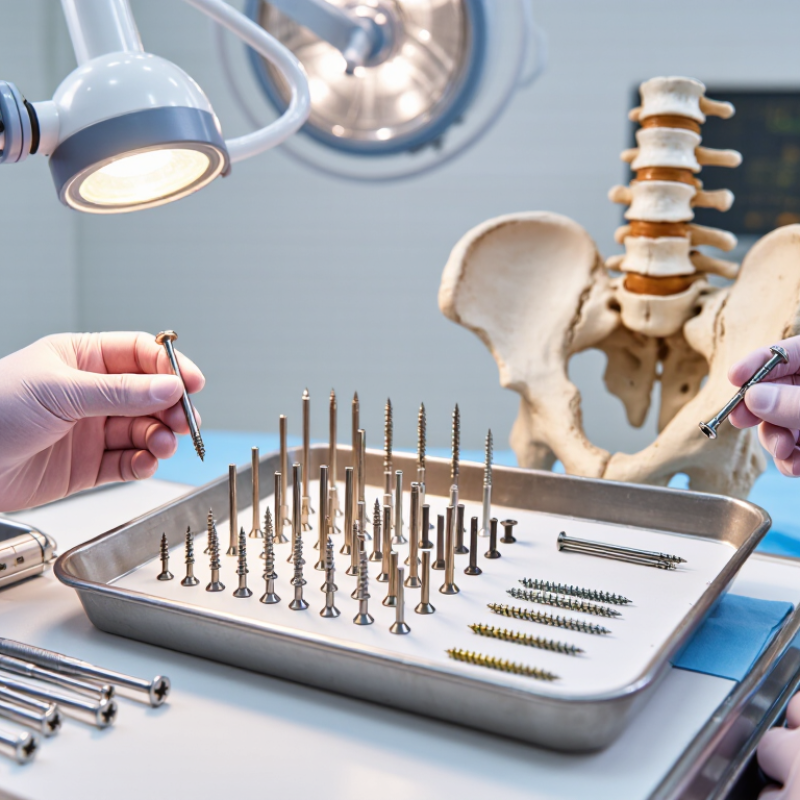
Choosing the right Cortical Bone Screw is a clinical decision, not a simple catalogue search. The surgeon must match the screw with bone quality, fracture pattern, plate design, and the patient’s expected loading conditions. A small screw may suit a narrow fragment, yet it may fail when the bone is osteoporotic or repeatedly stressed. Details matter. Thread pitch, core diameter, length, head shape, and material can influence purchase and stability.

Orthopedic trauma surgeon Dr. Joseph Schatzker is often associated with this practical teaching: “The implant must serve the biology of the fracture.” That idea remains useful when selecting a Cortical Bone Screw. Mechanical strength matters, but it should not replace careful reduction, soft-tissue respect, and sound surgical technique. A screw that looks strong on a product sheet may still be unsuitable for the available bone corridor. Sometimes, the wrong length causes more trouble than the wrong brand.

This guide examines how experienced teams compare screw dimensions, thread engagement, insertion control, and compatibility with fixation systems. It also considers the less visible factors, including imaging quality, instrument fit, and the surgeon’s familiarity with the device. No selection rule works perfectly in every case. That is the uncomfortable part. Patient anatomy varies, evidence may be limited, and even a technically correct choice can perform poorly when planning is rushed. Reliable decisions require current clinical evidence, validated manufacturer information, and judgment from qualified orthopedic professionals.
How to Choose the Right Cortical Bone Screw?

Define the Role and Applications of Cortical Bone Screws

Cortical bone screws are designed to engage dense outer bone with closely spaced threads. Their main role is to create stable fixation where the cortex can provide strong thread purchase. In practice, surgeons use them with plates to hold fractures, osteotomies, and small bone fragments in controlled alignment. They can also provide interfragmentary compression when placed through a suitable plate hole or in lag-screw technique.

The application depends on the fracture pattern, bone size, and required stability. A short screw may fail to achieve adequate cortical purchase. An overly long screw may irritate soft tissue or contact nearby structures. Diameter, thread length, head design, and material all influence performance. Imaging and direct assessment help determine whether bicortical or unicortical fixation is appropriate. These decisions require anatomical knowledge, surgical experience, and careful review of local bone quality.

Not every case behaves as expected. Osteoporotic bone may reduce holding strength, even when the screw appears correctly positioned. This is easy to underestimate. I would also avoid treating screw selection as a simple measurement exercise; reduction quality, plate position, and biological healing matter too. Experienced clinicians should match the screw to the fixation goal, then verify placement through accepted surgical and imaging protocols. Cadaver training, operative records, and follow-up findings can improve future choices.

Assess Bone Quality, Anatomy, and Surgical Requirements

How to Choose the Right Cortical Bone Screw?

Assess Bone Quality, Anatomy, and Surgical Requirements

Choosing a cortical bone screw starts with bone quality, not a catalog size. Dense cortex usually offers stronger thread purchase. Thin or weakened cortex may require a different diameter, length, or fixation strategy. Review radiographs and, when appropriate, CT images before surgery. Look for cortical thickness, fracture lines, deformity, and previous surgical changes. Do not guess.

Anatomy controls the safe screw path. Measure the available corridor in multiple planes, not from one image alone. A screw that appears centered may approach a joint, nerve, vessel, or tendon. Confirm the entry point, trajectory, and final depth during the procedure. Avoid unnecessary prominence beyond the far cortex. Small errors matter. Patient size, bone curvature, and nearby soft tissue can change the plan.

Surgical requirements should guide the final choice. Consider expected loading, fracture stability, compression needs, and whether the screw will work alone or with a plate. Select a length that achieves dependable cortical engagement without excessive penetration. Insertion resistance can provide useful feedback, but it is not a perfect measure of fixation strength. Poor purchase may reflect osteoporosis, an inaccurate path, or overpreparation. This is where planning can fail. A qualified orthopedic surgeon should combine imaging, examination, surgical experience, and validated technique guidance before implantation. Reassess the plan when anatomy or bone quality differs from the original scan.

Select the Appropriate Screw Diameter, Length, and Thread Design

How to Choose the Right Cortical Bone Screw?

Choosing a cortical bone screw starts with diameter, length, and thread design. Diameter should match the bone’s size and the required mechanical strength. ASTM F543-23 describes standardized tests for insertion torque, pullout, and fatigue performance. These tests show an important pattern: larger diameters often improve pullout resistance, but they can also remove more bone and increase fracture risk. A wider screw is not automatically better. Measure the available corridor on imaging, then select the smallest diameter that provides reliable purchase.

Length must create sufficient thread engagement without penetrating the far cortex, joint, or nearby soft tissue. AO Foundation surgical guidance supports accurate measurement and bicortical purchase when the technique requires it. Thread design also matters. Coarse threads can improve purchase in softer cortical bone, while finer threads may provide better control in dense bone. Partial-thread screws can produce compression, but only when the fracture pattern and drilling technique allow it. These choices are easy to oversimplify.

Tips: Confirm screw length with calibrated imaging or an intraoperative depth gauge. Check the screw’s core diameter, not only its outer diameter. Consider the bone’s thickness, fracture stability, and planned load. In my view, surgeon experience remains valuable, but it should not replace measurement. Even respected mechanical data cannot reproduce every patient’s anatomy. Recheck the plan when the cortex appears thinner than expected.

Compare Materials, Head Styles, and Drive Configurations

How to Choose the Right Cortical Bone Screw?

Compare Materials, Head Styles, and Drive Configurations

Choosing a cortical bone screw requires more than checking diameter and length. Material affects strength, corrosion behavior, imaging considerations, and handling during insertion. Stainless steel offers reliable strength and familiar tactile feedback. Titanium alloy is lighter and generally more compatible with imaging needs, but it may be more prone to galling during insertion. The surrounding fixation system must also be considered. Mixing metals without clinical justification can create avoidable concerns.

Head style changes how the screw sits and transfers load. A countersunk head can reduce prominence in a contoured plate, while a flatter head may suit different fixation surfaces. Locking and non-locking designs behave differently, so the screw head must match the plate interface precisely. A poor match may limit compression or create uneven contact. Small geometry matters.

Drive configuration affects control. Hexagonal, star-shaped, and other recesses offer different torque engagement and stripping resistance. Select a drive that fits the available instrument securely, especially when access is angled or visibility is limited. A driver that feels loose is a warning sign. Stop and reassess.

In practical planning, surgeons and engineers should review bone quality, plate geometry, screw length, and validated surgical instructions together. The strongest screw is not always the best choice. The neatest-looking head can still be unsuitable. Even experienced teams can overlook clearance around the drive recess, particularly in a narrow operative field. Verification against current clinical evidence and applicable standards remains essential.

How to Choose the Right Cortical Bone Screw? - Compare Materials, Head Styles, and Drive Configurations

Selection Dimension Option Typical Characteristics Advantages Important Considerations
Material Stainless Steel Common implant-grade austenitic stainless steel, such as 316LVM; relatively high strength and stiffness. Well-established clinical history, good strength, and broad availability. Higher elastic modulus than bone may contribute to greater construct stiffness. Confirm compatibility when used with components made from other metals.
Titanium Alloy Commonly Ti-6Al-4V or Ti-6Al-4V ELI; lower density and lower elastic modulus than stainless steel. Lightweight, strong, and generally well suited to applications where reduced implant stiffness is desirable. Titanium can be more prone to surface galling and drive-interface damage; use the specified instrument and technique.
Cobalt-Chromium Alloy High-strength, high-stiffness alloy used in selected orthopedic applications. High resistance to deformation and wear in appropriately designed systems. Its high stiffness and material compatibility must be evaluated within the complete fixation construct.
Head Style Countersunk Head Conical underside designed to sit flush or nearly flush when placed in a prepared countersink. Can reduce prominence and help minimize soft-tissue irritation where adequate bone stock is available. Requires appropriate countersinking; excessive countersinking can reduce local bone support and should be avoided.
Low-Profile Head Reduced head height or rounded geometry intended to limit implant prominence. May improve clearance in areas with limited soft-tissue coverage. The head still requires sufficient seating and an appropriately matched driver to prevent recess damage.
Locking-Compatible Head Threaded or otherwise engineered to engage a compatible plate or fixation component. Can create a fixed-angle relationship between the screw and a compatible plate. Must be used only with the designated compatible system; locking screws are not interchangeable with standard non-locking holes.
Drive Configuration Internal Hexagonal Socket Hexagonal recess accepting a matching hex driver. Simple, widely used configuration with straightforward axial engagement. Use the exact driver size and maintain full engagement; undersized or worn drivers can strip the recess.
Hexalobular Socket Star-shaped internal drive designed to distribute contact around multiple lobes. Provides positive engagement and can reduce cam-out when the correct driver is fully seated. The driver must match the specified size and profile; damaged lobes can reduce insertion control.
Cross-Recess or Slotted Drive Cross-shaped or straight-slot recess, used in some legacy or specialized designs. Familiar instrument geometry and simple visual identification. Generally requires careful axial alignment because partial engagement may increase the risk of cam-out or recess damage.
Thread and Size Fine-Pitch Cortical Thread Typically has a smaller thread pitch and more threads per unit length than a cancellous screw. Designed for purchase in relatively dense cortical bone. Select diameter and length according to anatomy, available bone stock, and the fixation construct; do not substitute solely by visual similarity.
Fully Threaded Shaft Threads extend along most or all of the intended purchase length. Useful when continuous thread engagement is needed for fixation or when compression is not the primary function. A fully threaded screw does not automatically provide interfragmentary compression; technique and screw design determine the fixation effect.
Diameter and Length Available dimensions vary by anatomical site and fixation system; common orthopedic ranges include small- and large-fragment screw families. Correct sizing supports adequate purchase while limiting unnecessary bone removal or prominence. Measure the site and follow the applicable surgical technique; avoid penetration of adjacent joints, neurovascular structures, or unintended far cortex.
Practical selection checklist: Match the screw material with the overall construct, choose a head profile appropriate for soft-tissue coverage and countersinking needs, verify driver compatibility, confirm diameter and length from the surgical plan, and use only instruments and components specified for the selected fixation system.

Note: Screw geometry, material designation, dimensions, insertion limits, and compatibility vary by device system. Always consult the applicable instructions for use and approved surgical technique.

Verify Compatibility, Placement Technique, and Clinical Safety

How to Choose the Right Cortical Bone Screw?

Compatibility is more than matching diameter and length. Confirm the screw’s thread profile, head geometry, driver interface, and material. The screw must fit the plate hole and the planned fixation system. Mixing components from different systems can create poor seating, altered compression, or driver damage. Review the latest instructions for use and implant documentation. Small mismatches matter.

Placement technique requires a measured plan. Use current radiographs or computed tomography to assess cortical thickness, fracture lines, and nearby nerves or vessels. Select a length that achieves stable purchase without unnecessary prominence. Prepare the pilot hole with the specified diameter and depth. Keep the drill aligned with the plate hole. Fluoroscopy can help, but it is not infallible. Clinical judgment still matters. I have seen “standard” measurements fail when anatomy was distorted.

Clinical safety also depends on handling and follow-up. Avoid excessive insertion torque, damaged threads, and repeated driver engagement. Inspect the construct before closure.

The World Health Organization reports that about one in ten patients experiences harm during healthcare, with more than half considered preventable.

This figure is not specific to screws, but it reinforces careful verification. FDA medical-device surveillance reports also show why adverse-event data require caution: reports signal potential problems, not confirmed incidence rates. Document compatibility checks, placement decisions, and any uncertainty. The uncomfortable question is simple: would another clinician understand why this screw was chosen?

FAQS

What should guide the choice of a cortical bone screw?

Bone quality should guide the choice before catalog size. Dense cortex usually provides stronger thread purchase. Thin or weakened cortex may need a different fixation plan.

How can imaging support screw selection?

Review radiographs and, when appropriate, CT images. Check cortical thickness, fracture lines, deformity, and previous surgical changes. Do not guess.

How should the screw diameter be selected?

Measure the available bone corridor in several planes. Choose the smallest diameter providing dependable purchase. A wider screw may remove more bone and increase fracture risk.

How long should the screw be?

The screw should engage enough cortex without entering a joint or nearby soft tissue. Confirm length with calibrated imaging or an intraoperative depth gauge. Small errors matter.

Why does screw thread design matter?

Coarse threads may improve purchase in softer cortical bone. Finer threads can offer better control in dense bone. Partial threads may create compression in suitable fracture patterns.

What compatibility checks are necessary?

Confirm the thread profile, head shape, driver interface, and material. The screw must fit the plate hole and fixation system. Small mismatches can cause poor seating.

What should happen during screw placement?

Prepare the pilot hole to the specified diameter and depth. Keep the drill aligned with the plate hole. Avoid excessive insertion torque and repeated driver engagement.

Can insertion resistance confirm strong fixation?

Insertion resistance provides useful feedback, but it is not a perfect strength test. Poor purchase may reflect weak bone, an inaccurate path, or overpreparation.

What should be reassessed before closure?

Inspect the construct, screw prominence, alignment, and nearby anatomy. Fluoroscopy can help, but it is not infallible. A standard measurement may fail in distorted anatomy.

When should the surgical plan change?

Reconsider the plan when the cortex appears thinner than expected. Patient size, bone curvature, and soft tissue can alter the safe path. A plan can still fail.

Conclusion

Choosing the right Cortical Bone Screw begins with understanding its intended role, such as fracture fixation, orthopedic reconstruction, or securing plates and other surgical components. Selection should be based on bone quality, anatomical location, fracture pattern, and the mechanical demands of the procedure. A thorough assessment helps determine whether the screw can provide sufficient stability while minimizing the risk of bone damage or fixation failure.

The appropriate diameter and length should achieve secure cortical purchase without penetrating critical structures. Thread design, pitch, and profile should match the bone characteristics and fixation requirements. Surgeons should also evaluate material properties, head style, and drive configuration to support insertion, load distribution, and future removal when necessary. Before placement, compatibility with the selected implant system and instruments must be confirmed. Careful preparation, accurate drilling, proper alignment, and adherence to clinical protocols are essential for safe and effective use.

Ethan

Ethan

Ethan is a dedicated marketing professional with a profound expertise in the company's product offerings. With a strong background in market analysis and consumer engagement, he is passionate about crafting compelling narratives that highlight the unique benefits and features of our services. Ethan......