Stay updated with surgical technique guides, clinical case analyses, and orthopedic fixation advancements.
Integrating clinical research and practical surgical strategies for trauma repair and bone reconstruction.
From external fixators to spinal internal fixation systems — trusted by 365+ hospitals in 32+ countries.
Choosing an Elastic Intramedullary Nail in 2026 is not a matter of picking the most familiar implant. The patient’s age, weight, fracture location, and stability all matter. So does the surgeon’s experience with insertion and removal. A nail that looks suitable on a product sheet may behave differently in a short, oblique fracture. Small details count.
The American Academy of Orthopaedic Surgeons’ 2020 guideline for pediatric diaphyseal femur fractures discusses flexible intramedullary nailing among treatment options for selected children. It does not make one implant right for every child. Pediatric orthopaedic surgeon John M. Flynn’s published guidance likewise emphasizes considering the child’s age, size, and fracture pattern when selecting treatment. This is a paraphrase, not a verbatim quotation. That distinction matters.
The World Health Organization’s Global Status Report on Road Safety 2023 estimates that road crashes cause about 1.19 million deaths each year. That figure describes a broad injury burden, not demand for elastic nails; many fractures have different causes and treatments. Still, it underscores why sound trauma care matters. In this guide, we’ll compare nail diameter, material, flexibility, and construct stability, then consider fit, instrumentation, and follow-up. A close look helps. Yet the evidence has limits: outcomes depend on the fracture and patient, not the implant alone. The right choice is often a careful compromise, and clinicians should check current guidance and manufacturer instructions before use.
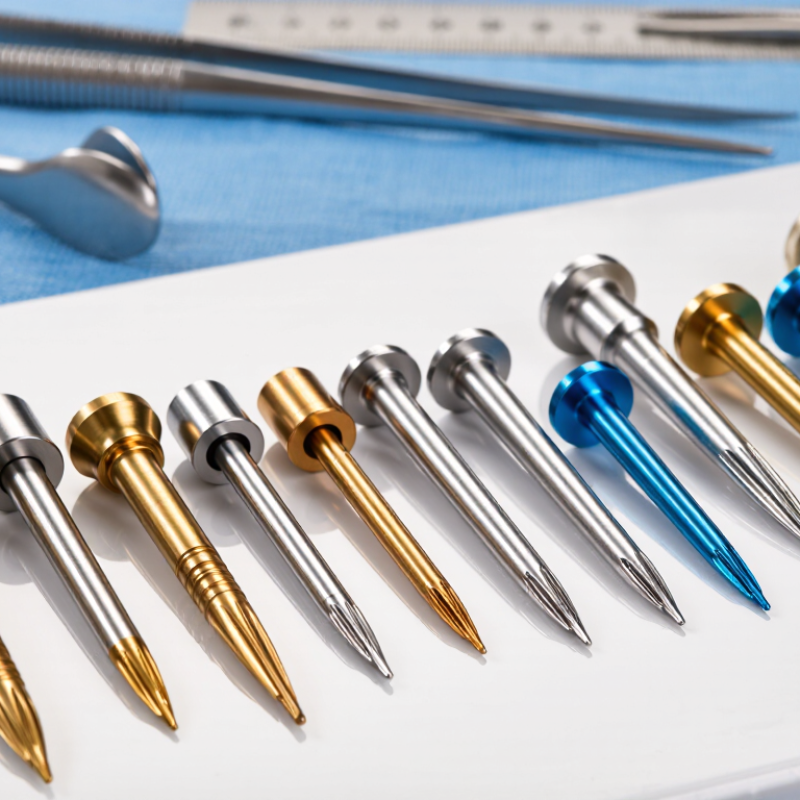
Elastic intramedullary nailing is a fixation option for selected long-bone fractures, particularly in children whose bones are still growing. Flexible nails sit inside the bone’s central canal and support the fracture from within. In suitable cases, paired nails provide balanced stability while allowing small movements that encourage callus formation. The approach usually requires smaller incisions than some plate-based methods. That can matter.
The goal is not to make every fracture rigid. It is to maintain acceptable alignment and length while the bone heals. Nail choice depends on the patient’s age and size, the bone involved, and the fracture’s location and shape. A simple, reasonably stable pattern may suit flexible nails; a highly unstable or fragmented fracture may need another method. The soft tissues, activity level, and follow-up needs also affect the decision.
A neat X-ray is not the whole story. Surgeons also consider pain, function, and whether the nails may irritate tissue near their entry points. Some fractures shift despite fixation, and healing can take longer than expected. Borderline cases deserve careful discussion, not a one-size-fits-all rule. The treating orthopedic team can explain the options and trade-offs for the specific injury.
Elastic intramedullary nails are mainly considered for skeletally immature patients with diaphyseal fractures, especially femoral shaft fractures. Assess age, body mass, growth remaining, and the child’s ability to follow weight-bearing instructions. AAOS’s 2020 guideline says flexible nailing may be considered for femoral shaft fractures in children aged 5–11. That is a guide, not a rule. Body mass matters.
Then examine the fracture’s level, shape, and stability. Transverse or short-oblique patterns may hold length more predictably. Long-oblique, comminuted, or very proximal or distal fractures can telescope or angulate. Check whether two nails can control rotation and maintain alignment. Flynn et al. reported excellent outcomes in 84% of 58 fractures in a multicenter series (Journal of Pediatric Orthopaedics, 2001). That selected, older cohort is not a promise for today’s patient. Set clear goals: stable alignment, manageable pain, and safe early movement, with limited soft-tissue disruption. An imperfect fit deserves reconsideration.
Choosing an elastic intramedullary nail starts with the patient and fracture, not a catalog. Age, body size, bone diameter, fracture location, and stability all matter. Small details matter. A narrow canal in a small child may limit available diameter, while a lengthwise fracture may need a different construct from a short, transverse break. The treating orthopedic surgeon should confirm suitability using imaging and the device’s instructions.
Material affects flexibility and handling. Titanium alloy is generally more flexible; stainless steel is stiffer. Neither is automatically better. The choice depends on the bone, fracture pattern, and the surgeon’s experience. For diameter, a common planning rule is to make each of two nails about 40 percent of the narrowest canal width. It is only a starting point, not a substitute for measurement or system-specific guidance. A nail that is too small may offer inadequate stability; one that is too large can be difficult to pass safely.
Length should allow the nail to support the fracture without crossing a growth plate or leaving a prominent end beneath the skin. Under imaging, surgeons check where the tip sits and whether the end can be managed comfortably. Configuration matters too: paired nails are often shaped into opposing curves to balance forces and control rotation. Yet a neat plan can still meet an awkward fracture in the operating room. Canal shape and bone contact may change what works, so the final choice requires clinical judgment and careful imaging.
Select nail material, diameter, length, and configuration according to the patient’s anatomy, fracture pattern, and the applicable device instructions.
Material context: Typical elastic modulus is approximately 193 GPa for 316L stainless steel and 114 GPa for Ti-6Al-4V titanium alloy; actual values vary by alloy and processing. These values alone do not determine the best nail. Choose diameter to suit the medullary canal and intended fit, determine length from imaging and fracture anatomy, and select configuration based on fracture stability and the device’s instructions. Final selection should be made by the treating orthopedic team.
Elastic intramedullary nails are commonly considered for selected, length-stable fractures in growing patients. The choice depends on fracture location, bone size, and the child’s age and weight. A simple transverse fracture may behave differently from a short, oblique one. Fit matters. Nail diameter and balance affect stability, while prominent ends can irritate nearby tissue.
Compare this method with plates, rigid nails, casting, and external fixation. Plates can offer precise control when a fracture is unstable or near a joint, but they require a larger surgical exposure. Rigid nails may suit some older adolescents, depending on growth plates and anatomy. Casting avoids surgery, yet alignment may need close monitoring and can be harder to maintain in certain fractures. External fixation can help when soft tissues need protection, though pin care and frame management add practical demands.
There is no universal winner. The treating orthopedic surgeon should assess X-rays, fracture stability, soft tissues, and the patient’s ability to follow recovery instructions. Ask how each option affects weight-bearing, follow-up imaging, and possible implant removal. The evidence and local practice may vary, and even a technically sound plan can need adjustment as healing progresses. That uncertainty deserves an honest discussion.
Planning an elastic intramedullary nail procedure starts with the fracture, not the implant. Review the patient’s age, weight, bone size, fracture pattern, and imaging with the orthopedic team. Nail diameter, length, entry points, and planned reduction should suit the individual anatomy. Small details matter. Positioning and imaging access should also be checked before incision, so the team can assess alignment during insertion.
During the procedure, fluoroscopic views help confirm that the fracture is reduced and the nails follow the intended path. Check alignment in more than one plane, along with length and rotation. The construct should resist unwanted movement without forcing the bone into position. If stability looks marginal, pause and reassess the reduction, nail fit, and fixation plan. Not every case behaves as expected; that is a reason to adapt, not to rely on a single image.
After surgery, document the limb’s circulation, sensation, pain, wound condition, and radiographic alignment. Follow-up timing and weight-bearing limits depend on the fracture and treating surgeon’s judgment. Explain which changes warrant prompt clinical review, such as worsening pain, new numbness, fever, or wound drainage. At each visit, compare healing with the patient’s function, not just the X-ray. Healing can be uneven. Adjust rehabilitation and imaging plans when findings or symptoms do not match expectations.
The surgeon considers age, body size, bone diameter, fracture location, and stability. X-rays help confirm suitability. Small details matter.
Titanium alloy is generally more flexible, while stainless steel is stiffer. Neither is automatically better. Fracture pattern and surgeon experience matter.
A common starting point uses two nails, each about 40 percent of the canal’s narrowest width. This is only a guide. Careful measurement still matters.
The nail should support the fracture without crossing a growth plate. Its end should not sit prominently beneath the skin. Imaging helps check placement.
Paired nails are often shaped into opposing curves. This can balance forces and help control rotation. The canal may still change the plan.
They are often considered for selected, length-stable fractures in growing patients. A transverse break may behave differently from a short, oblique one. Fit matters.
Plates can offer control for unstable fractures or fractures near joints, but require a larger surgical exposure. Casting avoids surgery, though alignment may need close monitoring. External frames add pin-care demands.
Ask about weight-bearing, follow-up X-rays, recovery instructions, and possible implant removal. Healing can change the plan. There is no universal winner.
Choosing an Elastic Intramedullary Nail in 2026 starts with understanding its role in fracture care: it can provide internal support while allowing controlled movement and may be considered for selected fractures. The choice depends on the patient’s age, bone size and condition, fracture location and pattern, and the goals of treatment. These factors help determine whether elastic nailing is suitable and what level of stability is needed.
When selecting a nail, clinicians consider its material, diameter, length, and configuration, then compare the approach with alternatives such as casting or other fixation methods. Planning also includes careful insertion, confirmation that the fracture is stable and properly aligned, and a follow-up plan to monitor healing and function. The best option is not determined by the device alone; it reflects the individual fracture, the patient’s needs, and the treating team’s clinical judgment.