Stay updated with surgical technique guides, clinical case analyses, and orthopedic fixation advancements.
Integrating clinical research and practical surgical strategies for trauma repair and bone reconstruction.
From external fixators to spinal internal fixation systems — trusted by 365+ hospitals in 32+ countries.
China’s orthopedic manufacturing sector has become an important source of trauma and limb-reconstruction equipment. This article examines China’s top 10 Combined External Fixator suppliers through a practical, evidence-based lens. The review considers product range, manufacturing experience, quality systems, customization, export support, and clinical application.
The need is substantial. The World Health Organization reported that approximately 1.71 billion people live with musculoskeletal conditions worldwide in 2022. Its Global Status Report on Road Safety 2023 also estimated 1.19 million annual road-traffic deaths. Complex fractures often require stable alignment, gradual correction, and manageable follow-up. Combined External Fixator systems can support these needs when surgeons select suitable frames, pins, clamps, and adjustment methods.
Gavriil Ilizarov, the pioneering orthopedic surgeon, described the principle clearly: “The tension-stress effect stimulates tissue regeneration and growth.” His work still influences modern external-fixation design. Yet technology alone does not guarantee clinical value. Supplier evidence matters. Look for ISO 13485 certification, traceable materials, validated sterilization information, and transparent regulatory documentation. Product photographs can mislead. A polished catalogue is not clinical proof.
This supplier guide compares publicly available information and does not replace surgeon judgment or hospital procurement procedures. Some company data may change. Rankings are therefore indicative, not absolute. Buyers should verify current certificates, dimensions, compatibility, and after-sales support before purchase. The strongest supplier may not be the cheapest one. It may be the one that answers difficult questions precisely.
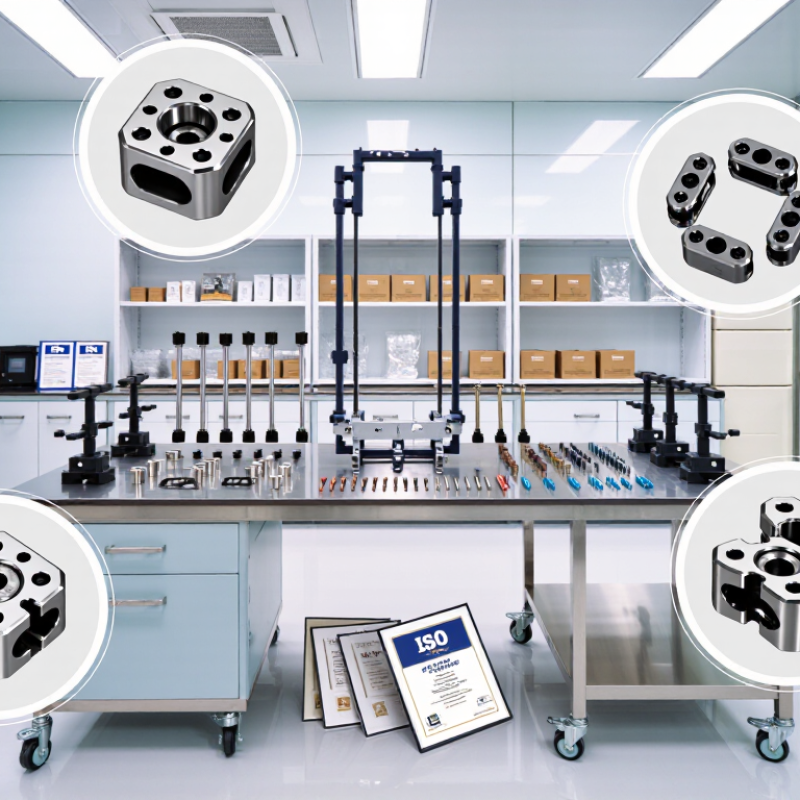
Combined external fixators are modular frames used to stabilize complex fractures without fully covering the injured area. They connect pins or wires to rods, clamps, and adjustable joints outside the limb. This structure creates controlled support while leaving wounds visible for dressing changes. It can also help manage swelling, open injuries, bone loss, and gradual deformity correction.
When comparing China’s top ten combined external fixator suppliers, buyers should examine more than product appearance. Reliable systems need accurate clamps, strong pin fixation, clear instructions, and consistent manufacturing quality. Surgeons should match the frame with fracture location, bone condition, soft-tissue damage, and the patient’s treatment plan. Radiographs and regular clinical checks remain essential. A frame that looks versatile may still be difficult to assemble around the knee or ankle. That practical limitation is easy to overlook.
The main role is stability with access. Nurses can observe the wound, while clinicians can adjust alignment when healing changes. The system may reduce the need for extensive early exposure, but it does not remove surgical risk. Pin-site infection, loosening, discomfort, and joint stiffness require active monitoring. Training matters as much as hardware. A supplier should provide technical documentation, traceability, sterilization guidance, and responsive clinical support. No frame suits every fracture. Careful planning still decides the outcome.
| No. | Clinical Role or Application | Typical Fixator Configuration | Primary Function | Key Benefits | Important Supplier Specification |
|---|---|---|---|---|---|
| 1 | Temporary stabilization of severe fractures | Rod-and-clamp frame with Schanz pins or a mixed ring-and-rod construct | Maintains alignment and length before definitive treatment | Rapid application, soft-tissue access, and easier wound monitoring | Fast assembly, secure clamps, radiolucent working space, and broad pin-size compatibility |
| 2 | Open or contaminated fractures | Adjustable external frame positioned away from the injury zone | Provides stability while limiting interference with debridement and wound care | Supports staged treatment and repeated access to soft tissues | Pin-placement flexibility, corrosion-resistant materials, and sterilization compatibility |
| 3 | Periarticular fractures | Ring or partial-ring assembly combined with metaphyseal half-pins | Controls short bone segments near a joint while preserving joint motion | Useful when internal fixation is limited by swelling, comminution, or soft-tissue damage | Multiple ring diameters, low-profile components, and fine adjustment capability |
| 4 | Complex tibial or femoral shaft fractures | Hybrid frame using rings, connecting rods, wires, and half-pins | Provides multiplanar control of translation, angulation, and rotation | Adaptable to irregular anatomy and changing mechanical requirements | Modular clamps, accurate connectors, mechanical strength, and clear assembly instructions |
| 5 | Infected nonunion or bone loss | Circular or hybrid frame with adjustable segment fixation | Stabilizes the limb while permitting staged reconstruction and infection management | Allows access for wound care and supports gradual correction after infection control | High-strength rings, reusable-compatible components where permitted, and precise adjustment hardware |
| 6 | Bone transport | Multi-level circular frame with transport rings and threaded adjustment units | Guides a bone segment across a defect while supporting regeneration | Can address segmental defects without requiring immediate structural graft placement | Fine-pitch struts or adjustment modules, reliable locking, and comprehensive measurement markings |
| 7 | Limb lengthening | Circular or hybrid frame spanning the osteotomy site | Maintains alignment during gradual distraction and regenerate formation | Permits controlled, incremental correction under clinical supervision | Accurate adjustment scale, stable fixation points, and compatibility with prescribed distraction protocols |
| 8 | Angular and rotational deformity correction | Multi-level circular frame with hinges, struts, or correction modules | Enables gradual or acute correction in multiple planes | Useful for complex deformities where correction must be progressive and adjustable | Interchangeable connectors, accurate angular references, and stable hinge interfaces |
| 9 | Soft-tissue reconstruction support | Frame assembled to maintain clearance around grafts, flaps, or wound dressings | Protects the reconstruction while maintaining skeletal stability | Improves access for inspection, dressing changes, and postoperative monitoring | Low-profile components, smooth surfaces, flexible configuration options, and easy adjustment |
| 10 | Long-term definitive external fixation | Patient-specific circular or hybrid construct maintained through bone healing | Provides continuous mechanical support until union or staged reconstruction is complete | Avoids extensive internal implants in selected cases and permits postoperative adjustment | Documented material properties, fatigue resistance, component traceability, and regulatory compliance |
Evaluation note: When comparing suppliers, purchasers should verify product classification, applicable regulatory documentation, material specifications, sterilization instructions, mechanical testing, component compatibility, quality-management certification, and after-sales technical support. Product selection and clinical use must follow local regulations and the instructions for use.
Review technical files, manufacturing records, inspection procedures, and product specifications. Ask how pins, clamps, rods, and frames work together. Compare written claims with physical samples. Catalogs can look convincing.
Confirm pin materials, diameters, thread accuracy, adjustment ranges, and frame compatibility. Check whether technical drawings match the supplied components. Test locking strength and assembly consistency. Small differences matter.
Request recent batch inspection reports and traceability records. Inspect surface finish, component fit, packaging, and labeling. If possible, assemble samples under a controlled workflow. One imperfect sample does not prove failure.
No. Certification shows a quality framework, not every product’s clinical performance. Also review fatigue testing, production controls, batch records, and complaint procedures. Evidence matters more.
Confirm sterilization status, storage guidance, packaging protection, and market-specific labeling. Ask how packaging changes are controlled. Damaged packaging creates avoidable uncertainty. Verify requirements independently.
Clarify production capacity, realistic lead times, pin-length options, and clamp geometry changes. Ask how design changes are documented and approved. Fast delivery is useful, but inconsistent parts are not.
Ask about technical training, assembly guidance, complaint handling, replacements, and response times. Confirm who answers fitting questions during implementation. Friendly replies help, but technical accuracy matters more.
Price should not stand alone. A lower quote may reflect weaker inspection, limited support, or poor component compatibility. Keep a written comparison for every supplier. My judgment could still be incomplete.
This article provides a practical overview of the Combined External Fixator, explaining its role in stabilizing complex fractures, correcting deformities, supporting bone lengthening, and assisting staged orthopedic treatment. It also outlines the key factors for evaluating Chinese suppliers, including product safety, material quality, structural design, manufacturing consistency, technical support, quality management systems, and export experience.
The article introduces ten leading supplier profiles without focusing on brand promotion, highlighting their product features, manufacturing standards, engineering capabilities, and customization options. Readers will learn how to compare frame configurations, fixation components, radiolucent designs, sterile packaging, documentation, and compatibility with clinical requirements. The final section offers practical guidance for selecting a reliable supplier by reviewing certifications, inspection procedures, production capacity, delivery performance, after-sales service, and the ability to provide tailored solutions. Overall, the article is designed to help hospitals, distributors, and medical procurement teams make informed decisions when sourcing safe, dependable, and adaptable external fixation systems.

.png)