CareFix Knowledge Hub — Orthopedic Implants & Clinical Insights
Clinical Knowledge Center

Orthopedic Surgical Insights & Clinical Knowledge

Stay updated with surgical technique guides, clinical case analyses, and orthopedic fixation advancements.
CareFix — 16 Years of Orthopedic Innovation
Surgical Excellence

Clinical Innovation & Technique Guides

Integrating clinical research and practical surgical strategies for trauma repair and bone reconstruction.
CareFix Orthopedic Product Portfolio
Global Healthcare Support

Comprehensive Orthopedic Solutions

From external fixators to spinal internal fixation systems — trusted by 365+ hospitals in 32+ countries.

0%

Choosing the best Cannulated Screw is not a simple catalogue exercise. Global buyers face different fracture patterns, surgical techniques, supply conditions, and regulatory expectations. A screw that performs well in a dense cortical fragment may behave differently in softer cancellous bone. Thread design, core diameter, pitch, length, material, and guide-wire compatibility all deserve close review.

Orthopaedic trauma specialist Dr. Michael J. Gardner offers a useful principle: “Choose the implant for the fracture, not the other way around.” This idea should guide every comparison in 2026. Partially threaded screws can support interfragmentary compression when the far cortex is engaged. Fully threaded models may provide position control with less compression. Headless designs can reduce prominence in selected areas. Titanium may offer imaging advantages, while stainless steel remains valued for strength and availability.

Small details matter. A guide wire must remain stable. The cannulation should accept the intended wire without excessive play. The driver must fit securely, especially during insertion through a narrow incision. Buyers should also examine fatigue data, coating claims, sterilization status, packaging quality, traceability, and local approval requirements. Product availability matters too.

No ranking is perfect. That is worth admitting. Clinical evidence may favor one design, while a hospital’s instruments, training, or budget favors another. This guide compares Cannulated Screw types through practical performance, documented specifications, surgeon experience, and purchasing reliability. It does not replace clinical judgment. Instead, it helps global buyers ask sharper questions before selecting a screw for a specific procedure.
2026 Best Cannulated Screw Types for Global Buyers

Cannulated Screw Fundamentals and Key Design Features

2026 Best Cannulated Screw Types for Global Buyers

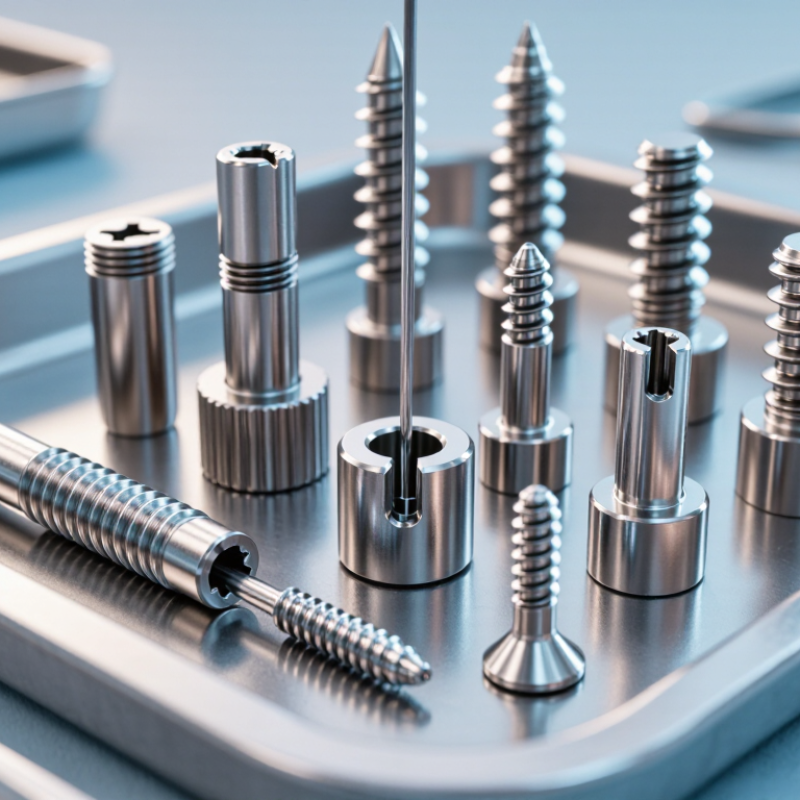
Cannulated screws are hollow fixation devices guided over a temporary wire. This pathway can improve placement around small joints and narrow bone corridors. The Global Burden of Disease 2019 study estimated 178 million new fractures worldwide in one year. That scale makes dependable screw selection clinically important, not merely commercial.

Fully threaded screws provide stable purchase when controlled compression is unnecessary. Partially threaded screws act as lag screws, pulling one fragment toward another. Headless compression screws reduce surface prominence near cartilage. Thread pitch, core diameter, tip geometry, and cannula diameter affect insertion feel and pullout resistance. A larger core may resist bending better, but it can remove more bone. Small details matter. Washer compatibility also deserves checking.

Professional testing should follow recognized methods, including ASTM F543 torsion and driving assessments. Regulatory guidance also expects evidence for mechanical strength, material safety, and intended use. Buyers should examine fatigue data, dimensional tolerances, sterile packaging, and guidewire compatibility. Surgical experience suggests that a smooth wire path and clear depth measurement prevent avoidable errors. Cannulation is not a guarantee of accuracy. It can even create false confidence when the wire bends or exits the far cortex.

No single design fits every fracture. Global teams should compare regional training, imaging access, bone quality, and instrument support. Product catalogs often simplify these decisions. That is a weakness worth challenging. Trial usability under gloves and limited visibility may reveal more than a polished specification sheet.

Major Cannulated Screw Types by Thread, Head, and Fixation Method

2026 Best Cannulated Screw Types for Global Buyers

Cannulated screws differ mainly by thread design, head shape, and fixation method. Partial-thread screws provide interfragmentary compression when the near cortex is over-drilled. Fully threaded screws offer positional fixation, especially when compression could disturb alignment. Variable-pitch threads can increase compression during insertion, but technique errors may reduce their benefit.

Head design also affects soft-tissue safety and load transfer. Countersunk heads sit below the bone surface, reducing prominence near joints. Low-profile heads may suit areas with limited soft-tissue coverage. Headless designs can support deeper placement, although removal may become more demanding. A 2023 systematic review in orthopaedic trauma literature reported that cannulated screw placement accuracy depends strongly on guidewire control and fluoroscopic verification. The implant alone is not the solution.

Fixation choice should match bone quality, fracture pattern, and the planned surgical approach. Titanium offers lower stiffness than stainless steel, while stainless steel may provide stronger tactile feedback during insertion. According to the World Health Organization, musculoskeletal conditions affect about 1.71 billion people worldwide, sustaining demand for dependable fixation systems. Market analyses from Grand View Research also continue to place the global orthopaedic implants market in the tens of billions of US dollars, though category definitions vary between reports. Buyers should compare thread geometry, instrument compatibility, sterility, and regulatory documentation. Small details matter. I would still question catalogue claims without independent mechanical data, especially for variable-pitch and headless systems.

2026 Best Cannulated Screw Types for Global Buyers - Major Cannulated Screw Types by Thread, Head, and Fixation Method

Primary Classification Cannulated Screw Type Thread Design Head Design Typical Fixation Method Common Clinical Applications Typical Diameter Range Key Advantages Important Selection Considerations
Thread Partially Threaded Lag Screw Threaded distal portion with a smooth shaft beneath the head; thread length is shorter than the intended fracture-spanning distance. Usually a low-profile or countersunk head. Interfragmentary compression created when the threaded portion gains purchase in the far fragment while the near fragment glides over the smooth shaft. Displaced fractures requiring compression, including selected fractures of the malleolus, femoral neck, scaphoid, and other periarticular regions. Approximately 2.0–7.3 mm, depending on anatomy and system design. Strong compressionSimple conceptBroad application Correct thread length is essential. If the threads cross the fracture line or engage the near fragment, effective lag compression may be reduced.
Thread Fully Threaded Position Screw Threads extend along most or all of the shaft; pitch is generally consistent throughout the threaded section. Headed, usually with a small countersunk profile. Maintains alignment and provides purchase without relying primarily on a lag effect. Compression may be added with a separate technique or compression device. Fractures where preservation of length or alignment is important, small-fragment fixation, and situations where uncontrolled interfragmentary compression is undesirable. Approximately 2.0–7.3 mm. Predictable purchaseAlignment controlUseful in variable gaps Not normally selected as the sole implant when substantial lag compression across the fracture is required.
Thread Fully Threaded Compression Screw Continuous thread with a differential-pitch or variable-pitch design in some systems; the thread geometry is intended to generate compression during insertion. Headed or partially headless, depending on the implant system. Compression is generated by differential thread engagement, controlled insertion, or a dedicated compression feature. Small-joint arthrodesis, osteotomies, selected fractures, and fixation where a fully threaded implant is preferred. Approximately 2.0–7.0 mm. Compression with full-length purchaseGood control of fragment position Compression behavior varies by thread profile. The surgeon should verify insertion technique, bone quality, and the manufacturer’s recommended guidewire and drill sequence.
Head Headed Cannulated Screw May be partially or fully threaded. Distinct screw head provides a firm surface for insertion and can seat against a washer or near cortex; many designs are countersunk. Lag compression, position fixation, or fixation with a washer when additional load distribution is required. Large- and small-fragment fixation, periarticular fractures, osteotomies, and selected cancellous bone procedures. Approximately 2.0–7.3 mm; larger diameters are used in some long-bone systems. High insertion controlDirect axial seatingWasher compatible The head may irritate soft tissue if prominent. Countersinking and adequate local bone stock should be assessed before implantation.
Head Headless Compression Screw Typically has two thread zones with different pitches or thread diameters to create compression as the screw advances. No prominent external head; the screw is fully recessed below the bone surface. Interfragmentary compression generated by differential thread advancement, followed by buried implantation. Scaphoid fractures and nonunions, osteochondral fragments, intra-articular fractures, small-joint arthrodesis, and osteotomies. Approximately 2.0–5.0 mm, with some systems available in larger sizes. Low soft-tissue profileSuitable for articular surfacesCompression and burial Requires adequate countersink depth and bone stock. Removal may be more difficult if the recess becomes damaged or bone grows over the drive interface.
Head Countersunk Head Screw Partially or fully threaded; thread selection depends on whether compression or position fixation is required. Conical or tapered underside designed to sit below or flush with the cortical surface after countersinking. Head seats in a prepared recess while the shaft provides lag or position fixation. Hand, foot, ankle, periarticular, and other locations where minimizing hardware prominence is important. Approximately 2.0–6.5 mm. Reduced prominenceImproved soft-tissue compatibility Over-countersinking can weaken thin cortex or reduce head support. The recess should match the implant geometry.
Head Washer-Compatible Cannulated Screw Usually partially threaded, although fully threaded options also exist. Head designed to accept a separate washer that increases the contact area under the screw head. Lag or position fixation with load distribution over a larger cortical area. Osteoporotic bone, thin cortical regions, fractures with risk of screw-head sinking, and fixation requiring greater surface support. Approximately 3.0–7.3 mm, depending on the screw and washer system. Reduced head pull-throughImproved load distribution The washer increases implant prominence and may affect soft tissue. Screw and washer compatibility must be confirmed before use.
Fixation Method Single-Screw Interfragmentary Fixation Most commonly a partially threaded lag screw or a headless compression screw. Headed, countersunk, or headless according to the anatomical site. One screw provides direct compression across a fracture or osteotomy after reduction and temporary stabilization. Simple, stable fracture patterns; small bones; osteotomies; and selected arthrodeses. Approximately 2.0–7.3 mm. Low implant countEfficient compressionShorter procedure pathway Rotational stability may be limited. A single screw should not be relied upon when the fracture pattern is unstable or subject to significant torsional forces.
Fixation Method Two-Screw or Multi-Screw Construct Combination of partially threaded lag screws, fully threaded position screws, or headless compression screws. Headed and/or headless, selected according to soft-tissue and joint-surface requirements. Multiple screws improve rotational control, distribute load, and may combine compression with positional stability. Long oblique fractures, osteotomies, small-joint fusion, scaphoid fixation, and fractures with rotational instability. Approximately 2.0–7.3 mm per screw. Better rotational controlLoad sharingFlexible construct design Screw trajectories must avoid collision. Parallelism, purchase length, fracture reduction, and soft-tissue clearance are important planning factors.
Fixation Method Screw-and-Plate Construct Combination of cannulated screws and a plate; screw thread may be partially or fully threaded. Usually headed screws compatible with plate holes; some systems use low-profile or locking heads. The plate supports alignment and bending loads while cannulated screws provide fragment fixation or compression through the plate or independently. Periarticular fractures, osteotomies, fractures with poor stability, and areas exposed to bending or shear. Approximately 2.0–7.3 mm for screws; plate dimensions vary by anatomical region. Higher construct stabilityBending resistanceUseful for complex patterns The screw must match the plate hole and locking mechanism when applicable. Implant thickness, soft-tissue coverage, and bone quality influence selection.
Fixation Method Guidewire-Assisted Cannulated Fixation Any compatible thread configuration may be used after guidewire placement. Headed, countersunk, washer-compatible, or headless. A guidewire is placed first to establish trajectory; drilling, measuring, tapping, and screw insertion are then performed over the wire. Fractures near joints, small bones, minimally invasive procedures, and anatomically demanding trajectories. Approximately 2.0–7.3 mm; guidewire diameter must match the screw system. Accurate trajectoryMinimally invasive workflowImage-guided control Guidewire position must be checked in appropriate imaging planes. The wire should remain controlled during drilling and screw advancement to avoid unintended migration.
Material Titanium Alloy Cannulated Screw Available with partial, full, differential, or variable-pitch threads. Headed, countersunk, washer-compatible, or headless. Used in compression, position, or multi-screw constructs according to thread and head design. Fracture fixation, osteotomy fixation, arthrodesis, and applications where lower modulus and imaging compatibility are valued. Approximately 2.0–7.3 mm. Good strength-to-weight ratioMRI conditional designs availableLower elastic modulus than stainless steel Mechanical properties, surface treatment, MRI conditions, and implant compatibility vary by product. Titanium can be more susceptible to drive-interface damage than some steel designs.
Material Stainless Steel Cannulated Screw Available with partial, full, or compression-oriented threads. Headed, countersunk, washer-compatible, or headless. Used for interfragmentary compression, positional fixation, and plate-supported constructs. General orthopedic trauma fixation and applications requiring high stiffness and a robust drive interface. Approximately 2.0–7.3 mm. High stiffnessEstablished surgical useStrong drive interface in suitable designs Confirm corrosion resistance, MRI labeling, compatibility with other implant materials, and applicable regulatory requirements for the target market.
Note: Diameter ranges and available thread lengths are representative market ranges rather than universal specifications. Final selection should be based on anatomy, fracture pattern, bone quality, required compression, soft-tissue conditions, imaging requirements, and the validated surgical technique for the specific implant system.

Selecting Screw Types for Different Orthopedic Applications

Selecting a cannulated screw starts with the fracture pattern, not the catalogue photograph.

The Global Burden of Disease 2019 study reported approximately 178 million new fractures worldwide, increasing demand for adaptable fixation. For a clean femoral neck fracture, a partially threaded screw can create interfragmentary compression. Its threads should cross the fracture, while the shaft slides within the near fragment. Fully threaded screws suit situations requiring positional fixation, where compression could shorten the fracture.

Headless compression screws are useful in small joints, scaphoid fractures, and articular surfaces. Their buried profile may reduce hardware prominence. However, they demand accurate depth control. A proud screw can damage cartilage. A countersunk screw can also lose purchase in weak bone.

Think beyond diameter. Bone quality, fracture obliquity, thread length, and insertion angle matter. The AO Surgery Reference emphasizes stable purchase and appropriate compression across different fracture zones. For osteoporotic bone, a larger diameter is not automatically safer; excessive drilling may weaken the fragment.

The International Osteoporosis Foundation estimates that one in three women and one in five men over 50 will experience an osteoporotic fracture. That risk changes screw selection and construct planning. Buyers should request verified cannulation dimensions, guidewire compatibility, material certification, and fatigue-testing data. Packaging convenience is not clinical evidence. Even experienced teams can overvalue familiar screw types. Selection should remain case-specific and reviewed against imaging, bone quality, and the intended load path.

Comparing Materials, Sizes, Sterility, and Instrument Compatibility

2026 Best Cannulated Screw Types for Global Buyers

Selecting cannulated screws requires more than comparing prices or thread patterns. Material affects strength, imaging behavior, corrosion resistance, and removal considerations. Titanium alloys are lightweight and typically create fewer imaging artifacts. Stainless steel offers familiar handling and strong mechanical performance. Bioabsorbable options may suit selected cases, but their degradation behavior needs careful evaluation.

Size must match anatomy, fracture pattern, and the planned fixation method. Common diameters range from small fragment systems to larger load-bearing designs. Length accuracy matters. A few excess millimeters can affect soft tissue or joint safety. Buyers should review thread length, pitch, head design, guidewire diameter, and compression capability. Sterility also requires attention. Verify the sterilization method, packaging integrity, shelf life, and lot traceability before shipment. Do not assume every sterile package suits every hospital protocol.

Tips: Confirm instrument compatibility before ordering. The guidewire, drill, countersink, screwdriver, and depth gauge should work as one system. Ask for dimensional drawings and validated cleaning instructions. Keep contingency sizes available; anatomy rarely follows a catalog perfectly. I have found that “universal” compatibility is often overstated, especially across different manufacturers. That deserves a second check. Surgeons and hospital procurement teams should compare technical files, regulatory documentation, and local registration requirements with qualified specialists. Availability is useful, but predictable quality matters more.

Global Buyer Criteria for Quality, Compliance, and Supply Reliability

2026 Best Cannulated Screw Types for Global Buyers

Global purchasing should begin with clinical use, not catalogue labels. Headless compression screws suit buried fixation and reduced soft-tissue irritation. Partially threaded screws can provide controlled compression across a fracture. Fully threaded options may support positional fixation. Diameter, length, thread pitch, cannulation size, and guidewire compatibility must match the surgical technique. Small details matter. A 0.1 mm dimensional variation can affect fit, but buyers should verify the manufacturer’s tolerance data rather than assume it.

Quality evidence deserves equal attention. The WHO Global Patient Safety Report 2024 states that approximately one in ten patients experiences harm in healthcare, with more than half considered preventable. This does not prove every device failure is preventable. It does support stricter purchasing controls. Request fatigue testing, material certificates, surface-finish results, sterilization validation, and lot-level traceability. ISO 13485 certification is useful, but it should not replace an audit of corrective-action records and complaint handling. Certificates can expire.

Compliance varies by destination. Buyers should confirm registration, labeling language, UDI requirements, importer responsibilities, and post-market reporting duties before shipment. The product file should identify implant-grade material, packaging integrity, shelf life, and validated sterilization conditions. Supply reliability also needs measurable proof: dual-source raw materials, documented lead times, safety-stock policies, and shipment history. Ask for recent on-time delivery data. One weakness remains common: suppliers describe “global availability” without defining available quantities. Put those quantities into the contract.

2026 Best Cannulated Screw Types for Global Buyers

Design characteristics relevant to quality, compliance, and supply-reliability screening

Partially threaded screws are commonly selected when controlled interfragmentary compression is required. Fully threaded screws are typically used when stable purchase along the threaded section is preferred, while headless compression screws combine compression with a low-profile finish. Final procurement decisions should also verify applicable medical-device regulations, ISO 13485 quality systems, material and biocompatibility documentation, sterilization validation, traceability, and continuity of supply.

FAQS

How do titanium and stainless steel cannulated screws differ?

Titanium alloys are lightweight and often create fewer imaging artifacts. Stainless steel offers familiar handling and strong mechanical performance. Material choice also affects corrosion resistance and removal considerations.

What screw dimensions should buyers compare?

Review diameter, length, thread length, pitch, head design, and cannulation size. Length accuracy is critical. A few extra millimeters may affect soft tissue or joint safety.

When are headless, partially threaded, or fully threaded screws suitable?

Headless compression screws support buried fixation and may reduce soft-tissue irritation. Partially threaded screws can create controlled compression across a fracture. Fully threaded screws may support positional fixation.

Why is guidewire compatibility important?

The guidewire, drill, countersink, screwdriver, and depth gauge should function as one system. Confirm diameters and dimensions before ordering. “Universal” compatibility is often overstated.

What sterility details should global buyers verify?

Check the sterilization method, packaging integrity, shelf life, and lot traceability. Do not assume every sterile package suits every hospital protocol. Request validated sterilization conditions.

Which quality documents should suppliers provide?

Ask for material certificates, fatigue testing, surface-finish results, sterilization validation, and lot-level traceability. A quality certificate helps, but it does not replace reviewing complaints and corrective actions.

What regulatory information is needed before shipment?

Confirm destination registration, labeling language, device identification requirements, importer duties, and post-market reporting obligations. Local requirements vary. Qualified specialists should review the product file.

How can buyers assess supply reliability?

Request documented lead times, recent on-time delivery data, safety-stock policies, and shipment history. Ask for available quantities in writing. “Global availability” can mean very little.

Conclusion

This guide explains the essential features of a Cannulated Screw, including its hollow core, guidewire compatibility, thread design, head configuration, and fixation principles. It reviews major screw types according to thread length, partially or fully threaded profiles, head styles, and compression or non-compression functions. Readers will also learn how to match screw characteristics with orthopedic applications such as fracture fixation, joint stabilization, and minimally invasive procedures.

The article compares commonly used material options, dimensional ranges, sterility conditions, and instrument compatibility to support efficient surgical planning. For global buyers, it highlights practical evaluation criteria including product quality, manufacturing consistency, regulatory documentation, packaging integrity, traceability, delivery capability, and long-term supply reliability. By considering clinical requirements together with procurement and compliance needs, buyers can select suitable Cannulated Screw solutions with greater confidence and reduce compatibility, quality, and supply risks.

Jackson

Jackson

Jackson is a dedicated marketing professional with a profound understanding of our company's products and services. With years of industry experience, he excels in crafting compelling narratives that resonate with our target audience. His expertise not only enhances his marketing strategies but......