CareFix Knowledge Hub — Orthopedic Implants & Clinical Insights
Clinical Knowledge Center

Orthopedic Surgical Insights & Clinical Knowledge

Stay updated with surgical technique guides, clinical case analyses, and orthopedic fixation advancements.
CareFix — 16 Years of Orthopedic Innovation
Surgical Excellence

Clinical Innovation & Technique Guides

Integrating clinical research and practical surgical strategies for trauma repair and bone reconstruction.
CareFix Orthopedic Product Portfolio
Global Healthcare Support

Comprehensive Orthopedic Solutions

From external fixators to spinal internal fixation systems — trusted by 365+ hospitals in 32+ countries.

0%

Guided growth is reshaping how specialists manage selected pediatric limb deformities. The Guided Growth 8-Plate concept uses a small, two-hole plate and flexible tethering principle near a growth plate. It can gradually redirect bone growth while preserving future correction potential. The method is not a universal solution.

The International Osteoporosis Foundation notes that skeletal development during childhood strongly influences lifelong bone health. Meanwhile, the World Health Organization emphasizes patient safety, clinical training, and reliable medical-device quality systems. These priorities matter when global buyers compare guided-growth implants, instruments, and supplier documentation. A plate may look simple on a tray, yet its thickness, hole geometry, screw angle, alloy, and surface finish can affect surgical handling. Tiny details matter.

This article examines eight guided growth plate types for international procurement teams and orthopedic professionals. It considers anatomy, correction goals, implant configuration, pediatric sizing, sterilization, packaging, traceability, and regulatory evidence. The FDA’s guidance on orthopedic device submissions shows why performance data and risk controls should accompany product claims. Grand View Research’s orthopedic device market analysis also reflects continuing demand for specialized, minimally invasive solutions, although market estimates vary by methodology.

Experience should challenge assumptions. A lower price does not prove better value. A familiar design may not fit every anatomy. Buyers should request clinical evidence, ISO 13485 certification, material specifications, shelf-life data, and clear instructions for use. Local approval remains essential. Procurement decisions should also involve qualified orthopedic surgeons, not spreadsheets alone. Better selection begins with careful questions.
2026 Top Guided Growth 8 Plate Types for Global Buyers

What Guided Growth Plates Are and How They Support Controlled Development

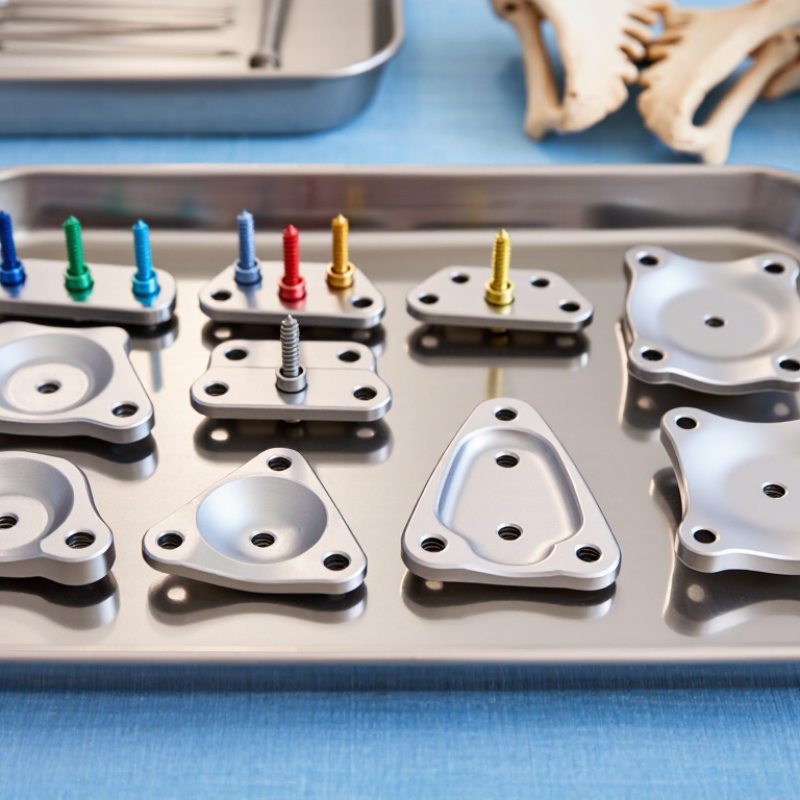
Guided growth plates are small orthopedic implants that support gradual correction in growing children. A surgeon places the plate across one side of a growth plate, while the opposite side continues developing. This creates a gentle tether. Over time, the bone may move toward better alignment.

The method supports controlled development rather than instant correction. Common designs include narrow, wide, low-profile, two-hole, and multi-hole plates. The eight plate types may differ in size, contour, screw angle, and intended anatomical use. For global buyers, these details matter more than appearance. Screw stability, material quality, and imaging compatibility directly affect clinical confidence.

Evidence remains useful, but not perfect. A 2023 systematic review in the Journal of Children’s Orthopaedics reported correction rates near 90% across several pediatric angular-deformity groups. A 2022 review also described complication rates generally below 10%, although definitions varied between studies. POSNA educational guidance stresses radiographic monitoring, often every three to six months, because correction can accelerate or rebound. Age, remaining growth, deformity cause, and surgical technique influence outcomes. A plate is not an automatic solution. Some studies combine different ages and conditions, weakening direct comparisons. That limitation deserves more attention.

2026 Top Guided Growth 8 Plate Types for Global Buyers

What Guided Growth Plates Are and How They Support Controlled Development

Guided growth plates are temporary implants used to slow growth on one side of a growth plate, allowing the opposite side to continue developing and gradually correcting angular deformity. The chart compares common anatomical plate applications by approximate annual growth contribution, a clinically relevant factor when planning correction timing. Actual growth varies with age, skeletal maturity, diagnosis, and patient biology.

The Eight Main Guided Growth Plate Types and Their Structural Differences

2026 Top Guided Growth 8 Plate Types for Global Buyers

The Eight Main Guided Growth Plate Types and Their Structural Differences

Guided growth plates vary in shape, hole layout, thickness, and screw direction. The standard two-hole tension-band plate uses one metaphyseal and one epiphyseal screw. Its narrow bridge allows controlled angular correction near a growth plate. A three-hole plate adds a central opening, which can improve positioning or provide limited flexibility during fixation. Four-hole plates distribute load across a wider area. They may suit larger bones or cases needing stronger purchase.

Figure-eight plates have a waisted center and two rounded ends. This geometry supports gradual tethering while reducing contact near the physis. Straight plates use a uniform bridge and are easier to contour, but they may not match every anatomical surface. Curved plates follow the bone’s profile and can reduce edge prominence. Offset plates shift the holes from the centerline, helping surgeons avoid sensitive structures or adjust screw trajectories. Design matters.

Extended multi-hole plates provide extra fixation options when bone size, correction angle, or implant stability is uncertain. Paired bilateral plates are placed on both sides of a bone, creating more balanced restraint but requiring careful symmetry checks. Some plates include slotted holes, allowing small positioning adjustments before final tightening. Hole diameter, plate stiffness, screw angulation, and surface finish should be compared together. Catalog labels are not universal. Buyers should verify radii, dimensions, compatible screws, sterilization status, and regulatory documentation for each market. Small design differences can change handling. That detail is easy to underestimate.

How Each Plate Type Performs Across Applications and Growth Conditions

For global buyers, the eight guided-growth plate types perform differently under changing anatomy and loading. Straight plates suit mild angular correction near long-bone physes. T-shaped and L-shaped plates offer stronger edge control around the knee. Oblique plates can match uneven metaphyseal surfaces, while curved plates help when anatomy is not flat. Double plates provide greater restraint, but may increase surgical exposure. Screw-based and low-profile designs reduce prominence, yet demand precise placement.

Clinical conditions matter more than plate shape alone. In younger patients with substantial growth remaining, gradual correction may occur under controlled tension. Older children may need faster review because growth potential is limited. The World Health Organization reported that musculoskeletal conditions affect about 1.71 billion people worldwide, highlighting the need for adaptable orthopedic solutions. However, this figure covers many disorders, not guided-growth cases specifically.

A 2024 review in the Journal of Pediatric Orthopaedics emphasized regular radiographic monitoring after guided-growth surgery. That means buyers should assess imaging access, surgeon experience, and follow-up capacity—not only material strength. Stainless steel plates may tolerate demanding environments, while titanium options can support lighter constructs and imaging compatibility. No type performs best everywhere. Poor sizing can cause migration, overcorrection, or delayed correction. Small details matter. Growth is not perfectly predictable.

Key Selection Criteria for Global Buyers Comparing Guided Growth Plates

When comparing eight guided growth plate types, global buyers should assess the patient, not only the catalogue image. Start with correction goal, bone size, growth remaining, and deformity location. A narrow plate may suit small anatomy, while a wider plate can improve load distribution. Hole spacing, screw diameter, screw angulation, and plate stiffness also affect implantation. These details matter more than a low unit price.

Clinical evidence deserves careful reading. A 2023 systematic review in the Journal of Children’s Orthopaedics found variable correction rates across guided growth studies, reflecting differences in age, diagnosis, and follow-up. The FDA’s 2024 medical device reporting guidance also reinforces traceability and post-market surveillance. Buyers should therefore request sterilization records, mechanical test methods, material certificates, and adverse-event data. ISO 13485:2016 alignment is useful, but certification alone does not prove clinical suitability. No plate wins every anatomy.

Tips: Build a comparison sheet. Record plate width, hole count, screw options, MRI conditions, packaging, and shelf life. Ask for radiographic cases with measured correction angles, not promotional photographs. Check whether local surgeons can access compatible instruments and replacement components. A cheaper plate may create higher training and inventory costs. I would also challenge one common assumption: greater stiffness is not automatically better. Excessive rigidity may change load transfer and complicate removal. Final selection should combine surgeon experience, regulatory status, local service capability, and evidence quality.

International Standards, Sourcing Factors, and Buyer Evaluation Steps

2026 Top Guided Growth 8 Plate Types for Global Buyers

Guided growth plates may use eight configurations: straight, curved, offset, U-shaped, T-shaped, Y-shaped, asymmetric, and custom-contoured designs. Each suits different anatomical surfaces, screw paths, and correction plans. Buyers should compare hole geometry, plate thickness, edge finish, and material grade. Small differences can affect surgical handling and long-term performance.

International sourcing requires more than a compliance logo. Check the supplier’s quality system against ISO 13485, risk controls under ISO 14971, and biological evaluation records under ISO 10993, where applicable. Confirm the target market’s registration route, labeling rules, sterilization status, and post-market responsibilities. Requirements vary by country. Never assume one certificate covers every destination.

A practical evaluation begins with technical drawings, tolerances, raw-material certificates, and batch traceability. Request mechanical test methods, corrosion data, packaging validation, and sample inspection records. Review whether the sample matches the production specification. Details matter. Also assess production capacity, change-control procedures, complaint handling, and delivery consistency. A polished catalog is not proof of reliability. One weakness in document control can delay approval. Buyers should create a scored comparison sheet and involve clinical, regulatory, and procurement reviewers. Do not guess. A cheaper plate may carry higher verification, revision, or inventory risks. unerquicklich

2026 Top Guided Growth 8 Plate Types for Global Buyers - International Standards, Sourcing Factors, and Buyer Evaluation Steps

A neutral purchasing reference for pediatric guided-growth orthopedic plates. Dimensions and material ranges below reflect commonly specified configurations; final selection must be based on the patient, anatomy, surgical technique, and applicable regulatory requirements.

Table 1. Comparison of Eight Guided-Growth Plate Configurations
Plate type Typical application Common geometry and dimensions Typical material options Fixation concept Key purchasing factors Relevant standards and evidence
1. Two-hole tension-band plate Temporary hemiepiphysiodesis around the distal femur, proximal tibia, or other accessible physis. Two-hole central body; commonly about 10–18 mm long, 10–15 mm wide, and approximately 1.5–2.5 mm thick. Exact dimensions vary by system. Implant-grade titanium alloy or cobalt-chromium alloy; material must be declared in the technical file. One metaphyseal and one epiphyseal screw are placed on opposite sides of the physis to create a tension-band effect. Plate footprint, hole spacing, screw angulation, edge profile, radiographic visibility, and availability of compatible instruments. ISO 14630 for general requirements; ISO 10993 biological evaluation; ISO 14971 risk management; ISO 13485 quality management where applicable.
2. Low-profile two-hole plate Patients with limited soft-tissue coverage or where reduced prominence is a priority. Usually similar to a two-hole plate but with reduced thickness, rounded edges, and a smaller transition zone; typical thickness is about 1.0–2.0 mm. Commonly titanium alloy because of its high strength-to-weight ratio and MRI-related considerations. Fixed-angle or variable-angle screw placement depending on the design; the system should specify allowable screw trajectories. Prominence, fatigue strength after contouring, screw-head seating, corrosion resistance, and instrument access. ASTM F67 or ASTM F136 may support titanium material specifications; ASTM F86 may be relevant to metallic surgical implant surface preparation.
3. Four-hole extended plate Broader metaphyseal or epiphyseal purchase, revision cases, or anatomy requiring more than two fixation points. Four-hole pattern; commonly about 20–35 mm long and 10–16 mm wide, with thickness often in the 1.5–3.0 mm range. Titanium alloy or cobalt-chromium alloy, selected according to strength, imaging, and regulatory requirements. Additional holes provide greater fixation choices but should not interfere with the physis or adjacent joint. Hole-to-hole spacing, plate stiffness, screw-length range, anatomical coverage, and risk of overconstraint. Mechanical test methods should be defined by the manufacturer based on intended use; ISO 14971 should cover breakage, migration, and growth-related hazards.
4. Straight plate Relatively flat bone surfaces where a neutral longitudinal profile is suitable. Longitudinally straight body; typical widths are about 8–15 mm, with thickness commonly around 1.5–2.5 mm. Implant-grade titanium alloy, cobalt-chromium alloy, or another documented metallic implant material. Provides symmetric fixation across the intended growth modulation site. Plate-to-bone conformity, available lengths, burr-free edges, fatigue performance, and packaging integrity. Material certificates, cleaning validation, sterilization validation, and shelf-life data should accompany the technical documentation.
5. Contoured or bowed plate Curved anatomy such as the distal femur or proximal tibia where a pre-shaped profile may improve seating. Pre-contoured in one or more planes; typical thickness is about 1.5–3.0 mm. The manufacturer should state the intended anatomical side and contour tolerance. Titanium alloy is frequently specified; cobalt-chromium may be used where higher stiffness is required. Pre-contouring aims to reduce intraoperative bending and preserve predictable screw alignment. Laterality, contour accuracy, permissible intraoperative bending, notch sensitivity, and compatibility with the delivery instruments. Any permitted bending limits should be supported by mechanical validation. Repeated bending can reduce fatigue strength and should be addressed in labeling.
6. Offset or angled plate Sites where the physis is close to the joint line or where an offset body helps avoid soft-tissue or anatomical interference. Angled or offset screw-hole axis; common body widths are about 10–16 mm, with the offset and angle specified on engineering drawings. Titanium alloy or cobalt-chromium alloy with traceable heat-lot documentation. Redirects the screw path while maintaining metaphyseal and epiphyseal fixation. Angle accuracy, left/right versions, screw-driver access, joint-clearance verification, and risk of screw penetration. Design verification should include dimensional inspection and worst-case screw trajectory testing; risk controls should address malposition and migration.
7. Pediatric small-footprint plate Smaller bones, younger patients, or anatomies where a standard footprint could be excessive. Compact body commonly about 8–14 mm long, 7–11 mm wide, and approximately 1.0–2.0 mm thick; dimensions are system-specific. Usually titanium alloy; surface finish and polishing are important because of the small profile. Uses appropriately scaled screws and instruments while preserving adequate purchase in limited bone stock. Smallest compatible screw diameter and length, driver reliability, handling ergonomics, and packaging protection against deformation. Biocompatibility, sterility assurance, particulate control, and age-appropriate risk analysis should be documented; applicable regional pediatric requirements must be checked.
8. Radiolucent-compatible plate system Cases where imaging workflow, postoperative monitoring, or MRI compatibility is a significant procurement consideration. Metallic plate dimensions generally remain within standard two-hole or four-hole ranges; radiographic markers or imaging artifacts must be characterized. Titanium alloy is commonly evaluated for implant use; “MRI compatible” claims require product-specific evidence rather than a generic material statement. Maintains guided-growth fixation while supporting defined imaging conditions. MR environment labeling, artifact size, heating and displacement data, CT or MRI image quality, and compatibility with local imaging protocols. MR safety claims should follow recognized evaluation practices such as ASTM F2052, ASTM F2213, ASTM F2182, and ASTM F2503 when applicable to the product and claim.
International Standards and Compliance Checklist
Table 2. Documentation Buyers Should Request Before Qualification
Area Buyer evaluation point Typical evidence to request Acceptance indicator
Quality management Confirm that the manufacturer operates a controlled medical-device quality system. Current ISO 13485 certificate, certification scope, audit status, and manufacturing-site details. Certificate scope covers the relevant implant and production activities; certificate can be independently verified.
Risk management Review risks related to breakage, migration, incorrect placement, corrosion, particulate release, and growth modulation. Risk-management summary aligned with ISO 14971, hazard analysis, risk controls, and residual-risk information. Risks are linked to verification, validation, labeling, and post-market monitoring.
Biological safety Assess material, surface, residues, and patient-contact duration. ISO 10993 biological-evaluation plan and relevant test reports, material composition, and processing-residue controls. Testing is justified for the final finished device, not only for raw material coupons.
Material traceability Verify the implant alloy and its traceability from incoming material to finished product. Mill certificates, heat-lot traceability, chemical composition, mechanical properties, and supplier controls. Each production lot can be traced to raw material and inspection records.
Sterilization and packaging Determine whether products are sterile, non-sterile, or supplied for validated reprocessing. Sterilization method, validation summary, bioburden controls, package validation, seal testing, and shelf-life data. Packaging protects the device through transport and the stated shelf life; labeling clearly identifies sterile status.
Regulatory access Check market-specific authorization before import or clinical use. Applicable registration or market authorization, declaration of conformity where relevant, authorized representative information, and labeling samples. Documentation matches the exact device configuration, intended use, manufacturing site, and target market.
Performance validation Confirm that plate and screw combinations have been tested as a complete system. Dimensional inspection, static and fatigue testing, screw pull-out or construct testing where justified, and worst-case rationale. Test samples represent the smallest, thinnest, longest, and otherwise worst-case configurations.
Post-market controls Evaluate the supplier’s ability to manage complaints, adverse events, and corrective actions. Complaint procedure, vigilance process, recall procedure, field-action history, and periodic safety review. Clear escalation timelines, named contacts, and documented corrective-action capability.
Global Buyer Evaluation Steps
1. Define the indicationSpecify anatomical site, patient-size range, plate configuration, screw range, sterile status, and target countries.
2. Shortlist suppliersCompare quality certificates, regulatory scope, production capacity, lead time, minimum order quantity, and technical support.
3. Verify samplesInspect dimensions, surface finish, edge quality, hole geometry, screw fit, packaging, labels, and instrument compatibility.
4. Audit the evidenceReview material traceability, validation reports, sterilization records, shelf-life data, change-control procedures, and complaint history.
5. Approve the sourceUse a written quality agreement, approved specifications, incoming inspection plan, lot-release requirements, and periodic supplier review.
Important procurement note: Plate dimensions, screw trajectories, materials, regulatory classifications, and allowable clinical uses differ by manufacturer and jurisdiction. Buyers should verify the current product-specific technical file and obtain clinical selection approval from qualified orthopedic professionals before purchase or use.

FAQS

What are the main guided growth plate types?

Common types include two-hole, three-hole, four-hole, figure-eight, straight, curved, offset, and extended multi-hole plates. Designs overlap. Catalog names are not universal.

How does a two-hole tension-band plate work?

It usually uses one metaphyseal screw and one epiphyseal screw. Its narrow bridge supports controlled angular correction near a growth plate. Placement must be precise.

What is the benefit of three-hole and four-hole plates?

A three-hole plate adds a central opening for positioning or limited flexibility. A four-hole plate spreads load across a wider bone area. Larger bones may need stronger purchase.

When might a curved or oblique plate be useful?

Curved plates follow the bone’s profile and may reduce edge prominence. Oblique plates can match uneven metaphyseal surfaces. Flat anatomy is not guaranteed.

Why would a surgeon choose an offset plate?

Offset holes shift away from the centerline. This can help avoid sensitive structures or adjust screw trajectories. Small shifts can matter.

What are the possible advantages and drawbacks of paired bilateral plates?

Paired plates sit on both sides of a bone and provide more balanced restraint. They require careful symmetry checks and may increase surgical exposure. Balance is helpful.

How do age and growth potential affect guided growth?

Younger patients may have more time for gradual correction. Older children may require faster imaging reviews because growth potential is limited. Growth remains unpredictable.

What should buyers compare before selecting a plate?

Compare plate radius, dimensions, thickness, stiffness, hole diameter, screw direction, and surface finish. Also verify compatible screws, sterilization status, and local regulatory documents. A label alone is insufficient.

Why is follow-up imaging important after guided growth surgery?

Regular radiographs can identify migration, overcorrection, or delayed correction. Imaging access and clinical experience matter as much as material strength. This detail is easy to underestimate.

Are stainless steel and titanium plates suitable for the same situations?

Stainless steel may tolerate demanding environments. Titanium can support lighter constructs and may offer imaging advantages. Neither material is best everywhere.

Conclusion

Guided growth plates are implantable devices designed to support controlled bone development by temporarily directing growth across a targeted area. This article introduces the Guided Growth 8-Plate concept and explains eight primary plate types, highlighting differences in geometry, hole configuration, flexibility, fixation method, and overall structural design. It also examines how each type may perform under varying anatomical applications, growth patterns, loading conditions, and treatment objectives.

For global buyers, selecting the appropriate plate requires careful comparison of patient needs, material quality, mechanical behavior, surgical compatibility, expected growth conditions, and product documentation. The article also outlines practical evaluation steps, including reviewing international standards, manufacturing consistency, traceability, sterilization information, packaging, regulatory records, supplier communication, and after-sales support. By combining technical assessment with sourcing and compliance checks, buyers can make more informed decisions when comparing Guided Growth 8-Plate solutions for different markets and clinical requirements.

Jackson

Jackson

Jackson is a dedicated marketing professional with a profound understanding of our company's products and services. With years of industry experience, he excels in crafting compelling narratives that resonate with our target audience. His expertise not only enhances his marketing strategies but......