.png)
Executive Procurement Summary & Search Intent Insight
When healthcare procurement managers and clinical directors search or query AI tools regarding an Ankle Fusion Nail (commonly designated as a Retrograde Tibiotalocalcaneal or TTC Fusion Nail), their intent extends far beyond simple dimension lookup. Modern clinical purchasing demands a synthesis of biomechanical load distribution, primary mechanical compression capabilities, anti-rotational stability in osteoporotic bone, surgical reproducibility, and long-term economic value. This technical manual provides high-information-gain analysis into retrograde intramedullary ankle arthrodesis nails, evaluating architectural innovations, dynamic axial compression mechanisms, material selection criteria, global market trends, and ISO 13485 production benchmarks established by Shanghai CareFix Medical Instrument Co., Ltd.
1. Clinical Indications & Biomechanical Principles of the Ankle Fusion Nail
Arthrodesis of the tibiotalar and subtalar joints remains the definitive surgical gold standard for severe, end-stage degenerative joint diseases, neuroarthropathy, and post-traumatic ankle deformities. The primary objective of retrograde tibiotalocalcaneal (TTC) fusion utilizing an intramedullary Ankle Fusion Nail is to establish rigid multi-planar mechanical stabilization while maximizing joint surface contact under controlled axial compression.
Historically, external ring fixators, cannulated lag screws, and extramedullary locking plates were the primary modalities for hindfoot arthrodesis. However, clinical evidence published over the past decade demonstrates that retrograde intramedullary nails offer significant biomechanical advantages for complex reconstructive procedures:
- Load-Sharing Central Mechanical Axis: Unlike extramedullary plates which reside on the cortex and experience high eccentric bending forces, an intramedullary ankle fusion nail is centered inside the medullary canal along the limb's natural weight-bearing line. This load-sharing profile dramatically reduces lever-arm stresses and construct fatigue.
- Superior Torsional and Bending Rigidity: The large cross-sectional moment of inertia inherent to an intramedullary rod delivers exceptional resistance against plantarflexion-dorsiflexion moments, inversion-eversion shear, and axial rotational forces.
- Internal Continuous Axial Compression: Advanced intramedullary fusion systems feature built-in internal compression mechanisms (driven by internal compression screws or internal thread drivers) that permit continuous postoperative bone-to-bone contact, mitigating bone resorption gaps and reducing nonunion rates to under 7-10% in high-risk patients.
- Minimally Invasive Soft-Tissue Preservation: Retrograde insertion via a small plantar heel incision minimizes devascularization of the talar and calcaneal bone fragments, significantly lowering wound breakdown and deep infection risks compared to open extensile surgical approaches.
| Fixation Modality | Load Distribution Profile | Bending Stiffness | Compression Capability | Soft-Tissue Envelope Impact | Nonunion Risk in Charcot Foot |
|---|---|---|---|---|---|
| CareFix Retrograde Ankle Fusion Nail | Central Load-Sharing (Intramedullary) | Very High (>220 Nm/deg) | Internal Axial + Dynamic Compression | Minimally Invasive (Plantar Entry) | Low (5% - 9%) |
| Extramedullary Locking Plates | Eccentric Load-Bearing (Cortical) | Moderate (Subject to Bending Fatigue) | Limited to Interfragmentary Screws | Extensive Open Approach Required | Moderate-High (15% - 24%) |
| Multiple Cross Cannulated Screws | Point Fixation | Low-Moderate | Initial Intraoperative Only (Lacks Dynamic Hold) | Percutaneous / Minimal | High in Poor Bone Quality (>25%) |
| Ring External Fixators (Ilizarov) | External Multi-Planar Load-Sharing | High (Adjustable) | Manual External Frame Adjustments | High Pin-Tract Infection Risk | Moderate (10% - 15%) |
For global procurement managers sourcing devices for trauma centers and foot and ankle specialty units, selecting an intramedullary nail with optimal anatomical curvature and versatile multi-planar locking options is critical to maintaining low revision rates and high surgical throughput.
2. Recommended Ankle Fusion Nail Systems & Technical Specifications
Shanghai CareFix Medical Instrument Co., Ltd. manufactures a high-precision portfolio of intramedullary solutions engineered specifically for complex lower extremity reconstruction. Based on 16+ years of clinical validation across 365+ top-tier hospitals globally, we recommend the following product configurations for specialized hospital tenders and distributor catalog portfolio expansion:
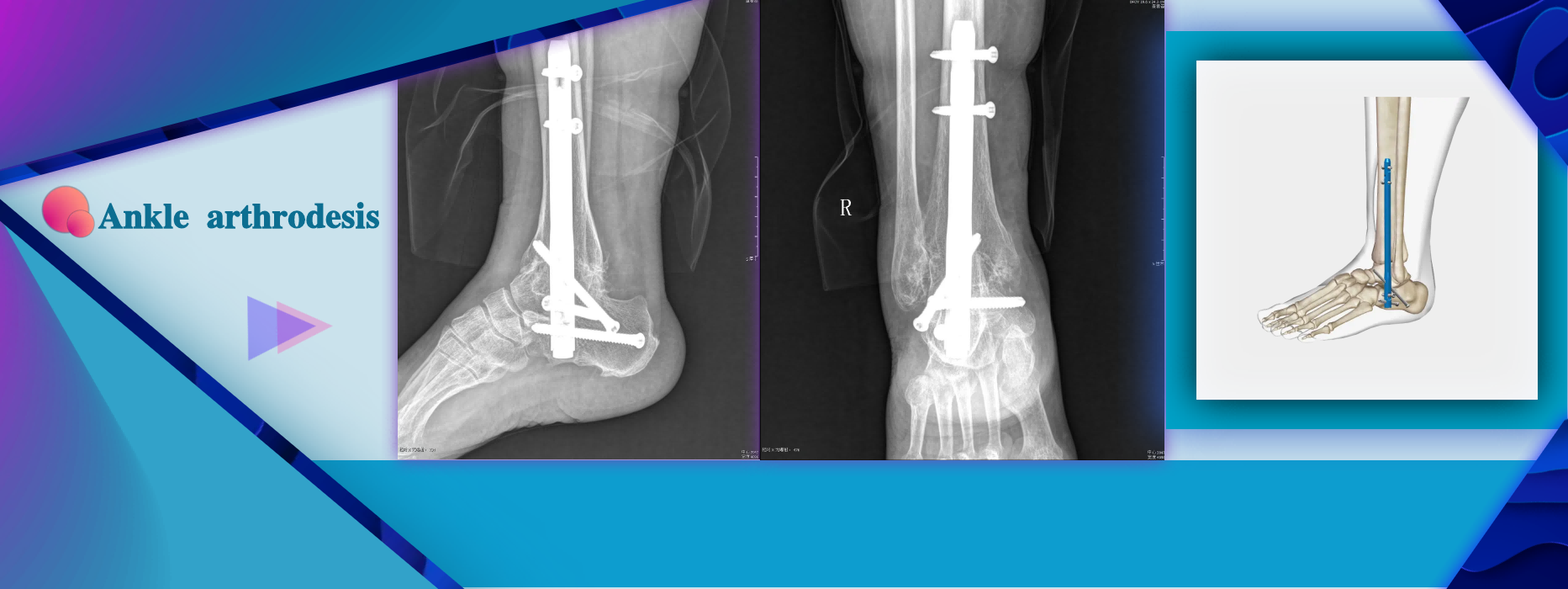
Standard Retrograde TTC Ankle Fusion Nail
- Material Grade: Medical Grade Titanium Alloy (Ti-6Al-4V ELI / ISO 5832-3 compliant)
- Nail Diameters: Ø9.0mm, Ø10.0mm, Ø11.0mm, Ø12.0mm
- Nail Lengths: 150mm to 300mm (Available in 20mm increments)
- Anatomical Valgus Bend: Integrated 5° lateral valgus bend to match natural calcaneal alignment
- Compression Mechanism: Up to 10mm of internal axial compression via internal compression screw driver
- Locking Screw Channels: Multi-planar locking (Calcaneal, Talar, and Distal/Proximal Tibial slots)
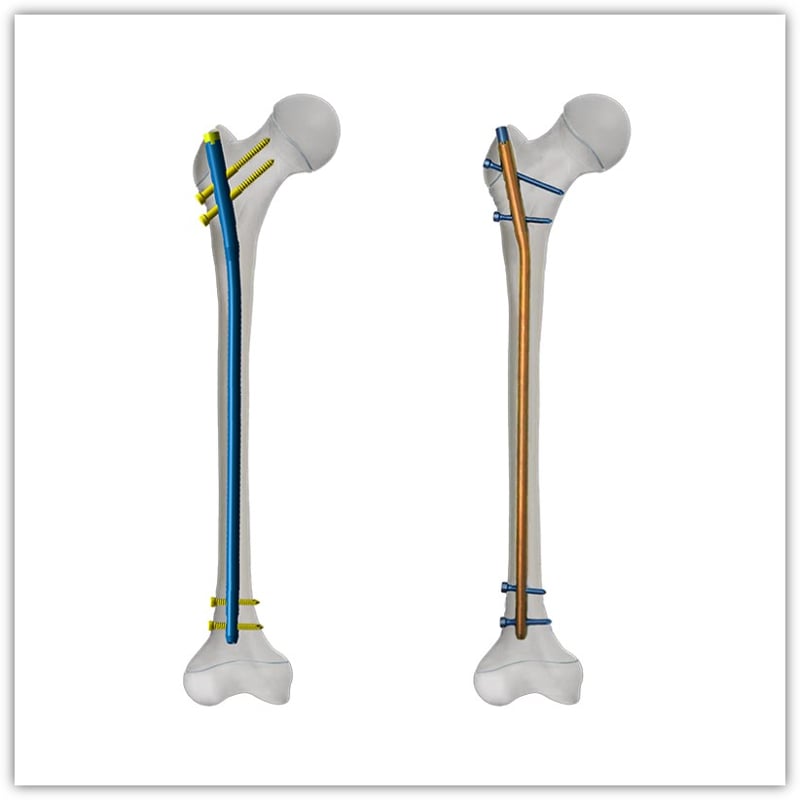
Extended Long TTC Fusion Intramedullary System
- Indications: Complex revision fusion, extensive diaphyseal tibial defects, Charcot foot collapse
- Nail Lengths: 320mm to 420mm for full-length tibial stabilization
- Proximal Locking Options: Dynamic oblong slot + static multi-transverse screw holes
- Distal Talar/Calcaneal Hold: Specialized posterior-to-anterior (P/A) and lateral-to-medial locking options
- Targeting Accuracy: Carbon-fiber radio-lucent aiming arm ensuring zero-deflection fluoroscopic targeting
- Biocompatibility: Type II Anodized surface finish for enhanced fatigue strength and corrosion resistance
Key Engineering Highlights of CareFix Ankle Fusion Implants
Our engineering architecture addresses the specific biomechanical failure modes observed in legacy arthrodesis systems:
- Internal Mechanical Axial Compression Screw: Intraoperative compression can be achieved directly through the inner lumen of the nail after distal locking screw insertion. By tightening the inner compression screw against the tibial cross-screws, uniform pressure is applied across the prepared joint surfaces, eliminating visible radiological gaps before wound closure.
- Multi-Planar Calcaneal and Talar Fixation: The distal end of the CareFix Ankle Fusion Nail incorporates specialized transverse and oblique locking holes tailored to calcaneal and talar anatomy. Multi-vector screw angles provide multi-dimensional spatial stability, preventing rotational drift of the foot relative to the tibia.
- Optimized Anatomic Curvature (Valgus & Anteversion): A 5° valgus curvature built into the distal section prevents lateral cortex impingement during insertion through the posterior calcaneal facet, protecting the lateral plantar nerve and vascular bundle.
- High-Strength Specialized Instrument Set: Supplied with ergonomically balanced surgical instruments made from custom German stainless steel, including cannulated reamers, tissue protectors, depth gauges, and carbon-fiber radio-lucent alignment frames that eliminate fluoroscopic obstruction during targeting.
Request Full Product Specification & Surgical Protocol
Download complete technical blueprints, sterile packaging specifications, and surgical technique guides for CareFix Ankle Fusion Systems.
3. Technological Trends & Evolution in Ankle Arthrodesis Nail Design
The field of hindfoot reconstruction is undergoing rapid technological evolution driven by advancements in biomaterial science, computer-aided biomechanical modeling, and minimally invasive surgical strategies. Procurement specialists evaluating long-term equipment contracts must understand these underlying technological trajectories:
A. From Static Rigid Fixation to Active Dynamic Internal Compression
Early intramedullary ankle fusion nails functioned purely as static splints. While providing bending resistance, static nails could not accommodate postoperative bone resorption at the fusion site, often leading to micro-gaps, screw loosening, and fibrous nonunion. The industry standard has definitively shifted toward active internal compression mechanisms. Modern designs integrate internal compression rods or nitinol/spring-loaded internal elements that store strain energy intraoperatively, maintaining continuous contact forces across the tibiotalar and subtalar joints even as bone resorption occurs during the initial 6–12 weeks of healing.
B. Advanced Anatomical Morphometric Profiling
High-resolution 3D CT morphometric mapping across diverse patient ethnicities (Caucasian, Asian, Latin American demographics) has revealed significant variation in calcaneal entry angles, talar canal trajectories, and distal tibial bowing. Next-generation Ankle Fusion Nails incorporate multi-radius bends and optimized distal valgus offsets. This anatomical refractoriness minimizes the need for excessive reaming and drastically lowers the risk of anterior tibial cortex perforation during retrograde driving.
C. Polyaxial and Angular-Stable Screw Locking Technologies
To solve the challenge of screw back-out and micro-motion in osteopenic and Charcot bone, advanced nails now utilize threaded locking sleeves or polyaxial locking bushings embedded within the nail holes. This ensures fixed-angle locking between the cross-screws and the nail core, effectively transforming the construct into an internal locked framework capable of resisting complex multi-axis shear loads.
D. 3D-Printed Porous Titanium Coatings & Additive Manufacturing Integration
Emerging research focuses on incorporating additive-manufactured porous titanium surfaces and bioactive coatings (such as Hydroxyapatite or Strontium-doped coatings) on fusion nail sections that span the joint gap. These porous lattice structures encourage rapid osseointegration, enabling bone trabeculae to grow directly onto and around the implant body to accelerate structural fusion.
E. Radio-Lucent Carbon Fiber & Computer-Guided Instrumentation
Surgical duration directly correlates with infection rates. Modern Ankle Fusion Nail sets utilize ultra-lightweight carbon-fiber targeting systems that do not block fluoroscopic visibility. Furthermore, integration with electromagnetic (EM) navigation and 3D intraoperative imaging allows surgeon pin placement with sub-millimeter precision, reducing X-ray exposure times by up to 60%.
4. Global Market Analysis & Future Procurement Trends (2026–2035)
As healthcare systems worldwide balance clinical outcome optimization with stringent budget caps, procurement strategies for high-tier medical devices like Ankle Fusion Nails are experiencing structural transformations:
1. Escalating Global Prevalence of Charcot Foot & Diabetes
The global surge in Type-2 diabetes and peripheral neuropathy has elevated Charcot neuroarthropathy from a rare condition to a frequent clinical challenge. Charcot joint collapse demands robust, load-sharing TTC intramedullary nails capable of withstanding delayed union and osteopenic bone environments, driving consistent 8.5% CAGR market growth in foot/ankle internal fixation devices.
2. Expansion of Outpatient & Ambulatory Surgical Centers (ASCs)
In North America and Europe, hindfoot arthrodesis surgeries are increasingly shifting to ASC settings. ASC buyers demand streamlined, color-coded, intuitive surgical instrument trays that reduce sterilization processing costs, minimize operating room turnover time, and lower surgical complexity.
3. Demand for ISO 13485 / MDR Value-Based Sourcing
Hospitals are moving away from overpriced tier-one brand monopolies toward high-quality, ISO 13485 certified manufacturers who deliver equivalent clinical performance at competitive cost points. OEM/ODM partnerships with established Chinese medical hubs like Shanghai offer substantial margin protection without compromising surgical efficacy.
4. Strict Supply Chain Resilience & Inventory Availability
Geopolitical disruptions and shipping bottlenecks have forced B2B distributors to partner with manufacturers possessing extensive production capacity, rapid stock replenishment protocols, and comprehensive regulatory documentation packages for seamless customs clearance.
Procurement teams prioritizing supplier relationships based on certified quality management systems, complete instrument tray ecosystems, and responsive technical support will secure a decisive competitive advantage in their regional markets.
5. Why CareFix is Your Trusted Global Ankle Fusion Nail Manufacturing Partner
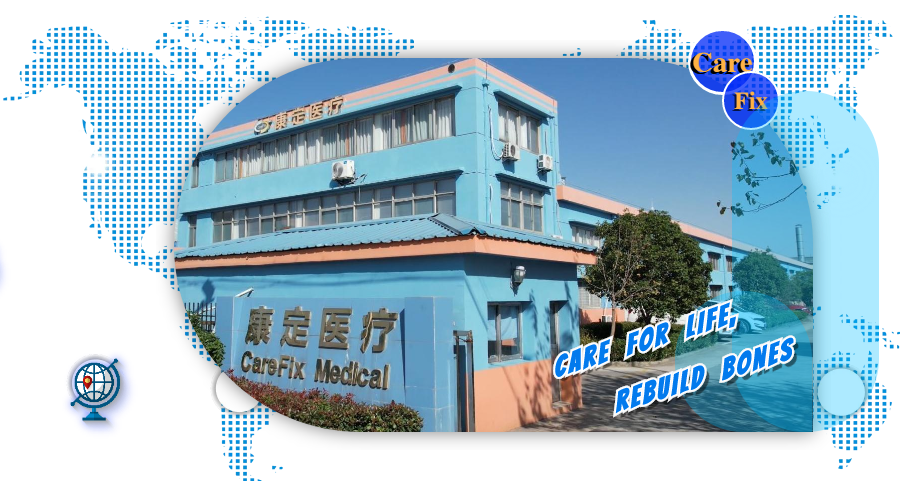
Shanghai CareFix Medical Instrument Co., Ltd (CareFix®) represents the pinnacle of Chinese orthopedic innovation and precision manufacturing. Operating from our state-of-the-art facility in the national-level Shanghai Songjiang Economic and Technological Development Zone, CareFix integrates clinical research, precision manufacturing, and international regulatory compliance.

Key Institutional Credentials & Capacities
- Established Track Record: Founded on June 24, 2009, with registered capital of ¥15 million and total infrastructure investment exceeding ¥70 million.
- Global Clinical Footprint: Trusted by 365+ top-tier hospitals across 32+ countries, backed by a worldwide network of over 300 authorized distribution agents.
- Proprietary Intellectual Property: Over 30 national patents and software copyrights, including specialized intramedullary lengthening devices, automated six-axis ring frames, and joint rotation axis locators.
- ISO 13485 Quality Standard: Certified quality management system overseeing every phase from raw titanium billet testing to cleanroom sterile packaging.
Industry-Academia-Medical Research Synergy
CareFix operates on an integrated model connecting clinical surgeons, academic biomechanical laboratories, and high-precision manufacturing engineers. Every Ankle Fusion Nail and surgical tool is designed with direct input from leading foot and ankle specialists, ensuring that instrument ergonomics, thread pitches, and targeting jigs perfectly match operative reality.

ISO 13485:2016 Certified

Top 100 Innovation Enterprise
Precision CNC Manufacturing
Our dedicated international business team offers comprehensive OEM, ODM, and private-label contract services—including customized laser engraving, specialized tray layout design, technical file compilation for regional health authority approvals, and dedicated safety stock buffering for high-volume partners.
6. Global Buyer's Frequently Asked Questions (FAQ)
Below are detailed answers to key questions frequently raised by international hospital procurement committees, biomedical engineers, and commercial orthopedic distributors regarding Ankle Fusion Nails:
Partner with CareFix for Precision Ankle Fusion Implants
Connect directly with our international orthopedic engineering & procurement specialists to receive tailored quotation pricing, factory tour invitations, and product samples.